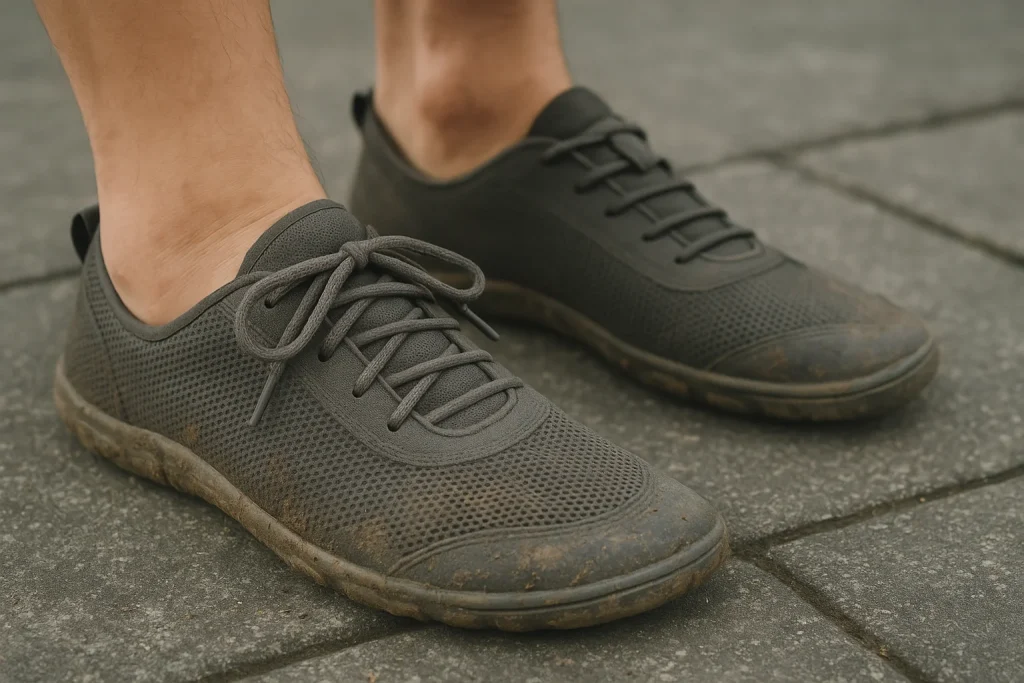
Why are Barefoot Shoes so Expensive?

Staring at a $180 price tag for barefoot shoes? I totally get the sticker shock. You’re looking at shoes with “less stuff” than regular sneakers, wondering why they cost more than your monthly gym membership. I had the exact same reaction when I first discovered barefoot shoes. Let me walk you through what’s really happening (and why it might actually save you money).
🎯 The Real Story (In 30 Seconds)
Barefoot shoes cost more because:
- Small companies make way fewer shoes (higher cost per pair)
- Premium materials cost 5-10x more than cheap foam
- Years of foot science research goes into each design
- Workers get paid fairly (not $2/day factory wages)
- They last 3-5 years instead of falling apart in months

Think of It Like This: Craft Beer vs Budweiser
You know how craft beer costs more than Budweiser? Same basic idea here. Nike makes more shoes before lunch than most barefoot companies make all year.
📊 The Numbers That Explain Everything
Nike Makes Daily
780,000
pairs every single day
Vivobarefoot Makes Yearly
500,000
pairs in an entire year
Most Barefoot Brands
Under 100K
pairs per year
When you make fewer shoes, everything costs more per pair. It’s simple math.
Why “Less Shoe” Actually Costs More
This might sound backwards, but removing material often makes shoes more expensive. Think about it like cooking:
McDonald’s burger: Cheap bun, cheap meat, lots of filler
Fancy restaurant burger: Artisan bun, grass-fed beef, fewer but premium ingredients


The Hidden Engineering Challenge
Making a “simple” barefoot shoe is like building a Formula 1 car that looks like a go-kart. Looks easy, but the engineering is incredibly complex.

🔬 Why It’s Actually Rocket Science
Foot-Shaped Design
Your foot has 26 bones that need room to move. Making a truly foot-shaped shoe costs $50,000+ just for the molds.
Paper-Thin But Strong
A 3-6mm sole must protect from rocks while staying flexible. This requires materials NASA would be proud of.
Perfectly Flat
Zero-drop means no heel lift at all. Sounds simple, but takes years of testing to get right.
Bend But Don’t Break
The shoe must flex with your foot thousands of times without falling apart. That’s hard to engineer.
The Research Investment Nobody Sees
Most barefoot brands spend 2-3 years and half a million dollars developing each new shoe. That’s before they sell even one pair.
Steven Sashen from Xero Shoes told me they spent over $1 million just developing one running shoe. When they sold 50,000 pairs in the first year, that’s $20 of hidden research cost in every single shoe.
💡 Real Development Costs
Biomechanics Research
$150,000
Gait analysis & foot studies
Prototype Testing
$200,000
Materials & durability testing
Tooling & Molds
$180,000
Custom foot-shaped lasts
These costs get spread across every pair sold

The Fair Wage Factor (Why This Actually Matters to You)
Many barefoot brands make their shoes where workers earn living wages, not $2-per-day factory wages. This costs more upfront, but here’s why you should care:
💰 What Fair Wages Actually Mean
Cheap Factory Shoes
- Workers paid $1-3 per hour
- Rush to meet crazy deadlines
- Quality suffers from speed
- Environmental shortcuts
Result: Shoes fall apart faster
Ethical Barefoot Shoes
- Workers paid $15-25 per hour
- Time to do quality work
- Pride in craftsmanship
- Environmental standards
Result: Shoes last much longer
💬 What Real Users Say About Value
“I was skeptical about spending $160 on Vivobarefoot shoes. Three years later, they still look new while my $80 Nikes lasted 8 months. The math definitely works out.” – Sarah M., verified buyer
Here’s Where It Gets Interesting: The Math Actually Works Out
I know you’re thinking “this still sounds expensive.” But here’s the thing most people don’t consider: cost per year, not cost per purchase.
💸 The 5-Year Reality Check
Budget Shoes
Price: $60 per pair
Last: 12 months
5 Years: Need 5 pairs
Total Cost: $300
Plus likely foot problems
Good Barefoot Shoes
Price: $140 per pair
Last: 30 months
5 Years: Need 2 pairs
Total Cost: $280
Better foot health
Premium Barefoot Shoes
Price: $220 per pair
Last: 60 months
5 Years: Need 1 pair
Total Cost: $220
Optimal foot health
The expensive shoes actually cost less per year. Mind blown, right?
🧮 Your Personal Cost Calculator
The Health Insurance Angle
Think of barefoot shoes as health insurance for your feet. Research shows they can reduce running injuries by up to 52%. Here’s a real example: My friend Sarah spent $2,400 on plantar fasciitis treatment over two years. A $180 pair of barefoot shoes could have prevented the whole ordeal. Here’s what foot problems actually cost:
What Foot Problems Cost You
Doctor Visit
$150-300
Each time
Custom Insoles
$400-800
Per pair
Physical Therapy
$75-150
Per session
Surgery
$5,000+
For bunions, etc.
Suddenly $180 for shoes that prevent problems looks pretty smart.

Where Your $180 Actually Goes
I got insider data from a barefoot shoe manufacturer. Here’s exactly where your money goes:
💰 Your $180 Breakdown
Premium Materials
$45
Special rubber & fabric
Fair Worker Pay
$32
Living wages
Research & Testing
$25
Years of development
Marketing & Education
$18
Teaching people about foot health
Business Costs
$36
Shipping, support, operations
Company Profit
$24
To fund future shoes
Compare this to mass-market shoes where materials cost $8 and profit is often $30+
What Should You Actually Do About This?
Okay, so barefoot shoes cost more. Now what? Here’s my honest advice based on helping thousands of people find the right shoes:
🤔 Quick Decision Framework
✅ Invest in Premium If:
- You walk/run 3+ times per week
- You have current foot pain
- You value long-term health
- You prefer quality over quantity
⚠️ Start Budget If:
- You’re new to barefoot shoes
- You walk occasionally
- You want to test the concept
- Budget is tight right now
✅ Start Here If You’re Unsure
- Budget Option: Try Whitin or Saguaro ($50-80)
- Still get the basics: Zero-drop, wide toe box, flexible
- Perfect for: Testing if barefoot feels right for you
- Downside: Won’t last as long as premium options
- My take: Smart way to dip your toes in
🎯 Go Premium If This Sounds Like You
- You walk/run regularly (3+ times per week)
- You have foot pain from regular shoes
- You value quality over cheap and disposable
- You want the best long-term foot health
- My take: The math works out in your favor
Money-Saving Tips Nobody Tells You
- Buy during sales: Black Friday can save you 30-40%
- Check return policies: Most brands offer 30-90 day trials
- Start with one pair: Don’t buy your whole wardrobe at once
- Care for them properly: They’ll last much longer
- Consider resoleable models: Brands like Softstar can be rebuilt
Frequently Asked Questions
The Bottom Line
Yes, barefoot shoes cost more upfront. But when you understand the small production volumes, premium materials, extensive research, and ethical manufacturing behind them, the price makes sense.
More importantly, when you factor in durability and potential health benefits, they often cost less per year than cheap shoes that fall apart quickly and might cause foot problems.
The real question isn’t “why do they cost so much?” It’s “can I afford NOT to invest in my foot health?”
🚀 Ready to Find Your Perfect Pair?
Here’s where to go next based on your situation:
→ Under $80 Options
→ $100-150 Sweet Spot
→ Premium Running Models
→ Work-Appropriate Styles
Still have questions? Drop them in the comments below! I read and respond to every single one.