Barefoot shoe review
Freet Danum review
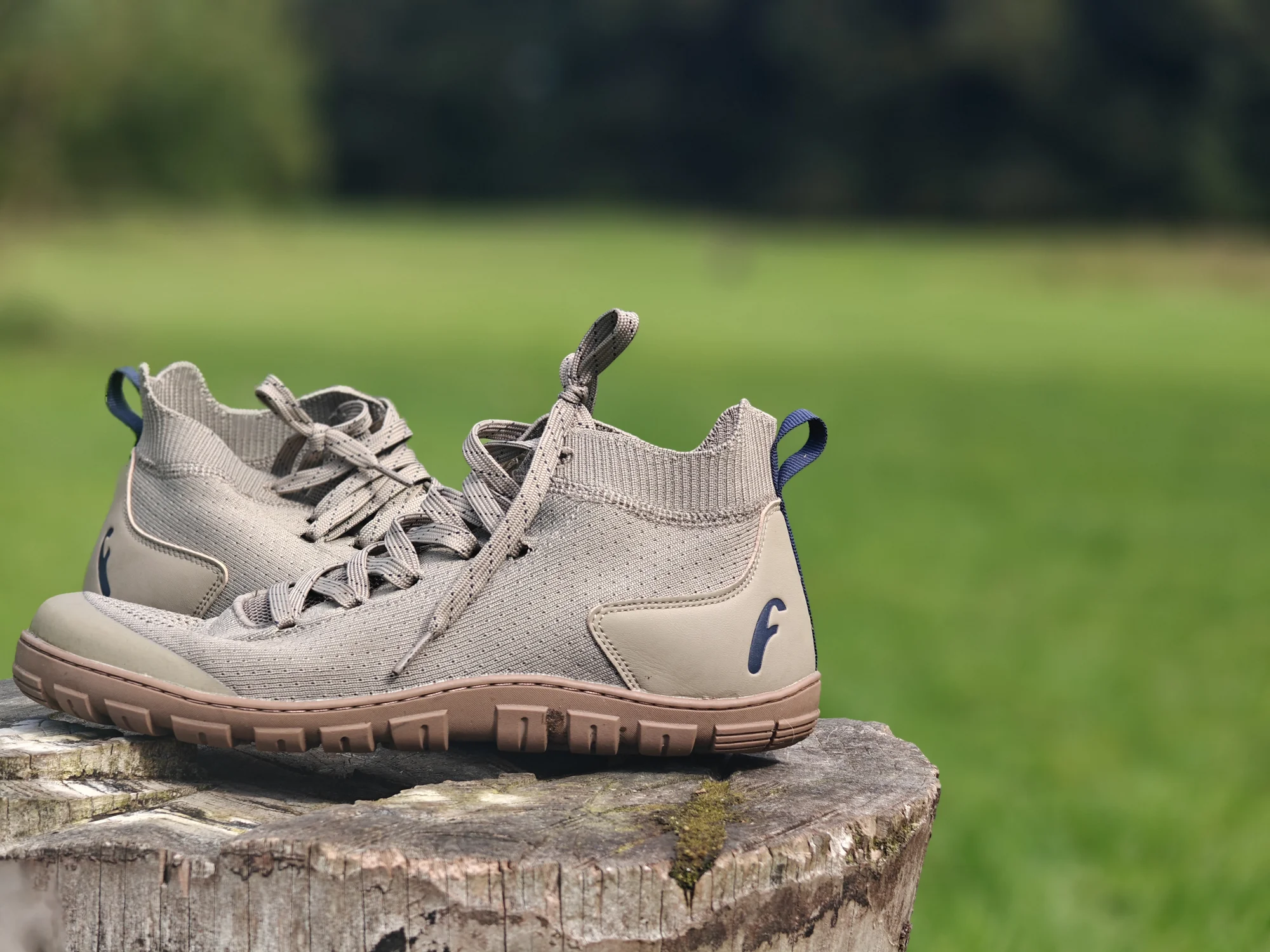
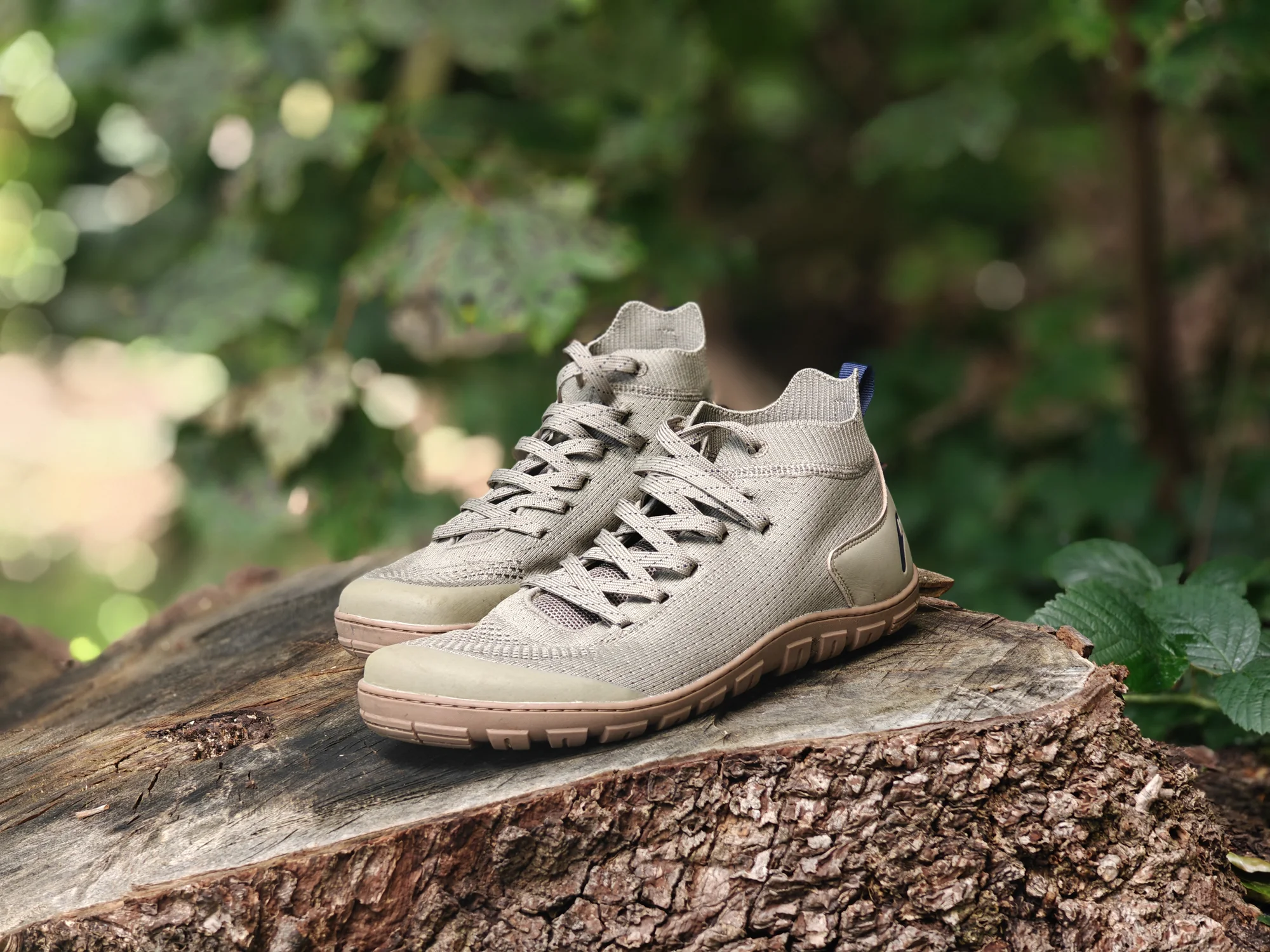
The Danum is Freet’s knitted summer boot, and it became a pair I kept reaching for on dry days.
Alin’s judgement
The Danum is a very comfortable summer boot with generous toe room and more ground feel than its chunky-looking tread suggests.
Work has been one of my main uses: they have felt consistently comfortable through 8–10 hour restaurant shifts, and I also kept choosing them for town and evenings out. They are lightweight and easy to wear with my normal clothes. The knitted opening takes a little effort, but that has become a familiar habit. They are not waterproof, and wet grass gets through the knit quickly.
Why it scored 4.6
- Barefoot feel
- Flexible sole and generous toe room; stronger ground feel without the insoles.
- Value for money
- At £85, very good value for the comfort, build and everyday use I have experienced.
- Style and design
- The knit, laces and silhouette worked with my normal clothes.
- Durability
- No durability problems after roughly 100 miles; the toe area has resisted the nicks and scratches I expected.
Is it right for you?
Best for
- You want an ankle-height boot with generous toe room, airflow and a flexible feel underfoot.
- You want a boot that works with ordinary clothes.
- You want a comfortable boot for work, town and evenings out, or for walking around on a city break.
Think twice if
- You need to keep your feet dry. The Danum is not waterproof; wet grass is its clearest limitation in my use.
- You want the easiest on and off. The knitted opening takes a little effort; a low shoe is less fuss.
£85
Price at reviewI'd pay £85 for them, but the knit soaks through on wet grass.
Freet sent me this pair and has no editorial input. This review contains affiliate links; I earn a commission if you buy through them.
The pair I prefer.
£50 less.
Both aim to cover trails and everyday wear. Having worn them, I would buy the Danum: it is more comfortable for my day, looks better to me and costs £50 less.
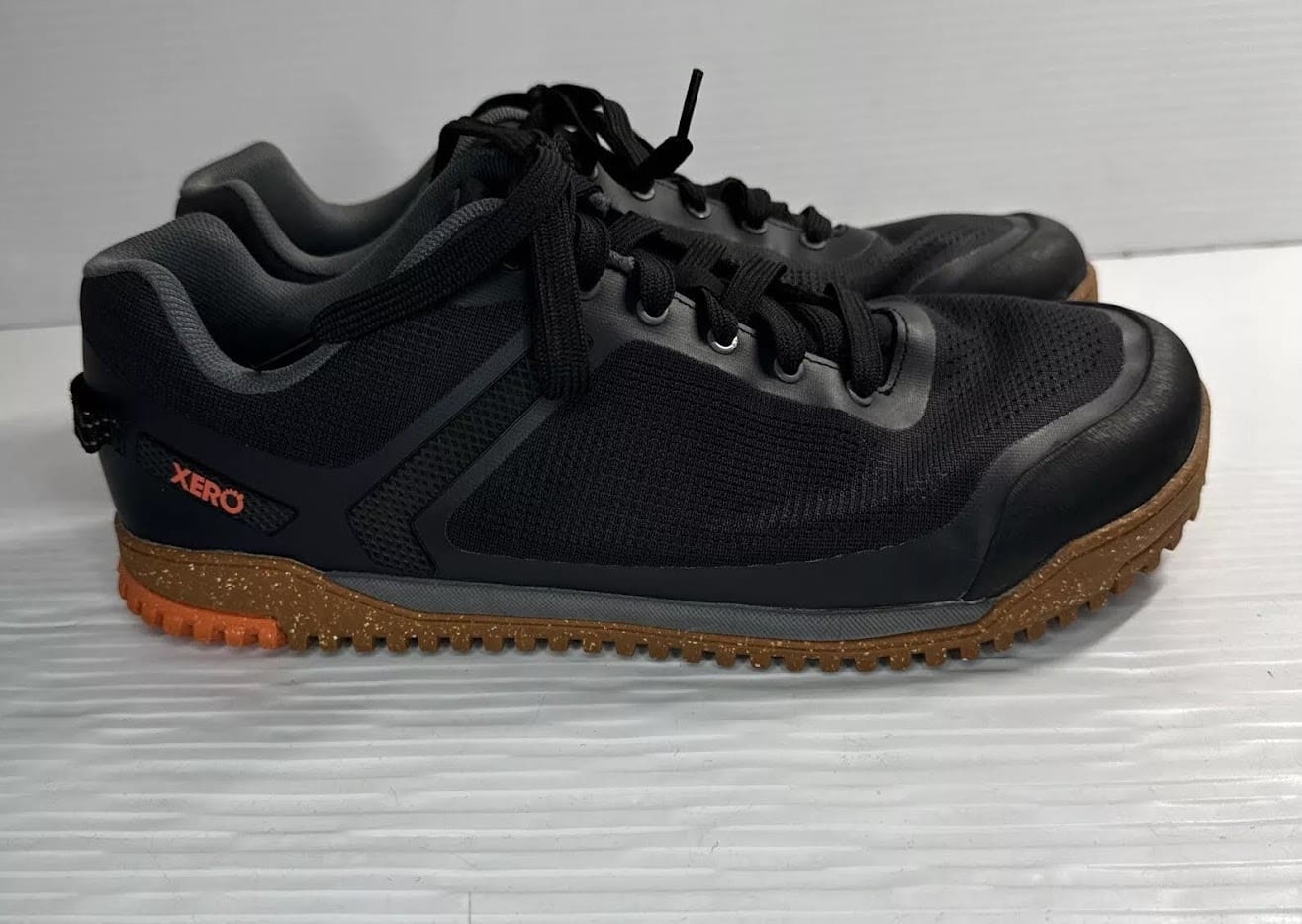
| In use | Danum | Ridgeway Mesh Low |
|---|---|---|
| Comfort | Comfortable through 8–10 hour shifts | The collar/counter can press into my ankle |
| Ground feel | Flexible sole; strong ground feel | A stiff sole that limits barefoot feel |
| Airflow | Open knit; I could feel air moving through it | Surprisingly warm after a couple of hours |
| Wear | No durability problems after roughly 100 miles | More sole abrasion around 100 miles. Side mesh has also cracked. |
I much prefer the Danum’s clean knitted silhouette to the Ridgeway’s busy hiking-shoe look. For long shifts, town and evenings out, I would keep the £50.
I would consider the Ridgeway at around half price, particularly as a first step away from conventional shoes. At £135, it is not the one I would buy. Neither shoe is waterproof.
Read my updated Ridgeway Mesh Low reviewUK listed prices checked 16 September 2026: Freet £85 · Xero £135. Prices may change. Wear comparison is based on my experience of each pair, not a controlled durability test.
How I tested
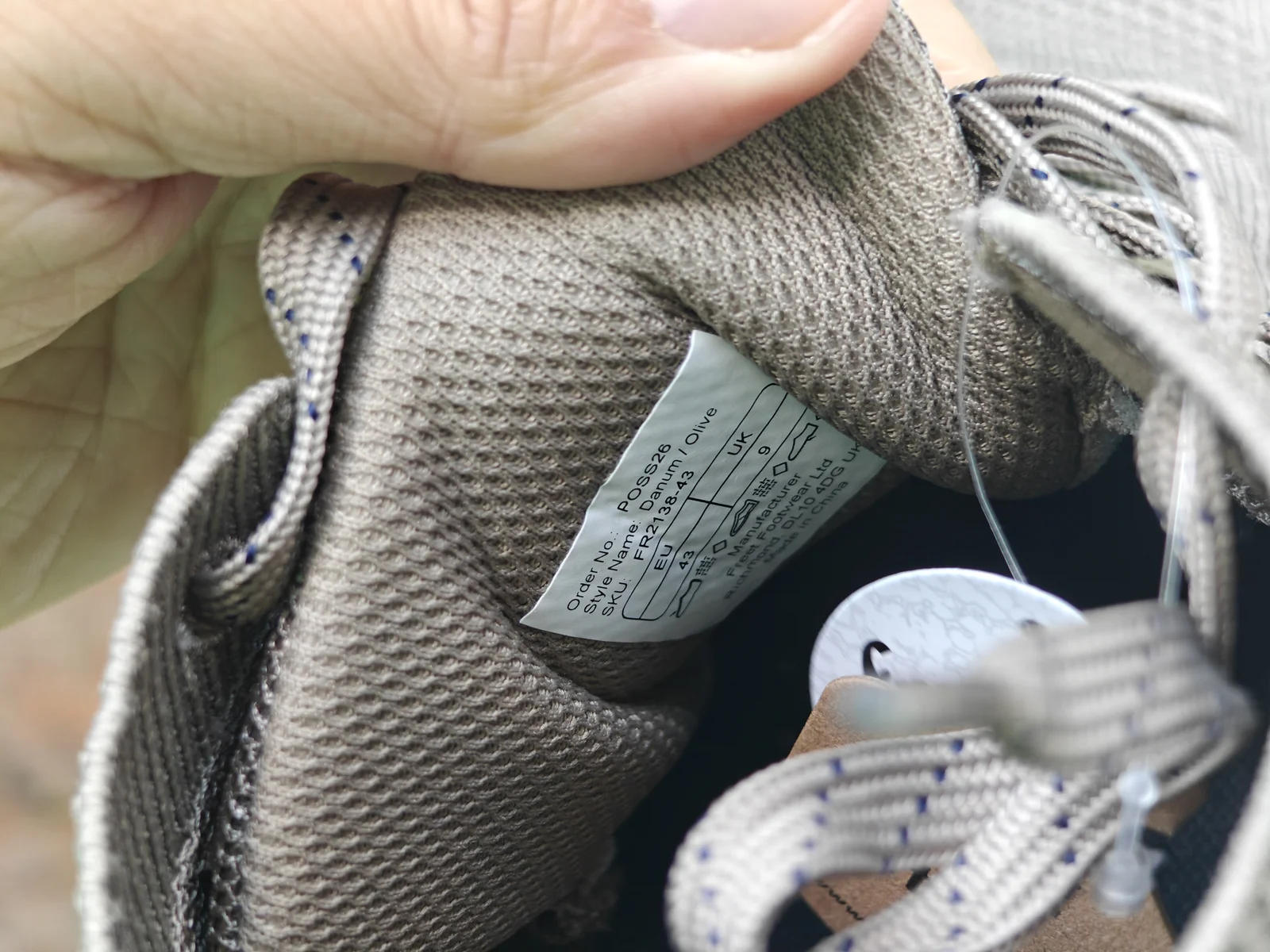
I tested a UK 9, my usual size. The boots arrived in the week of 4 July 2026 and I have worn them about three times a week since, roughly 100 miles in total, mostly with thin bamboo socks. I have been wearing them more frequently while writing this review. Work has been one of my main uses, including 8–10 hour restaurant shifts, alongside pavement walks, evenings out and trips to the beach around Northern Ireland. I avoided the rainiest days for outdoor walks, but rain did not stop me wearing them to work.
Design and everyday wear
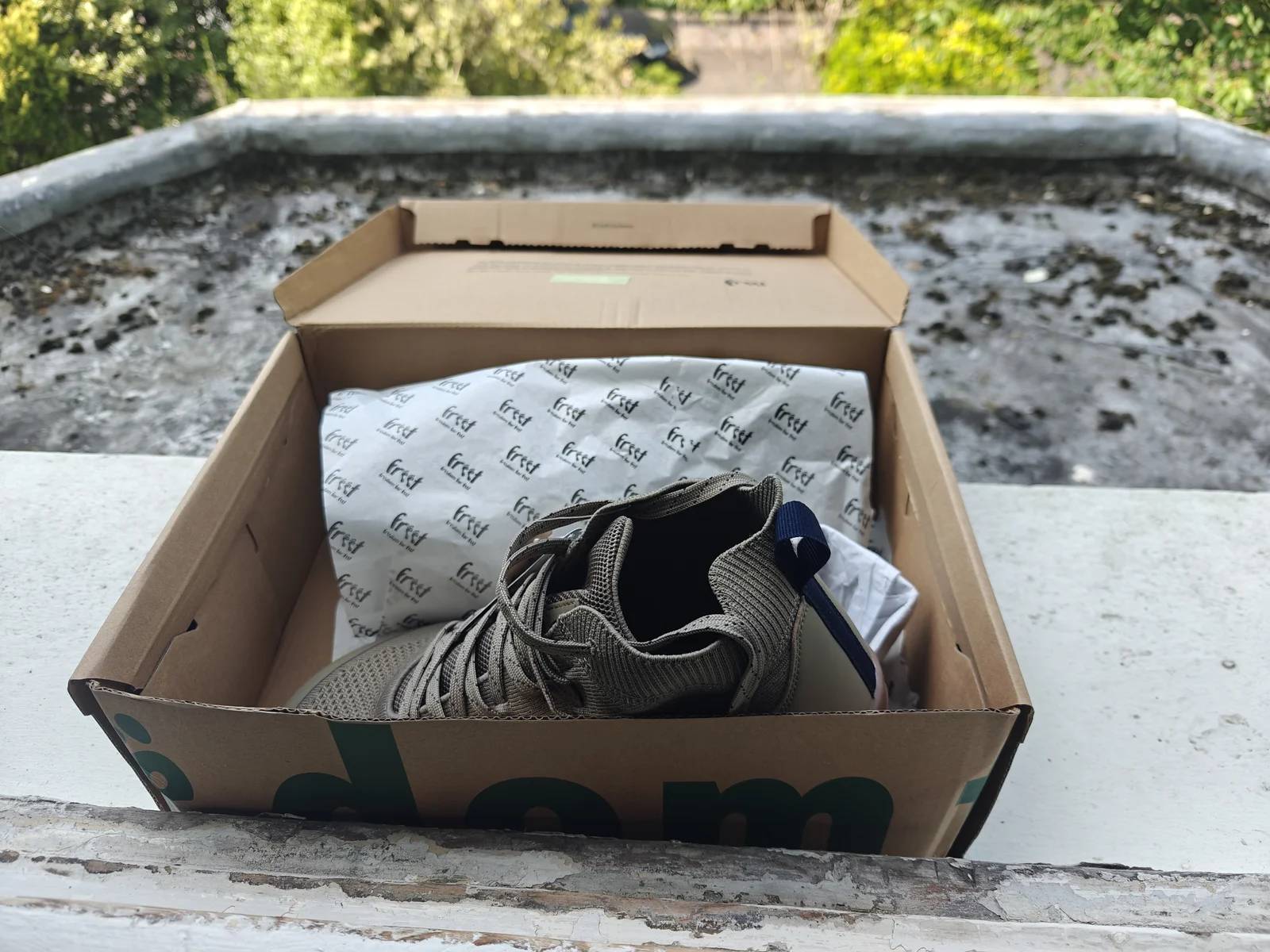
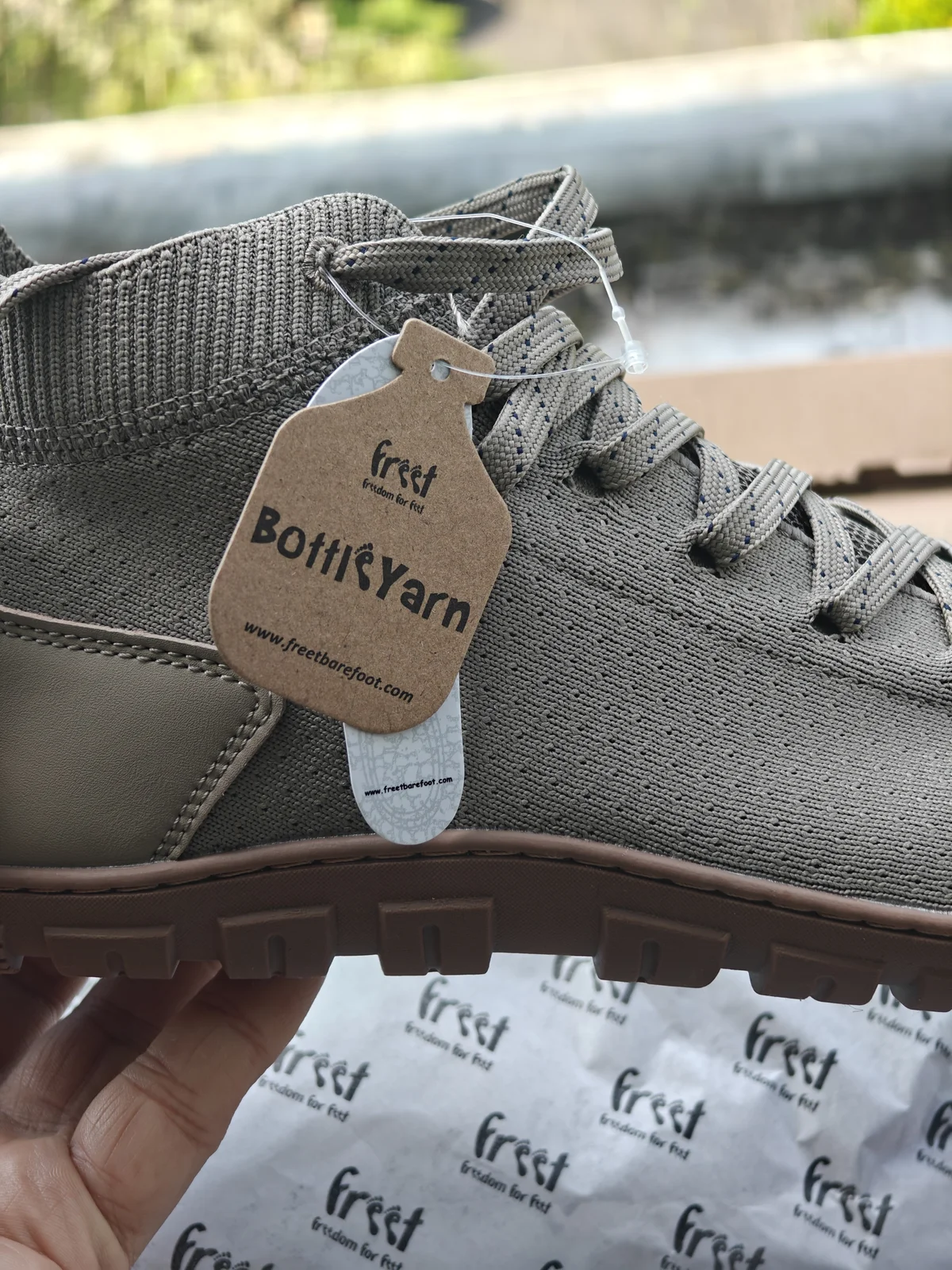
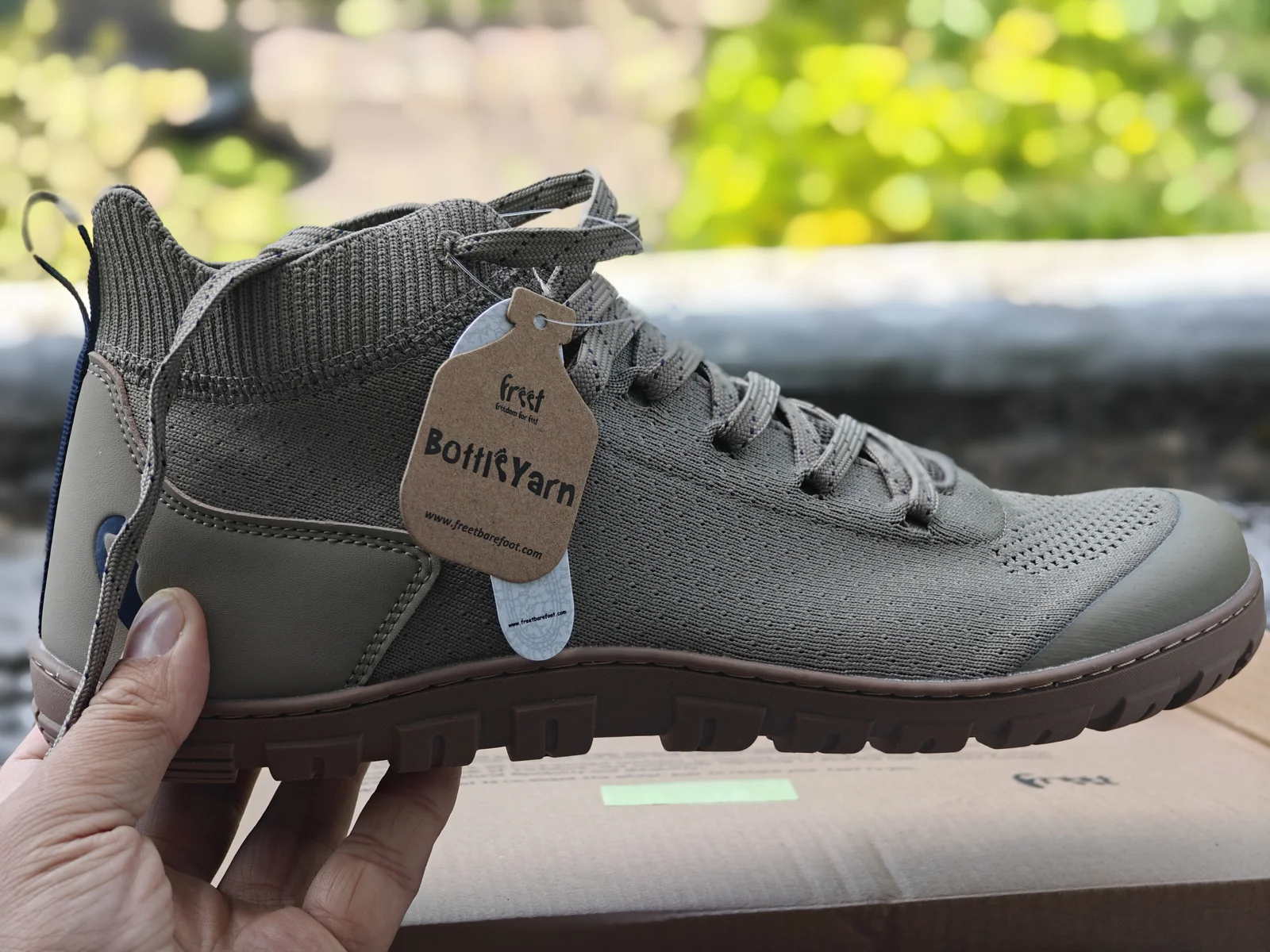
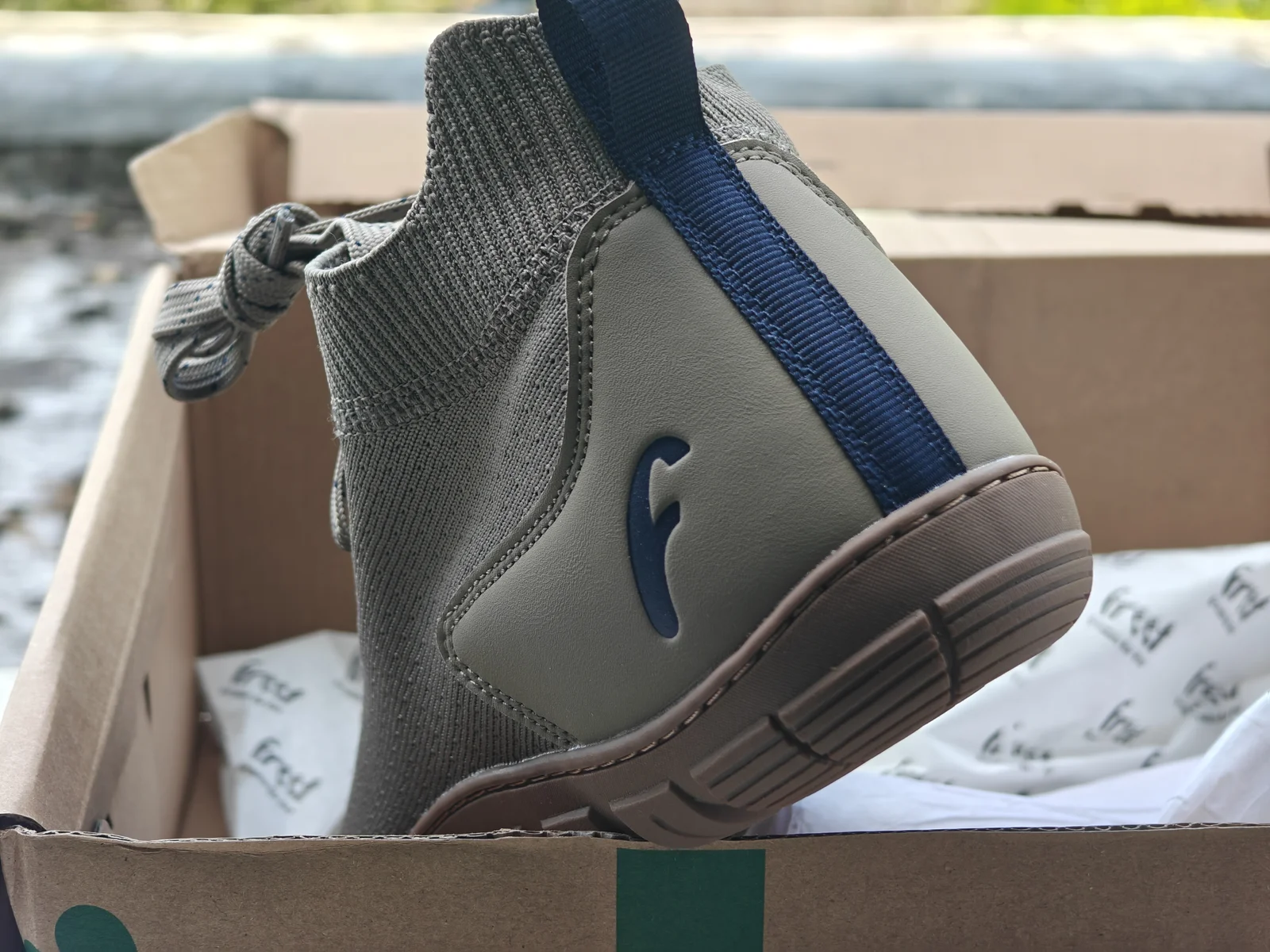
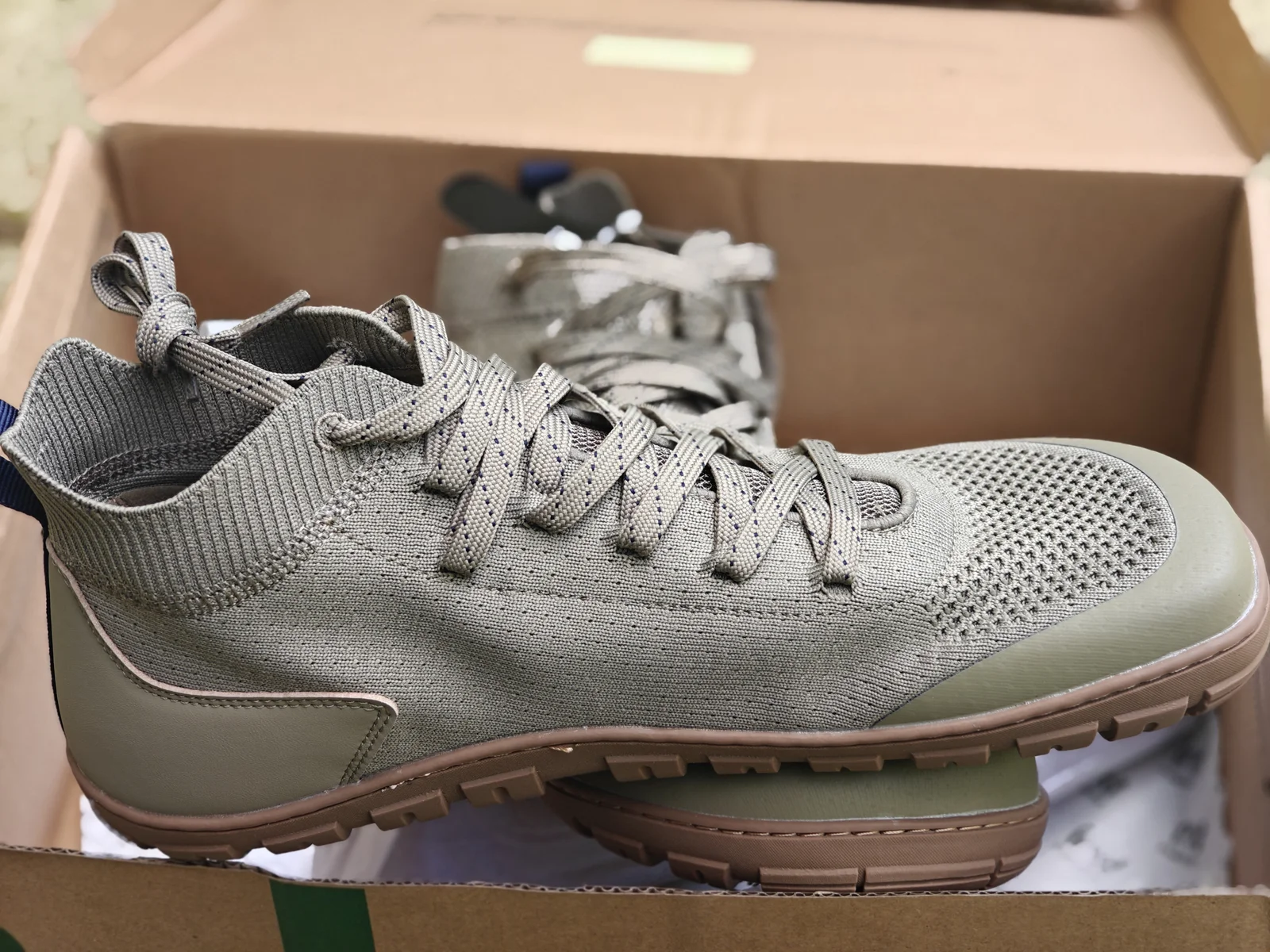
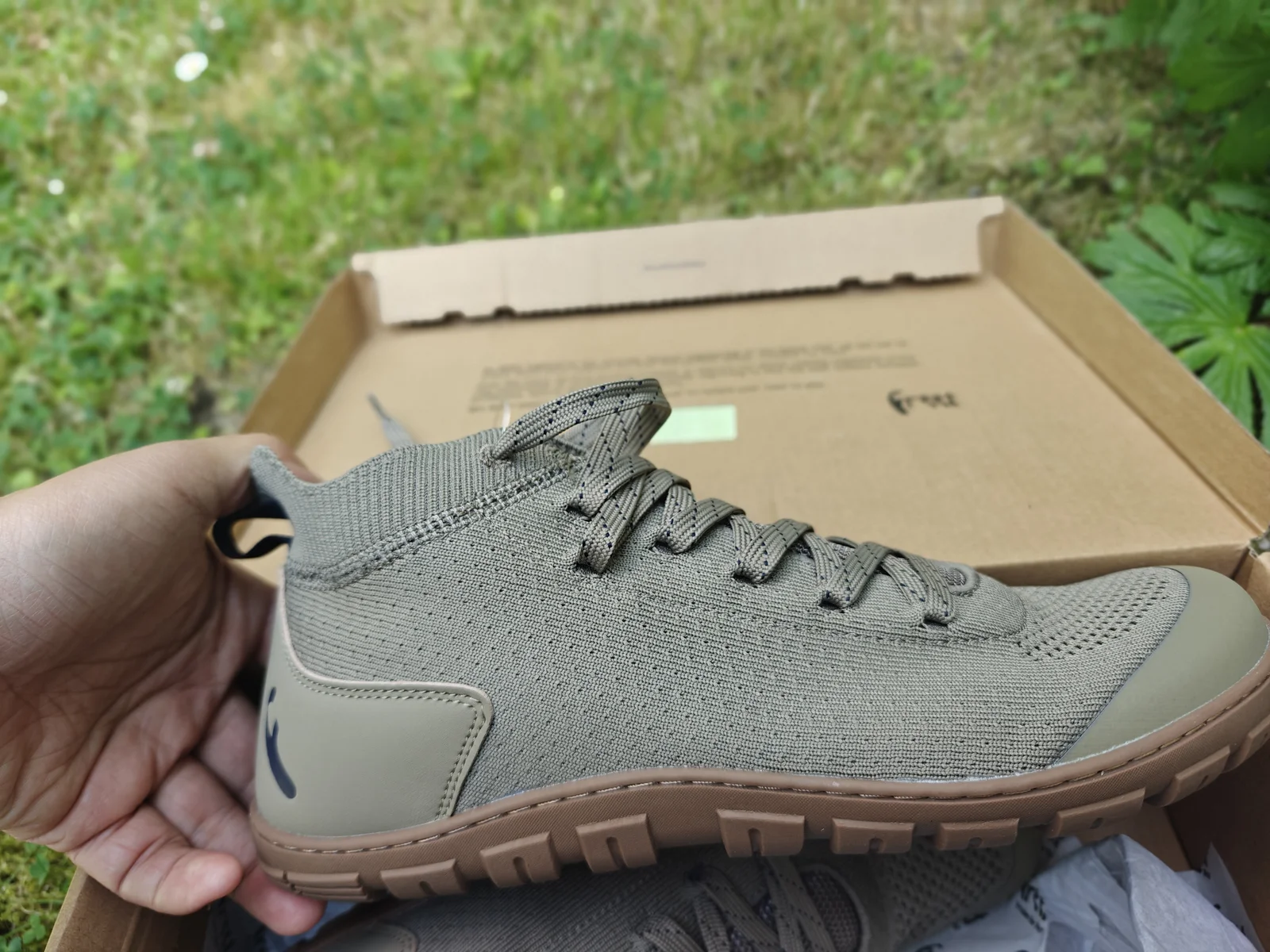
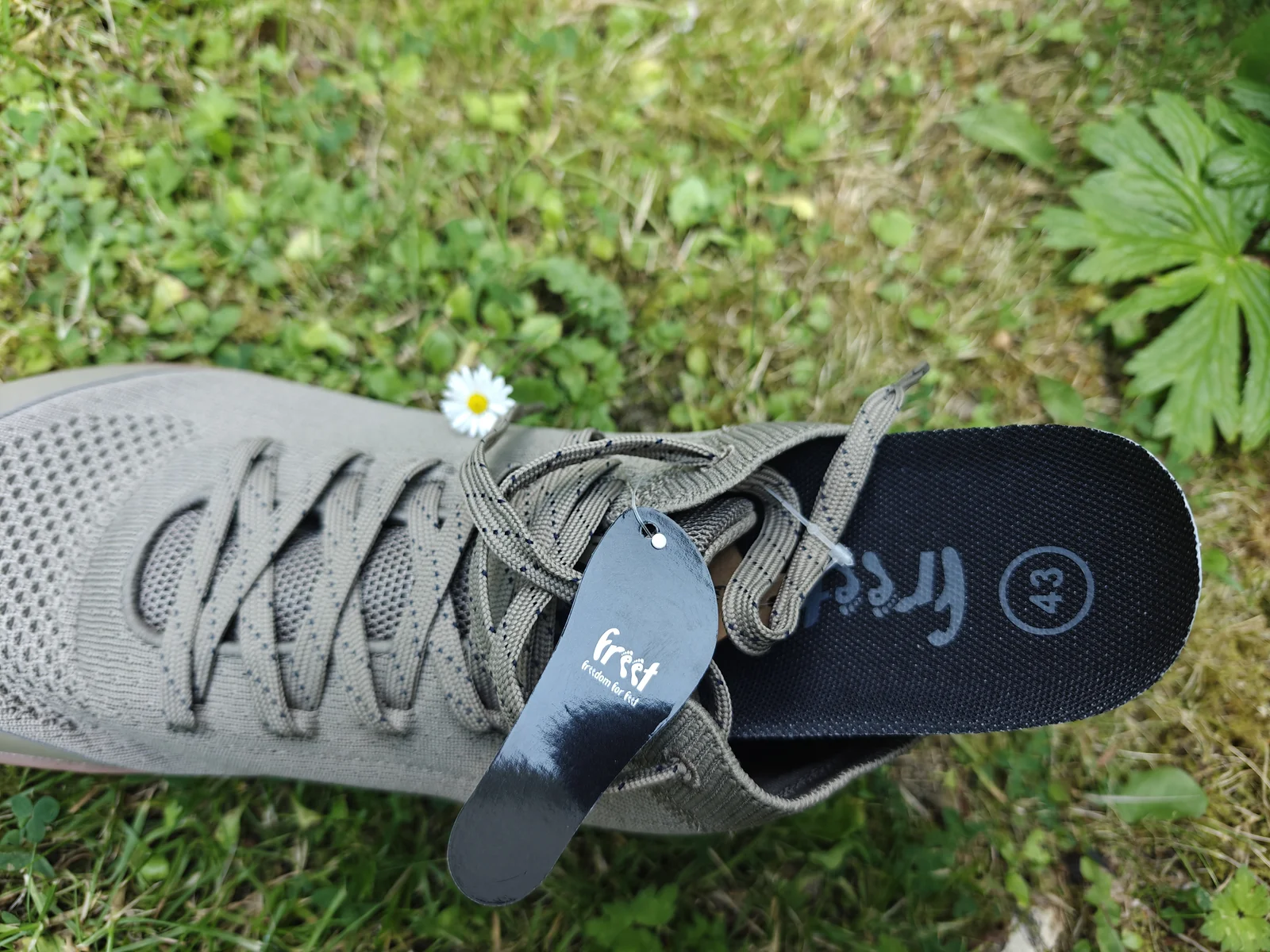
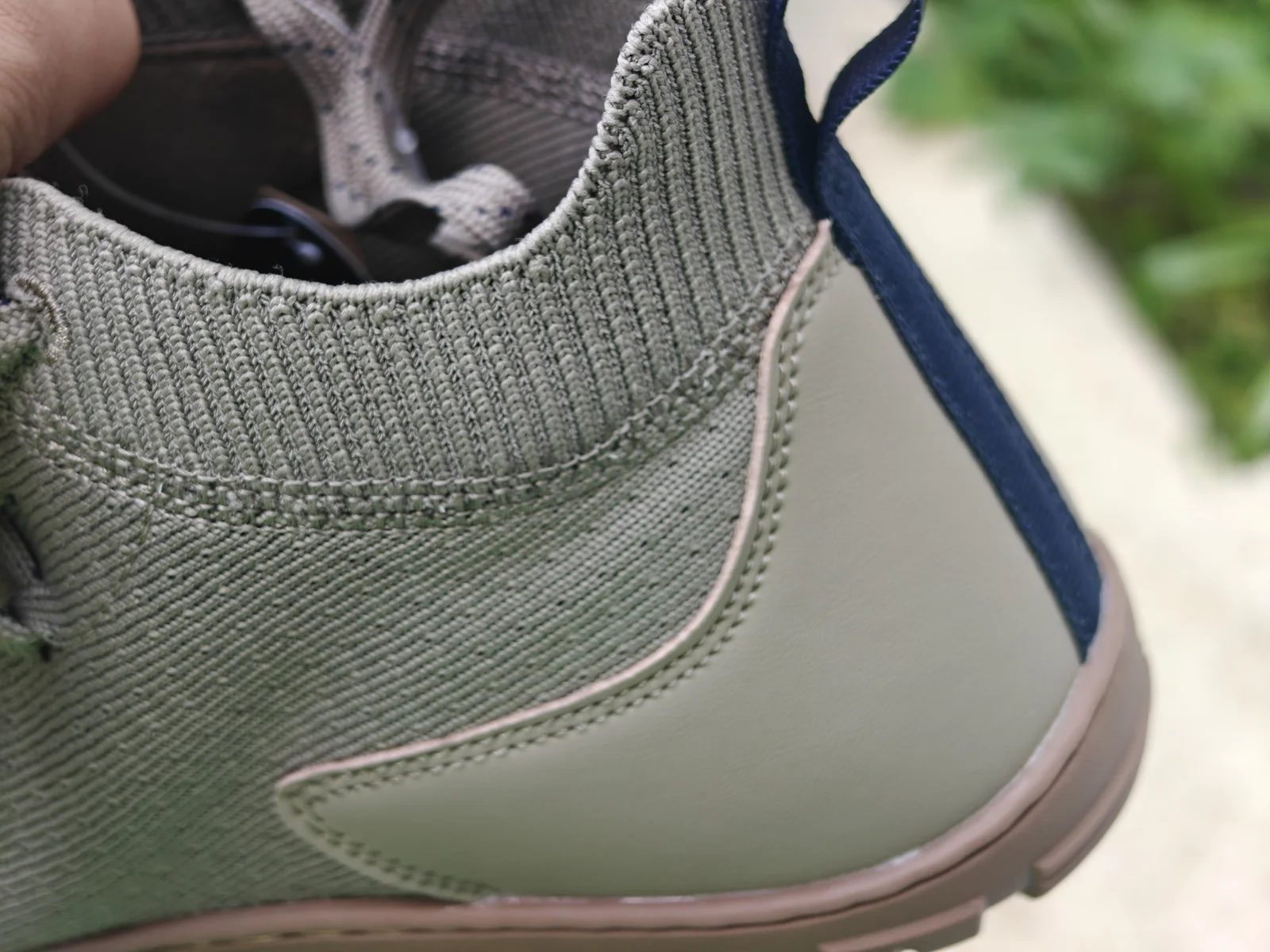
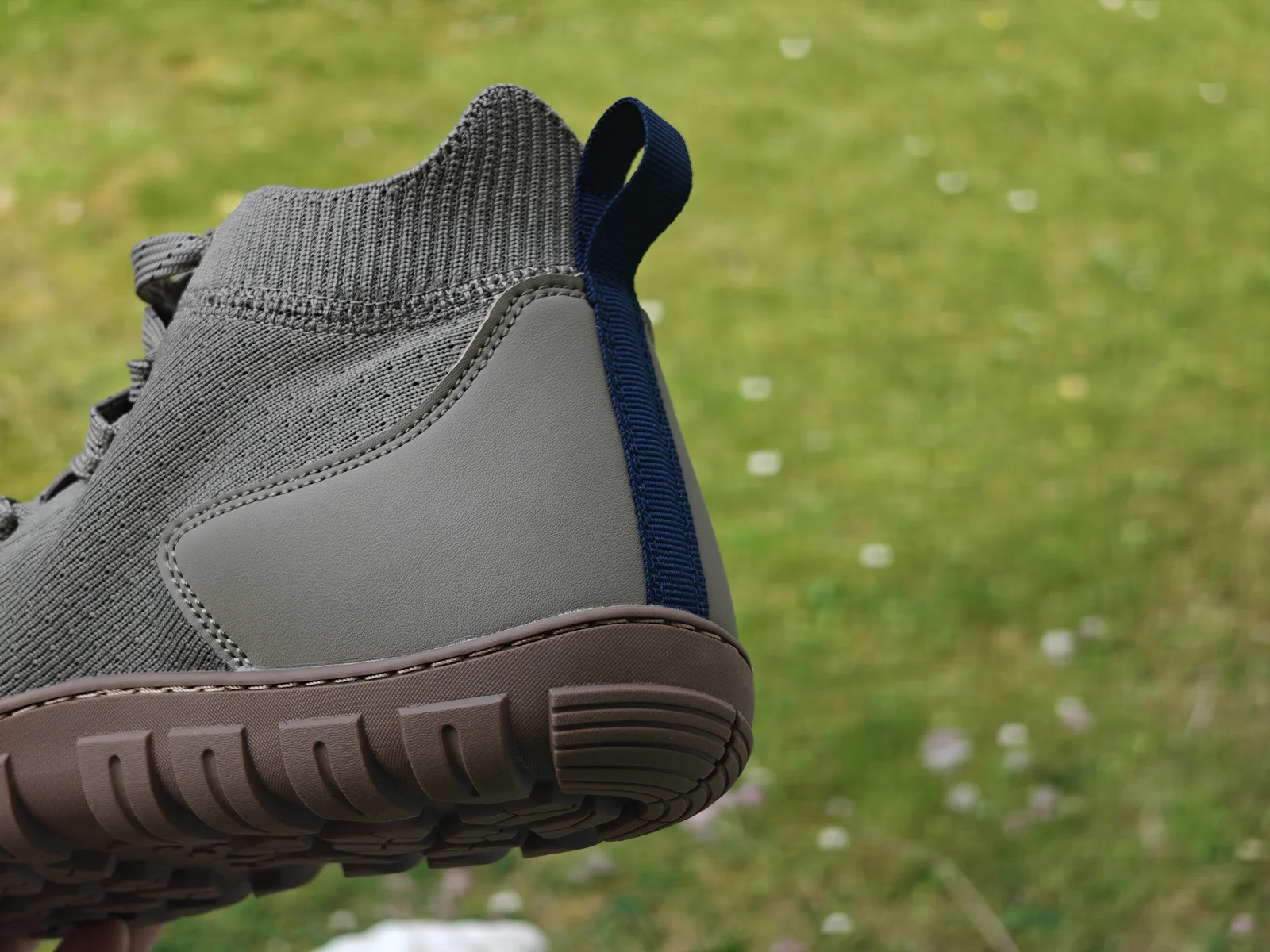
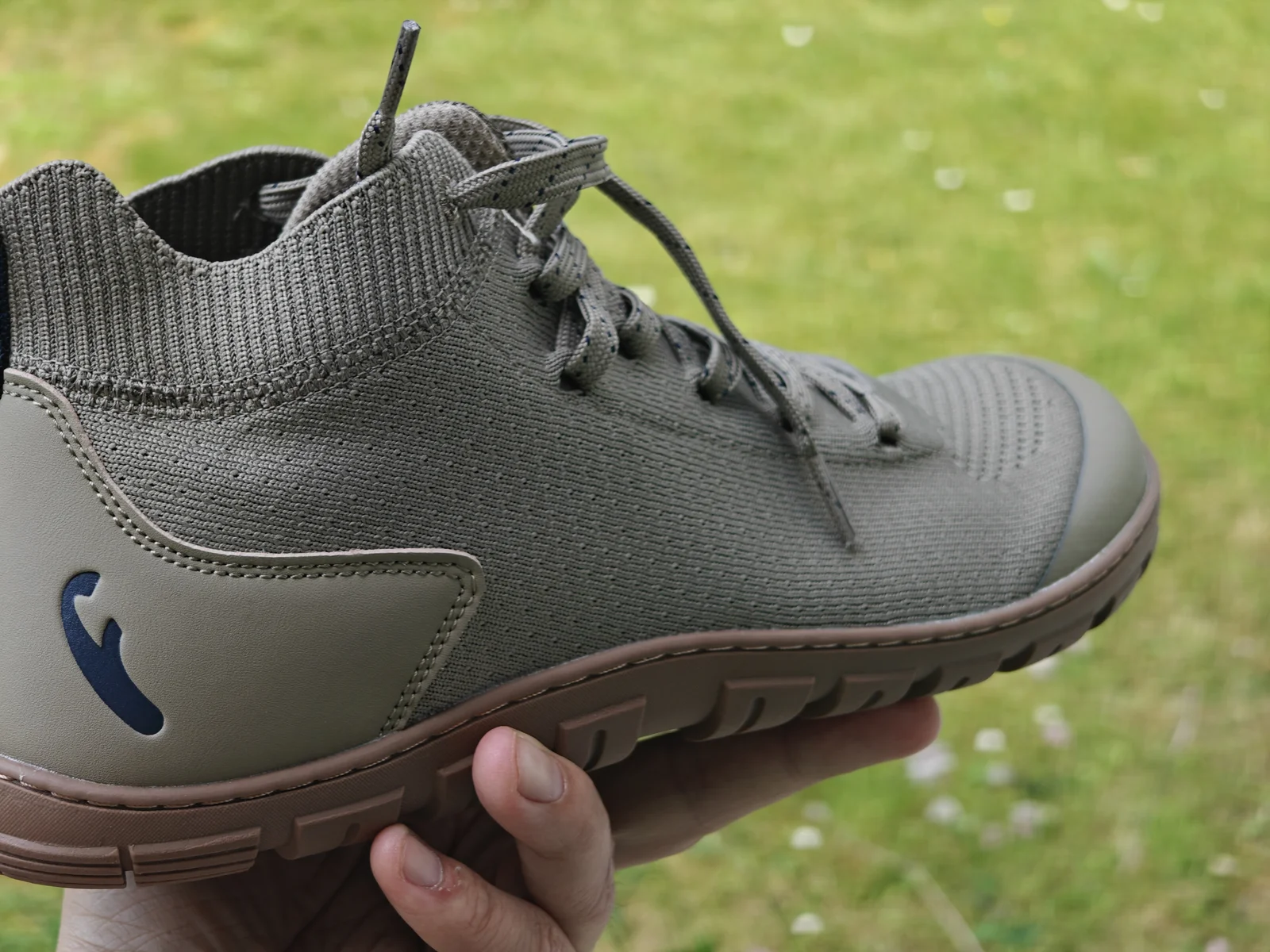
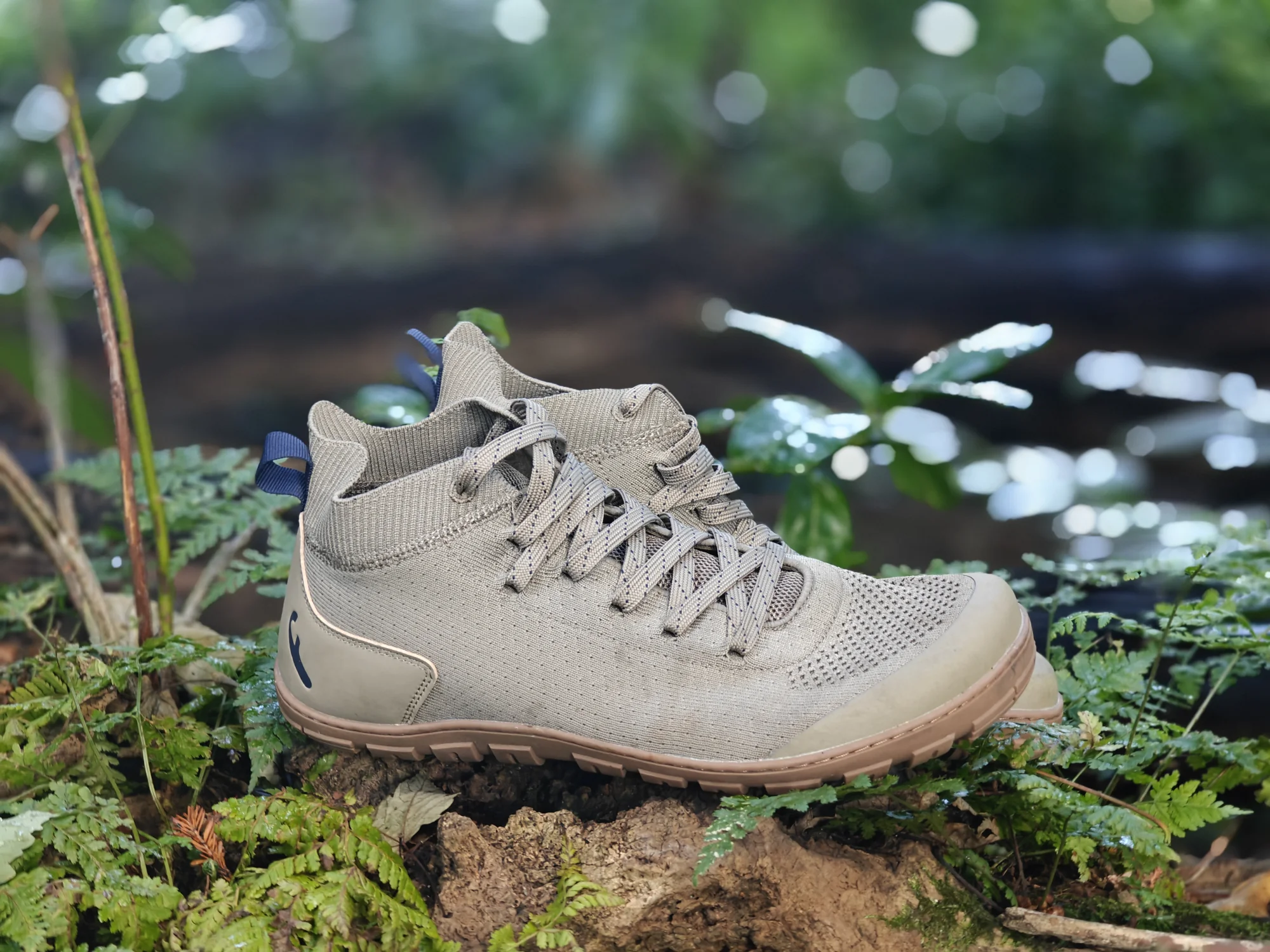
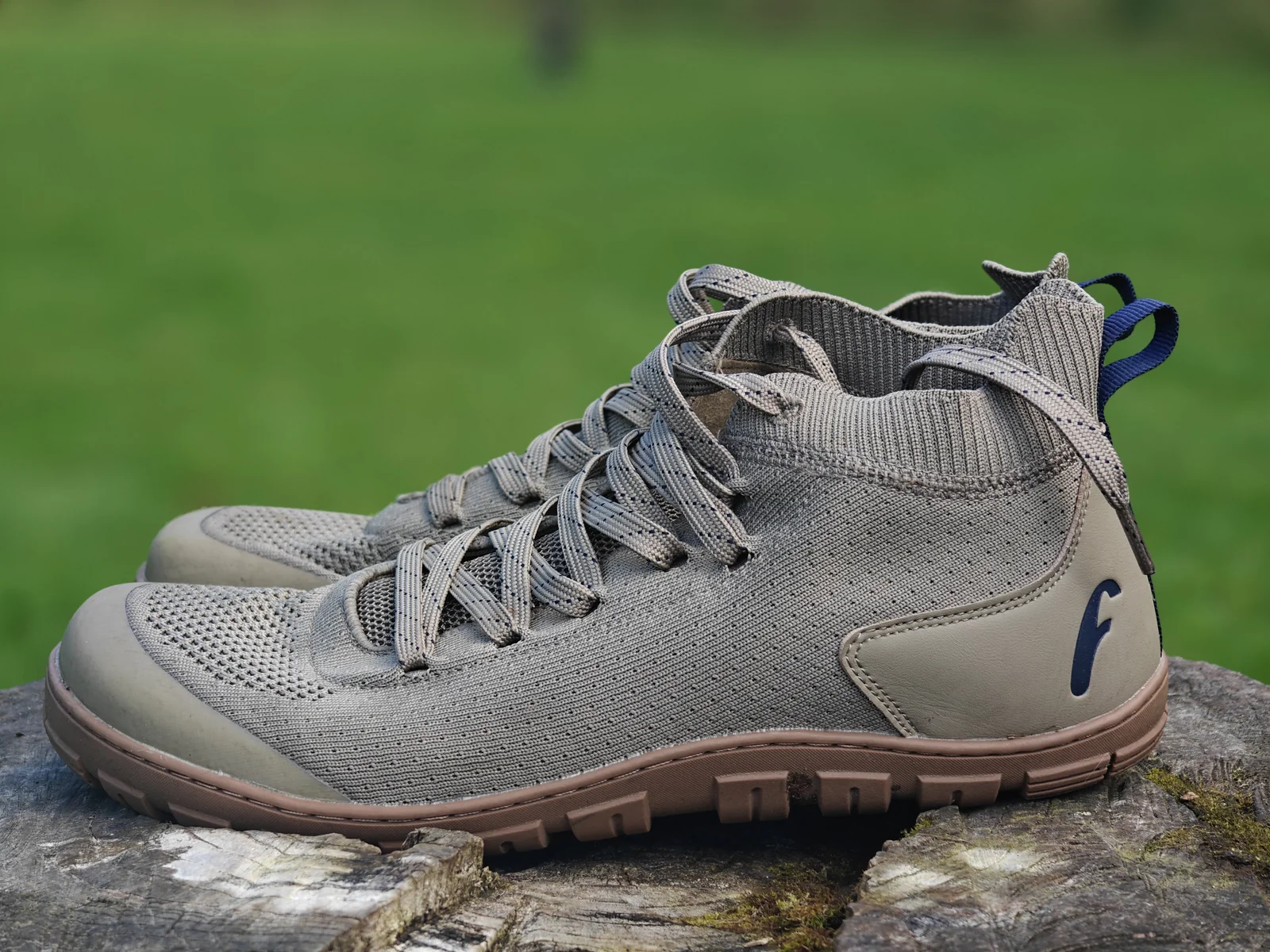
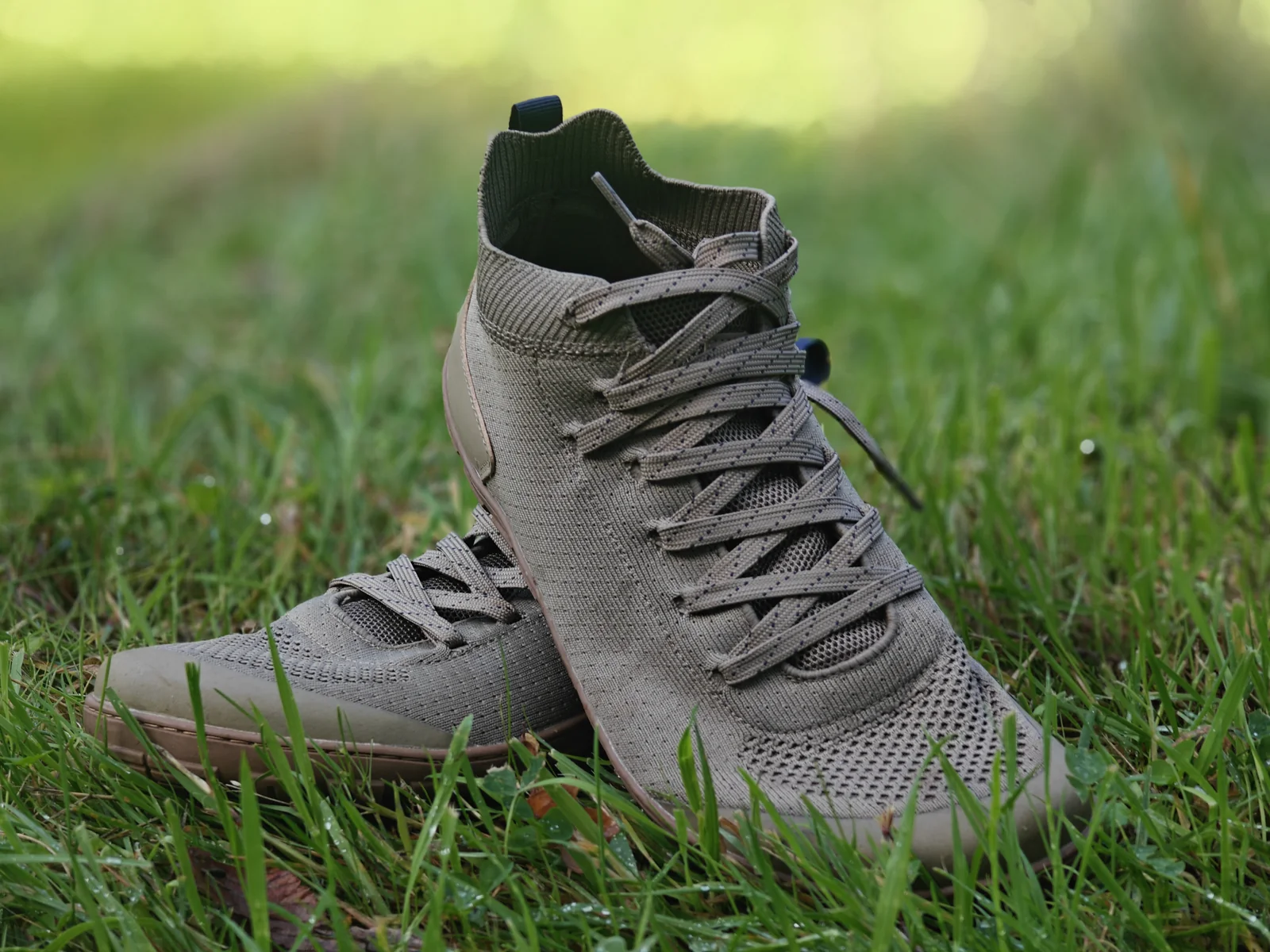
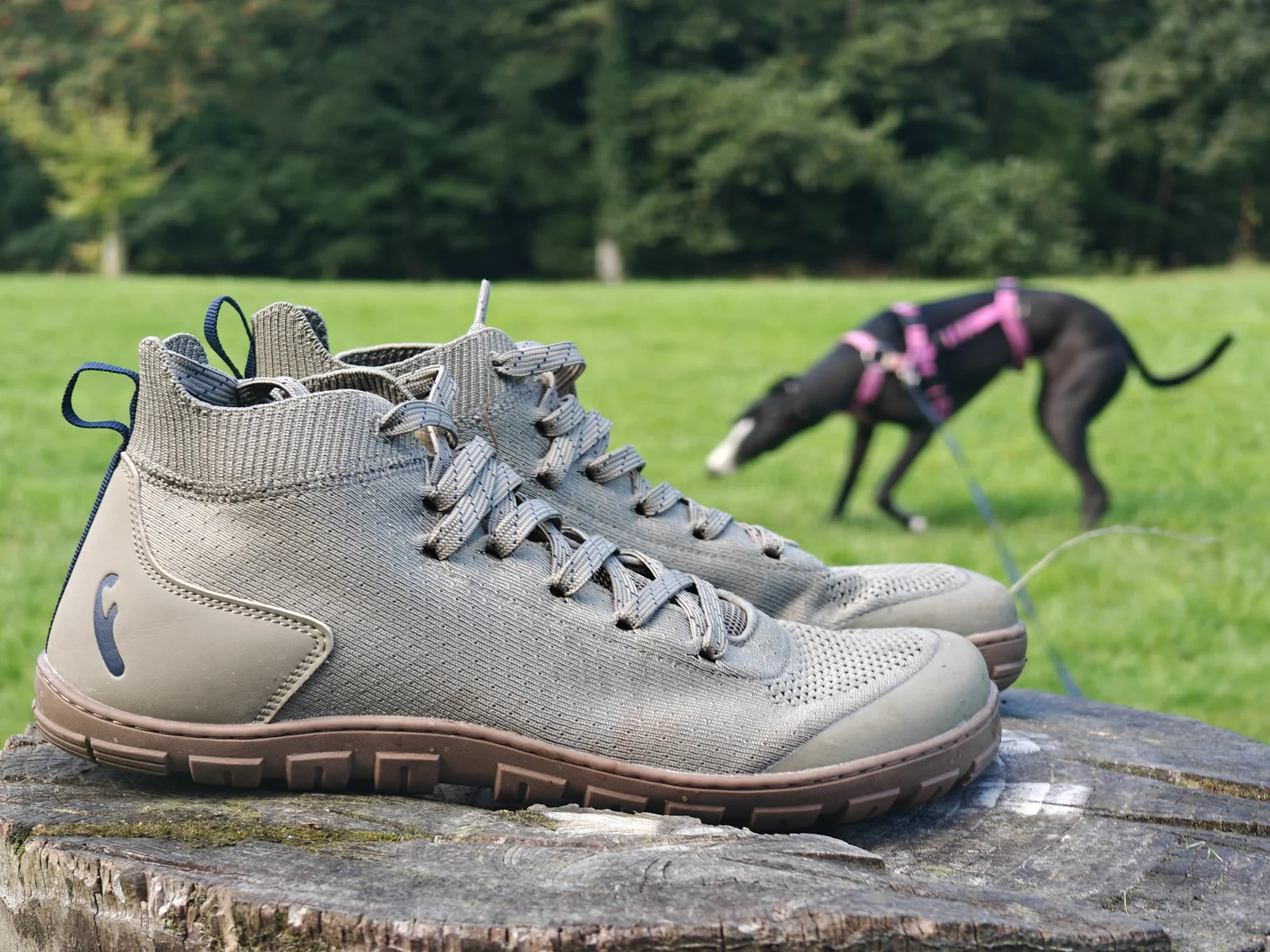
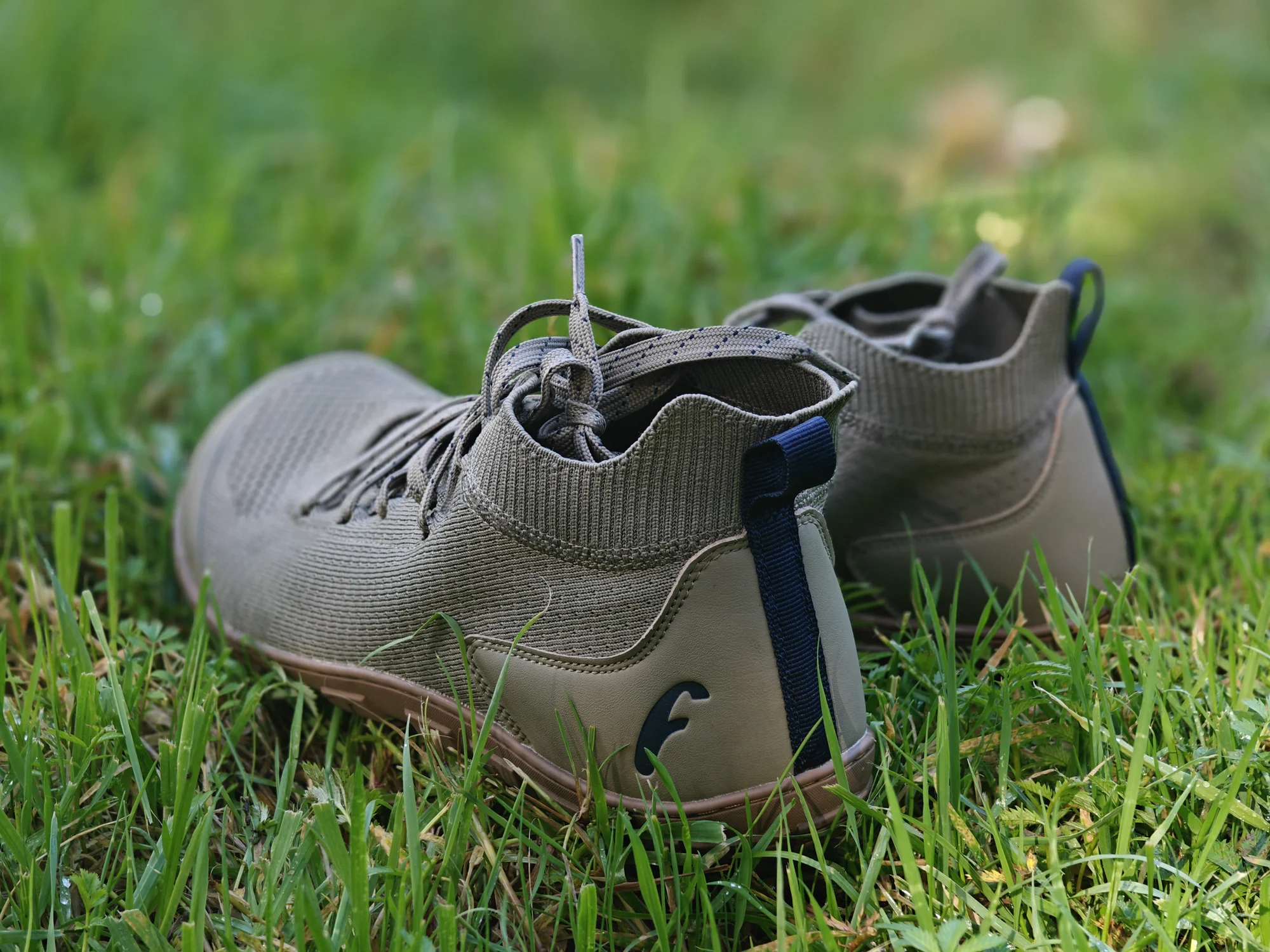
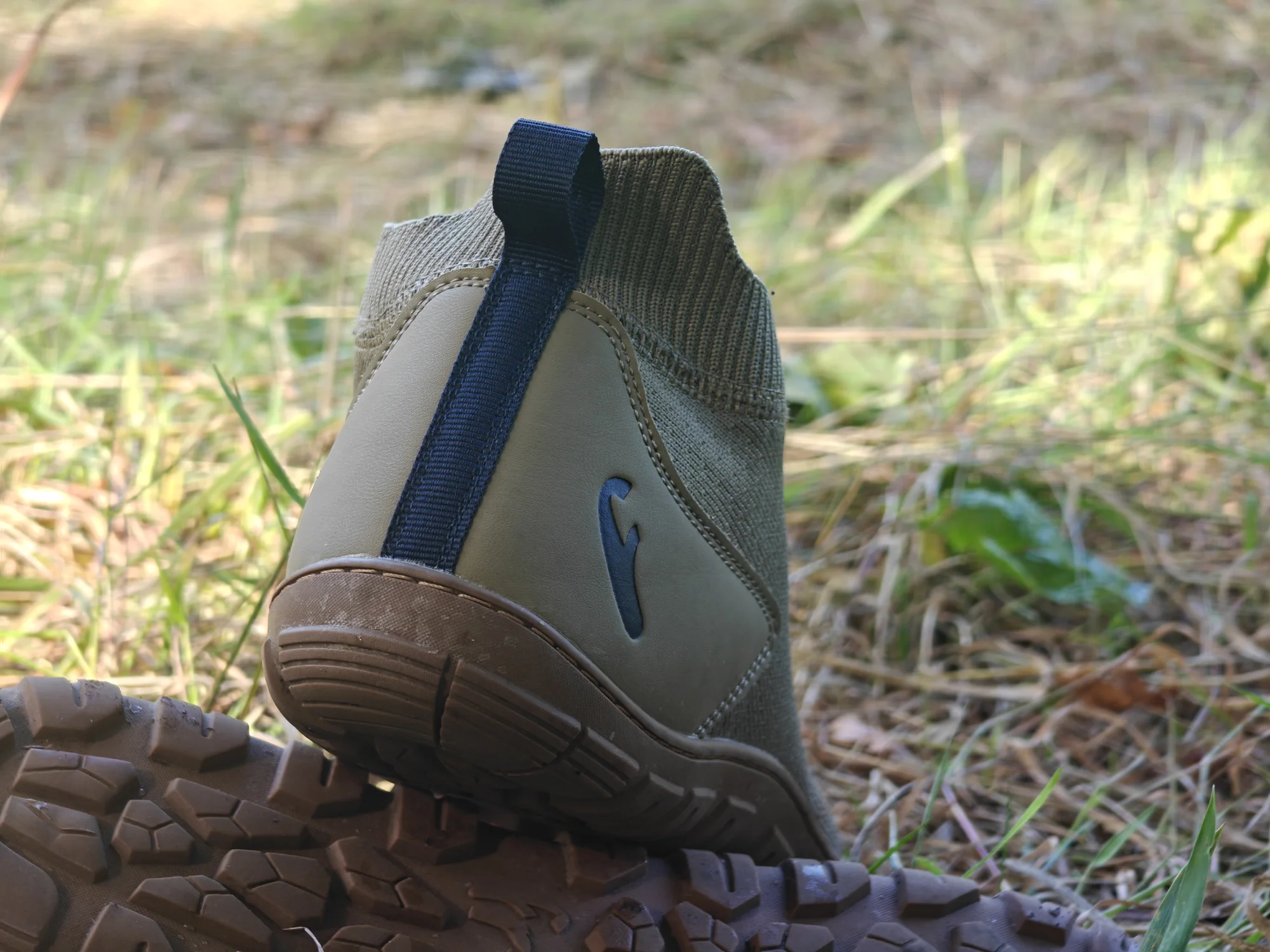
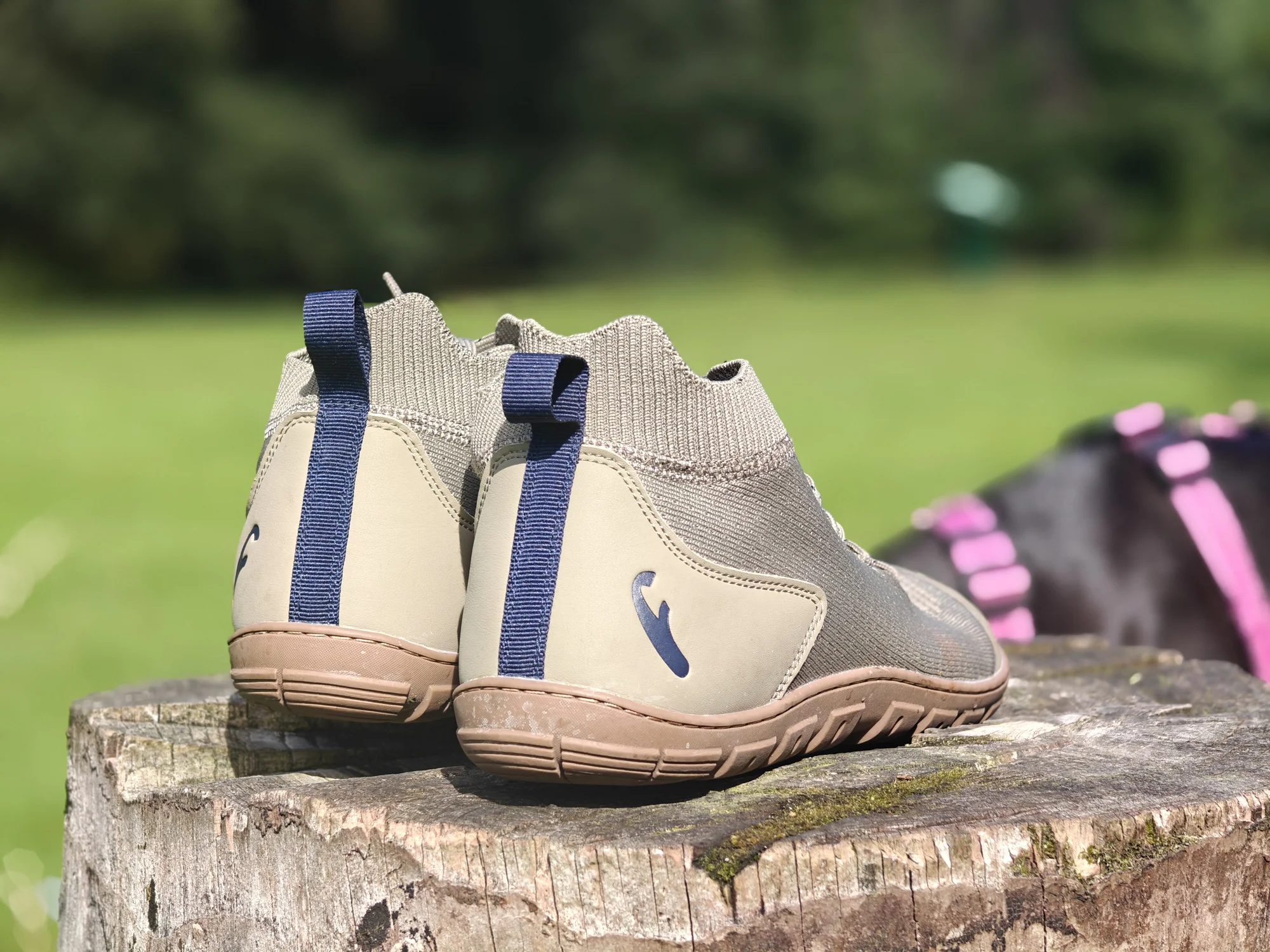
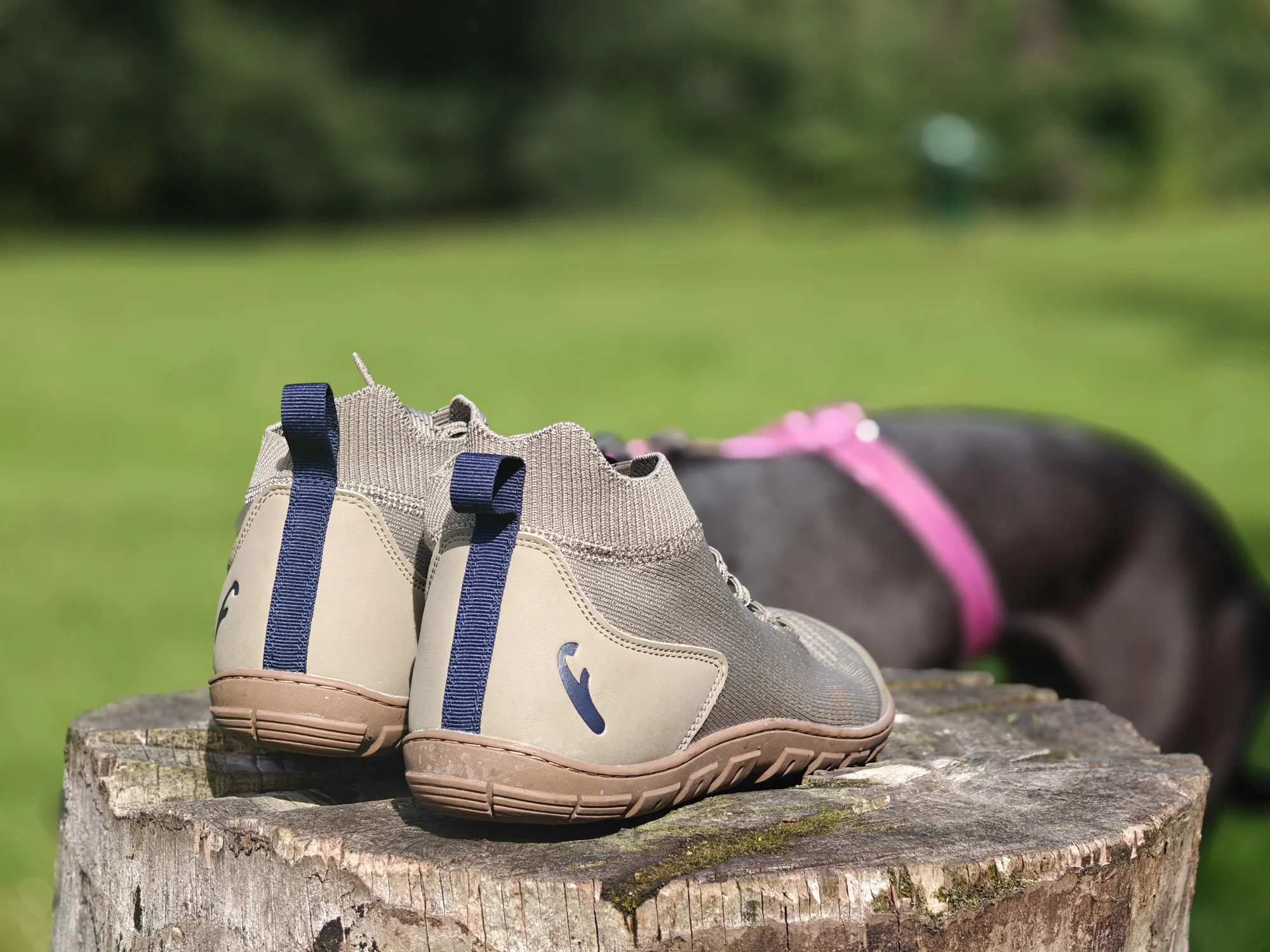
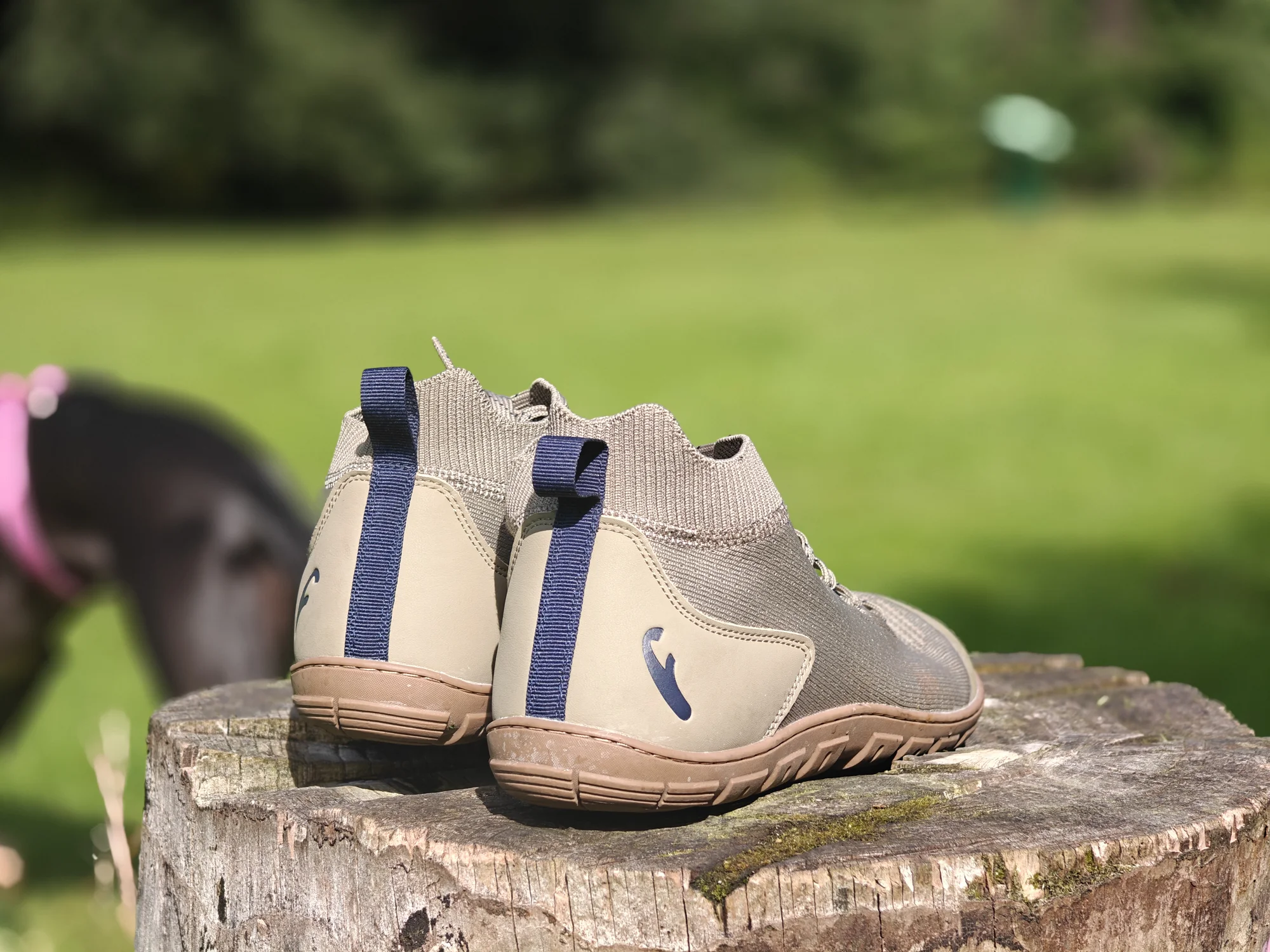
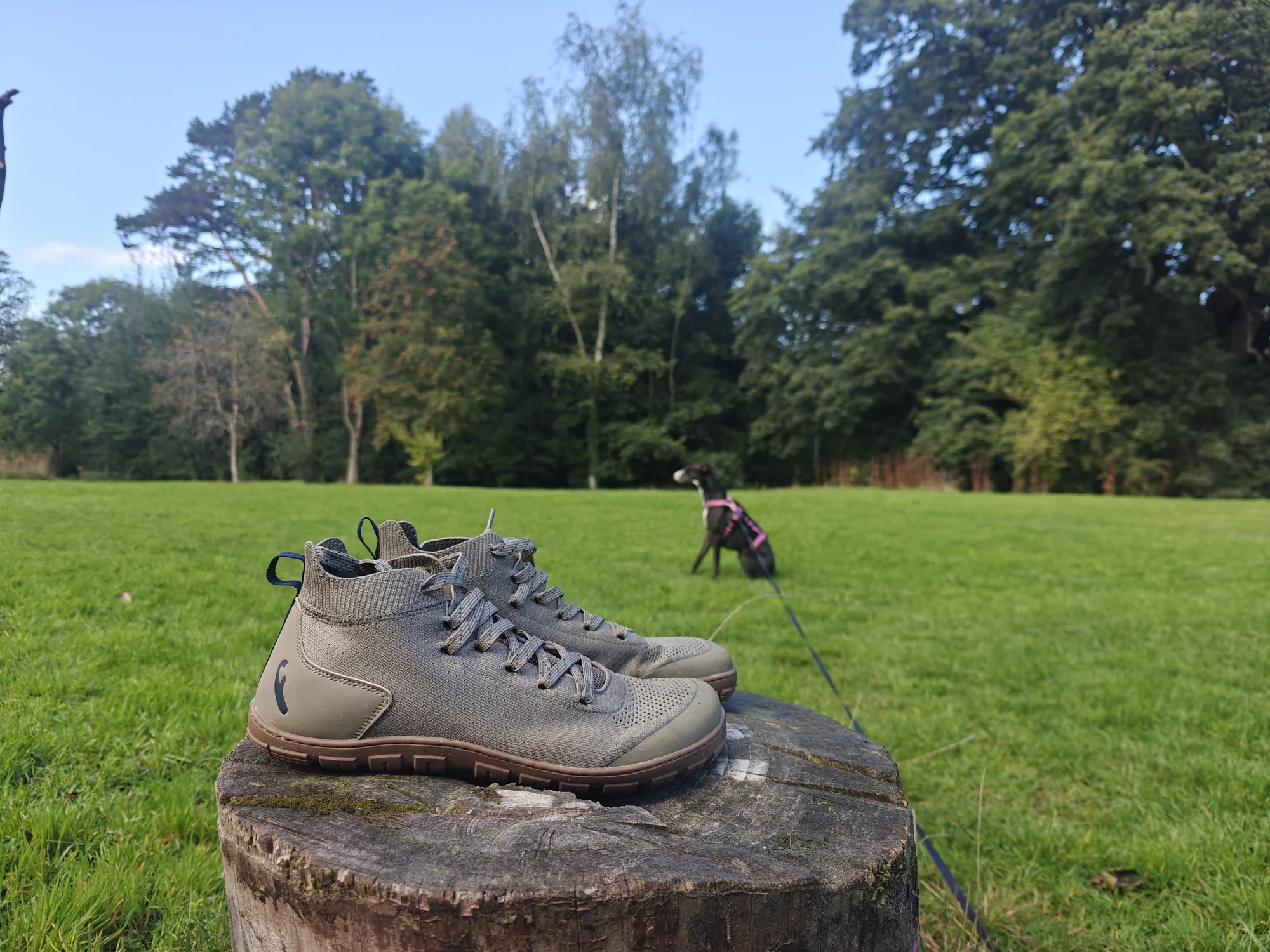
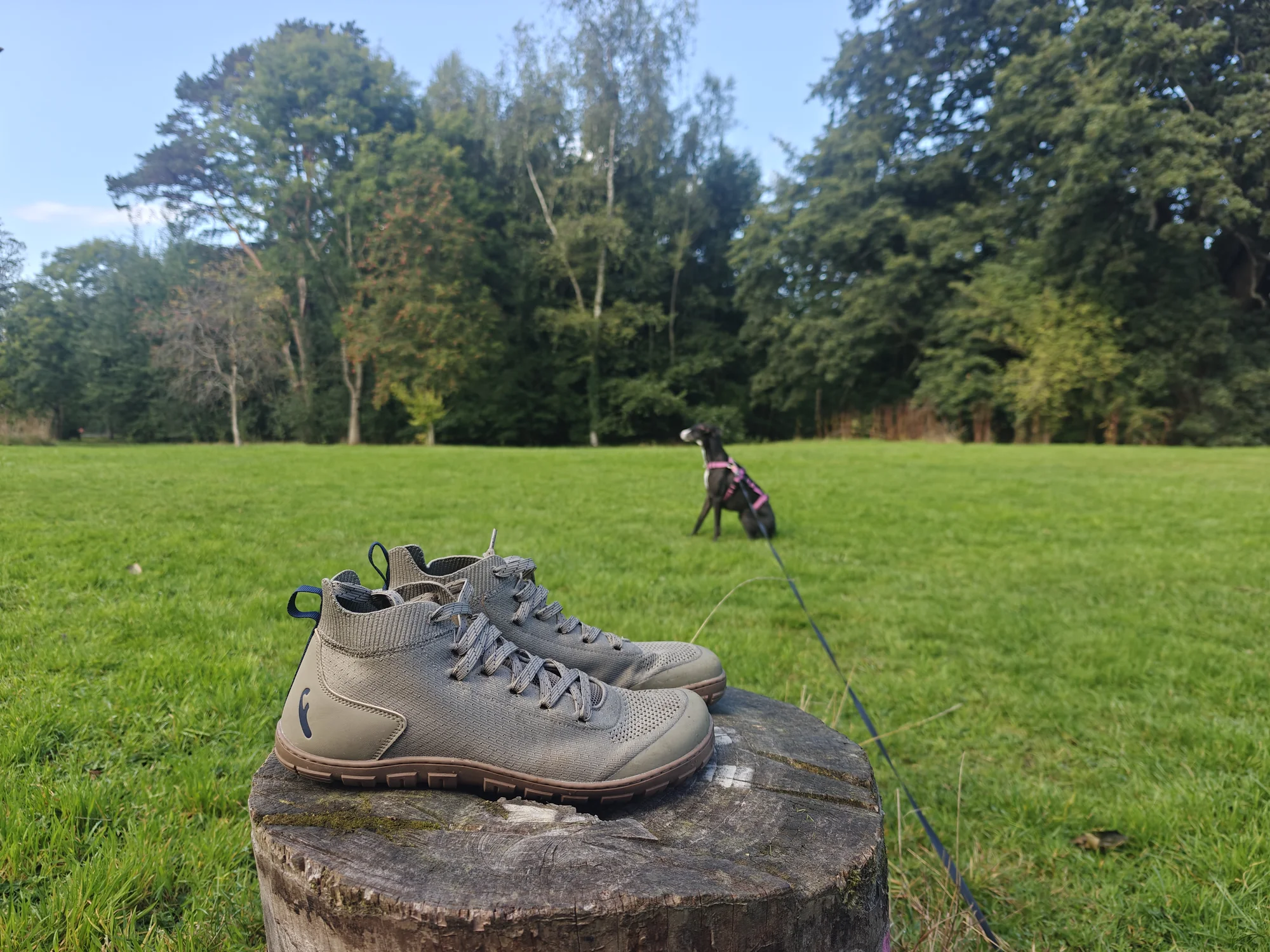
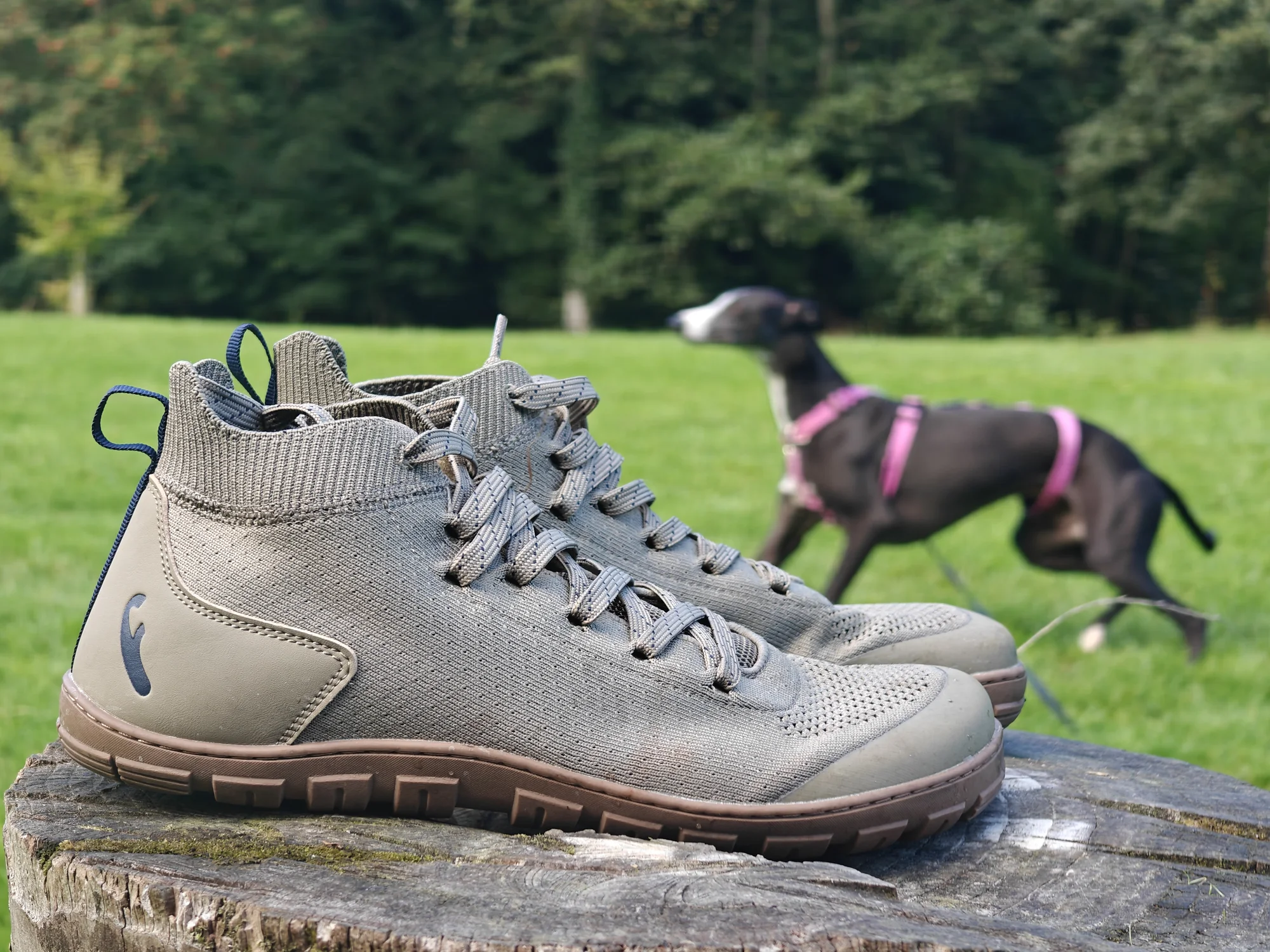
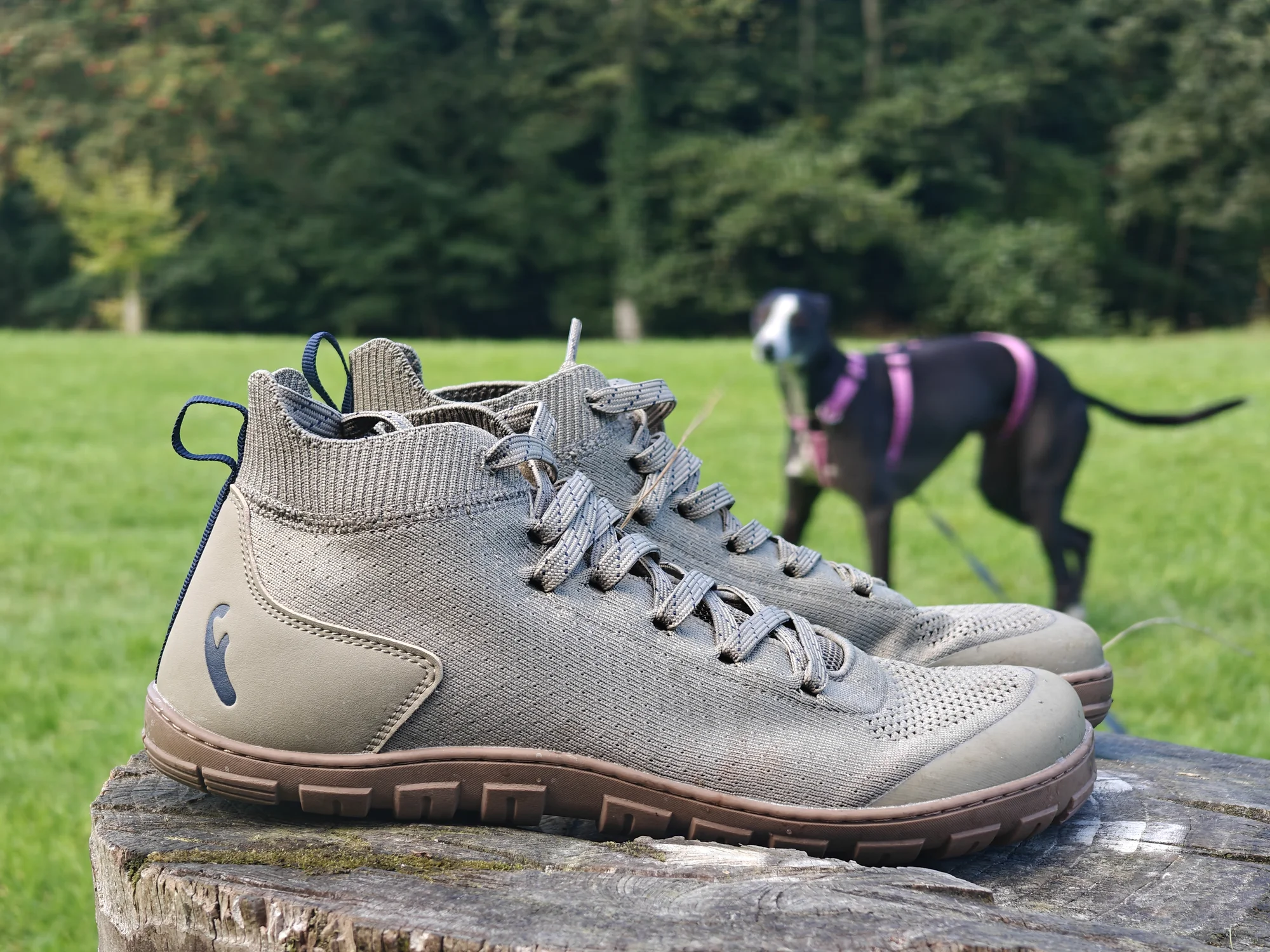
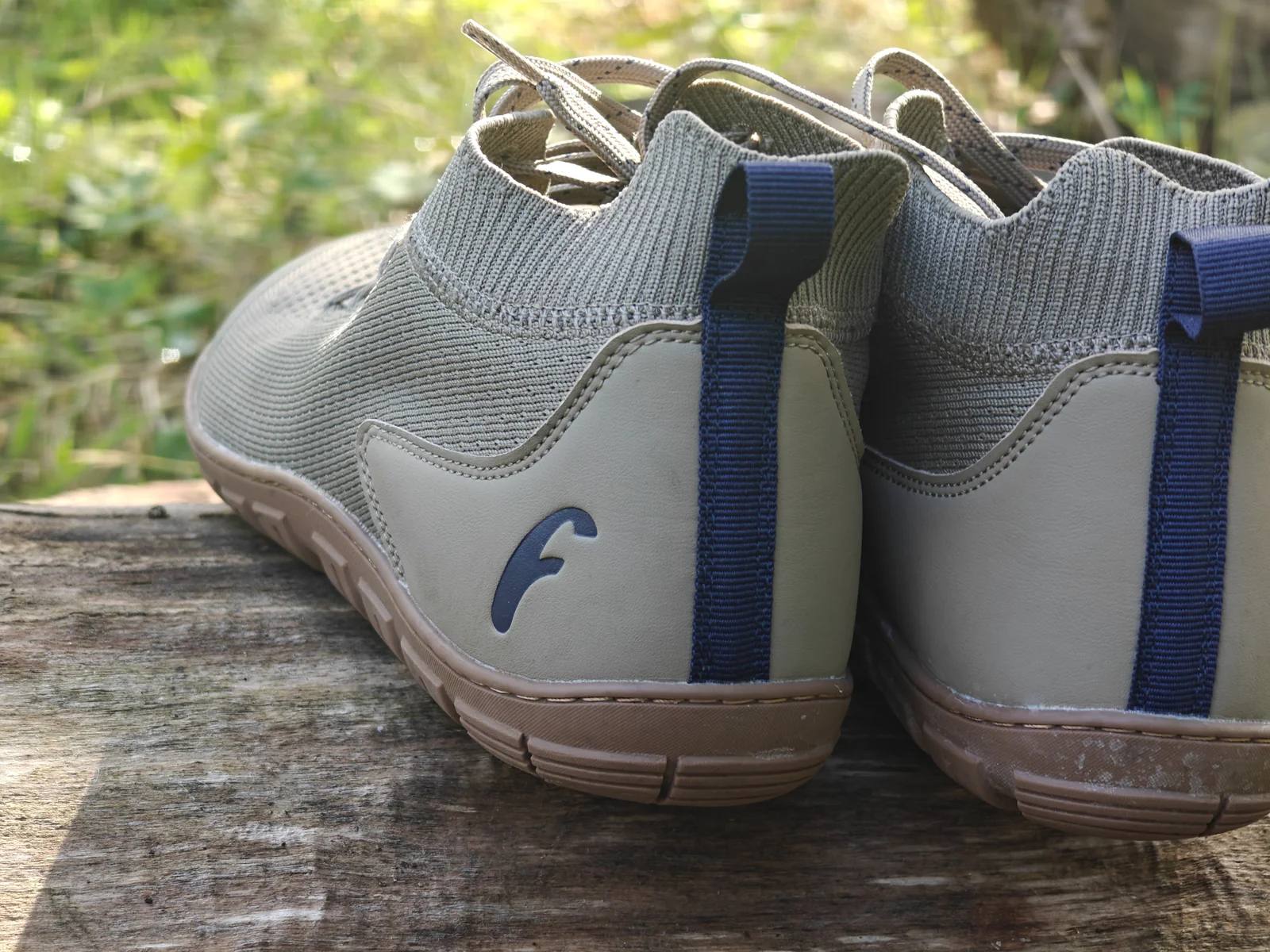
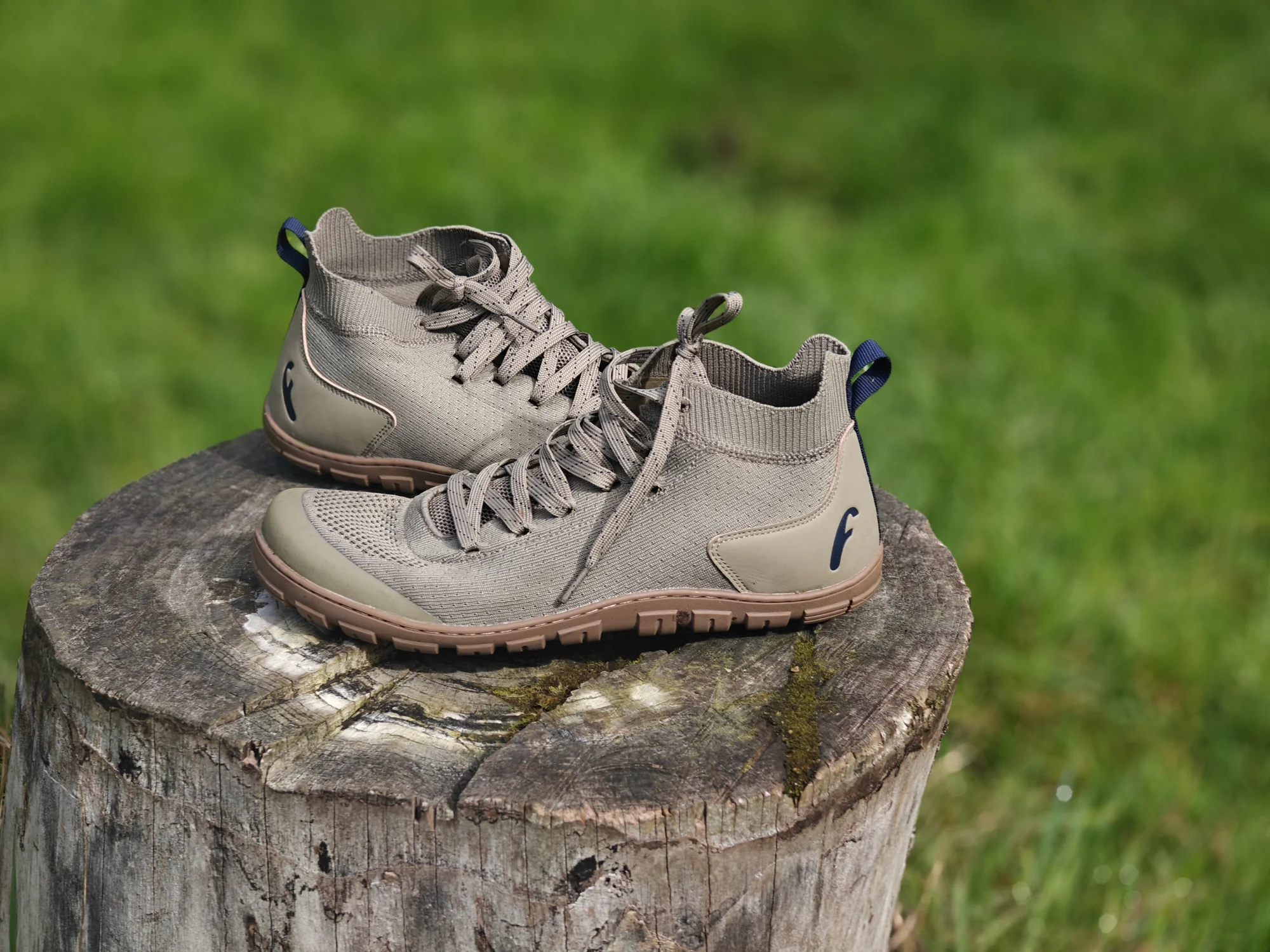
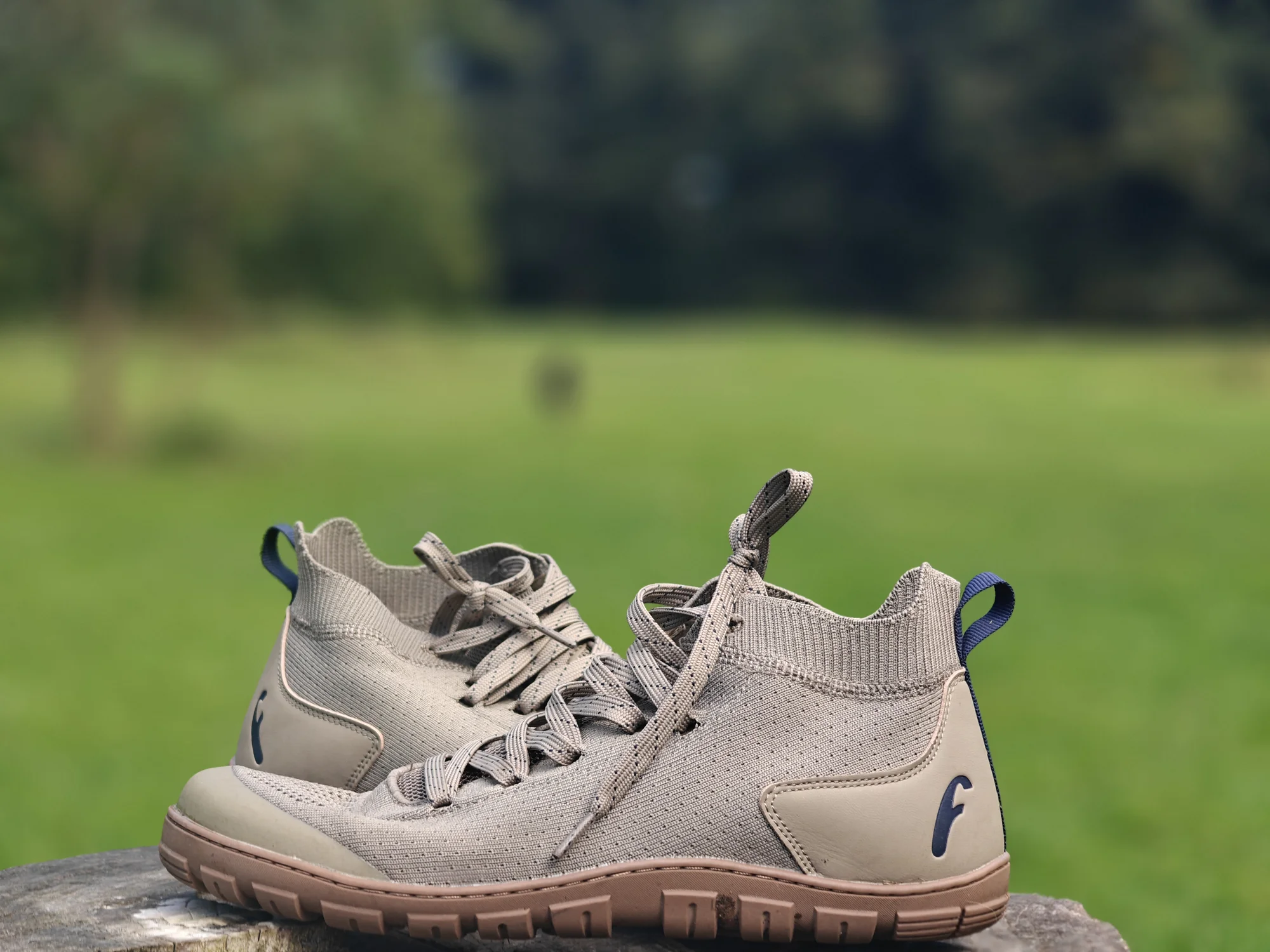
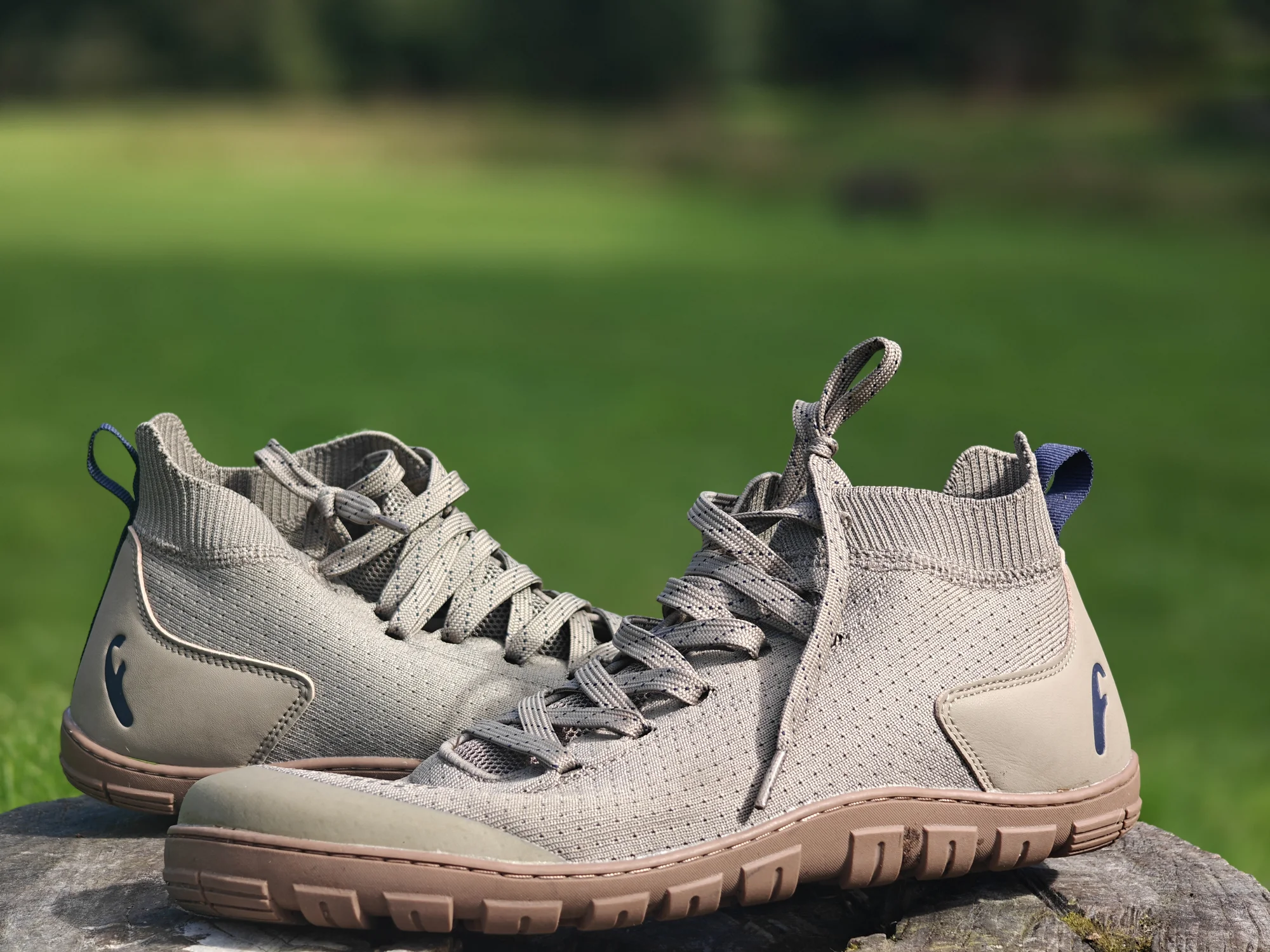
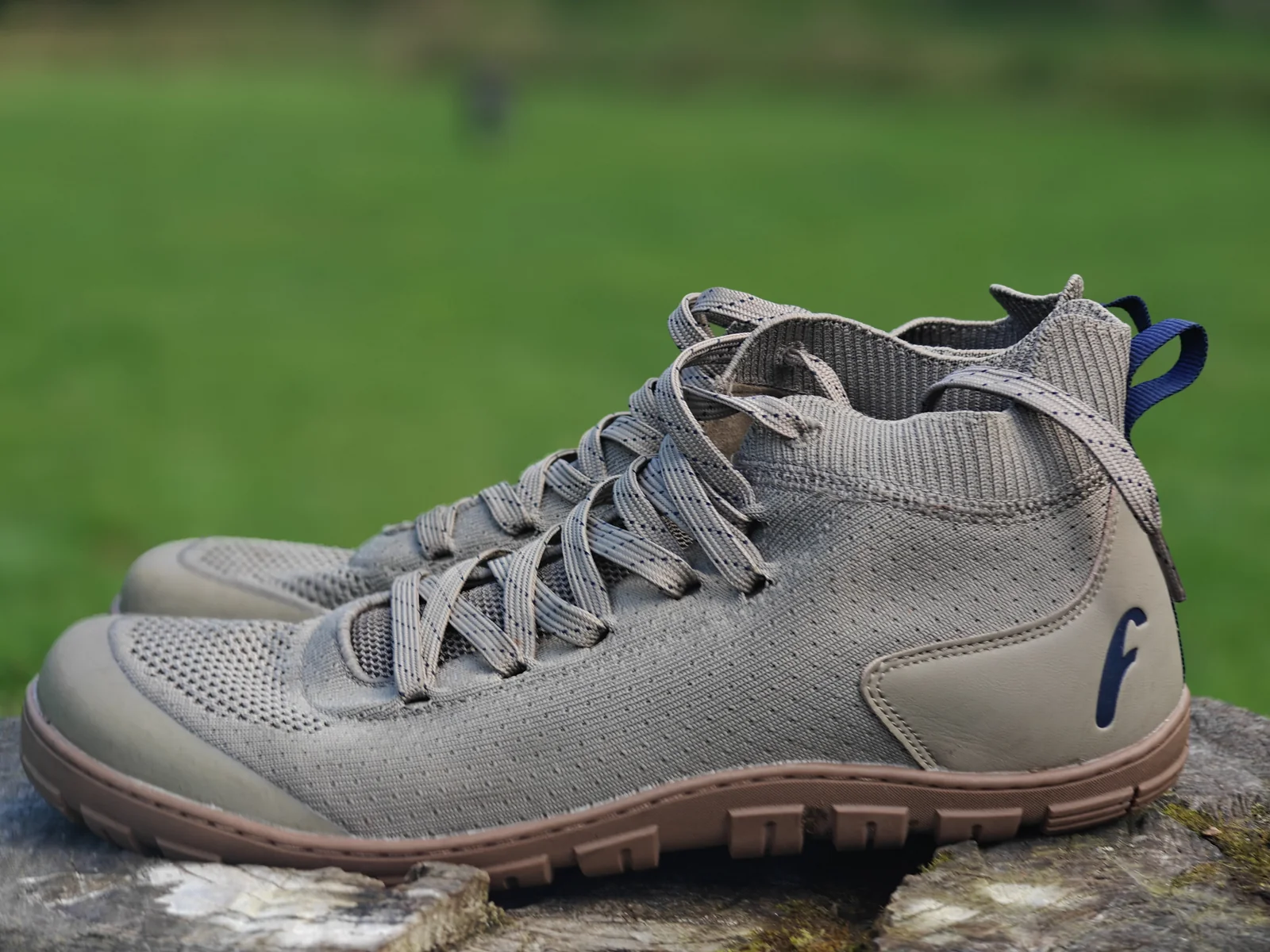
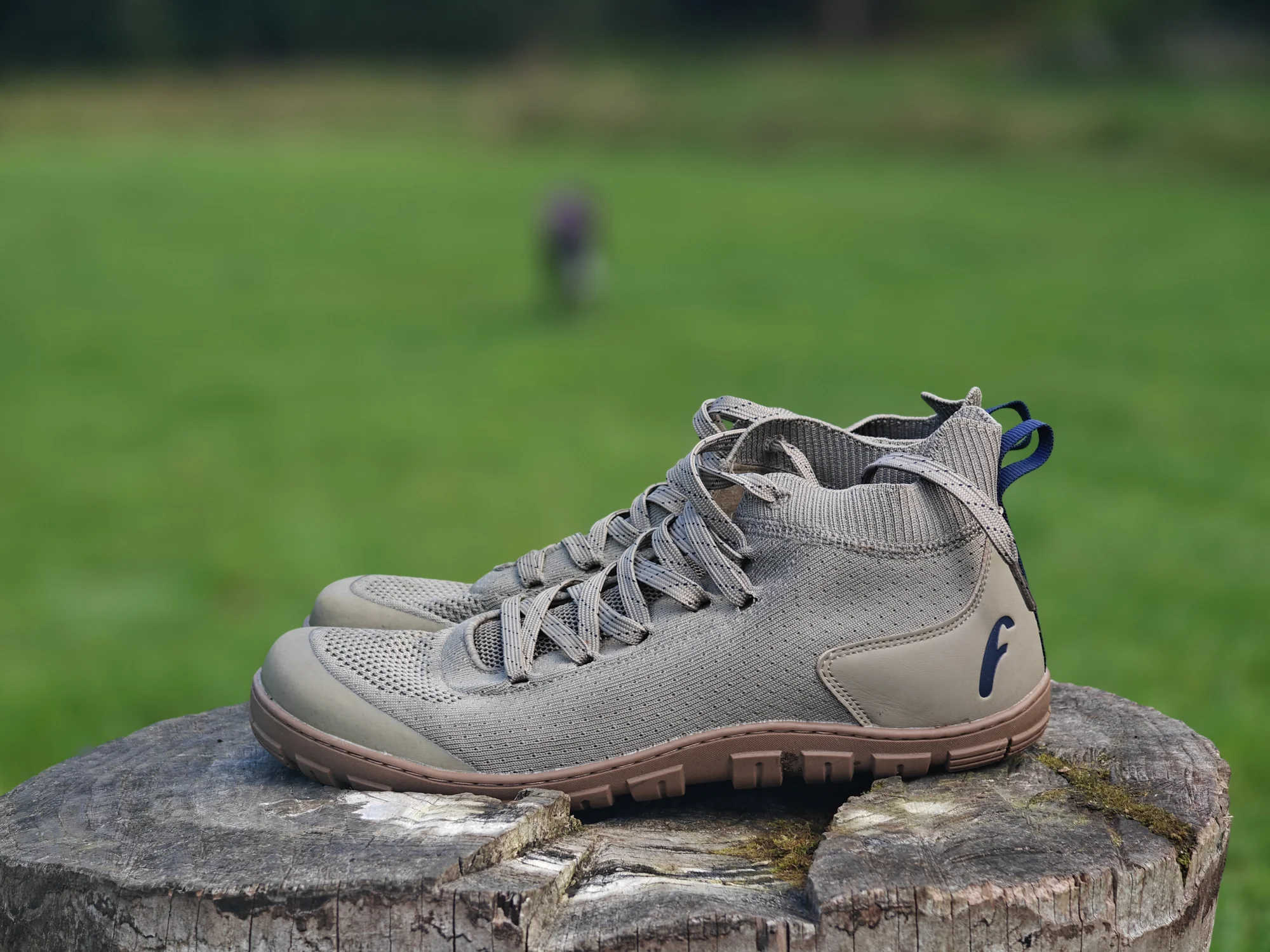
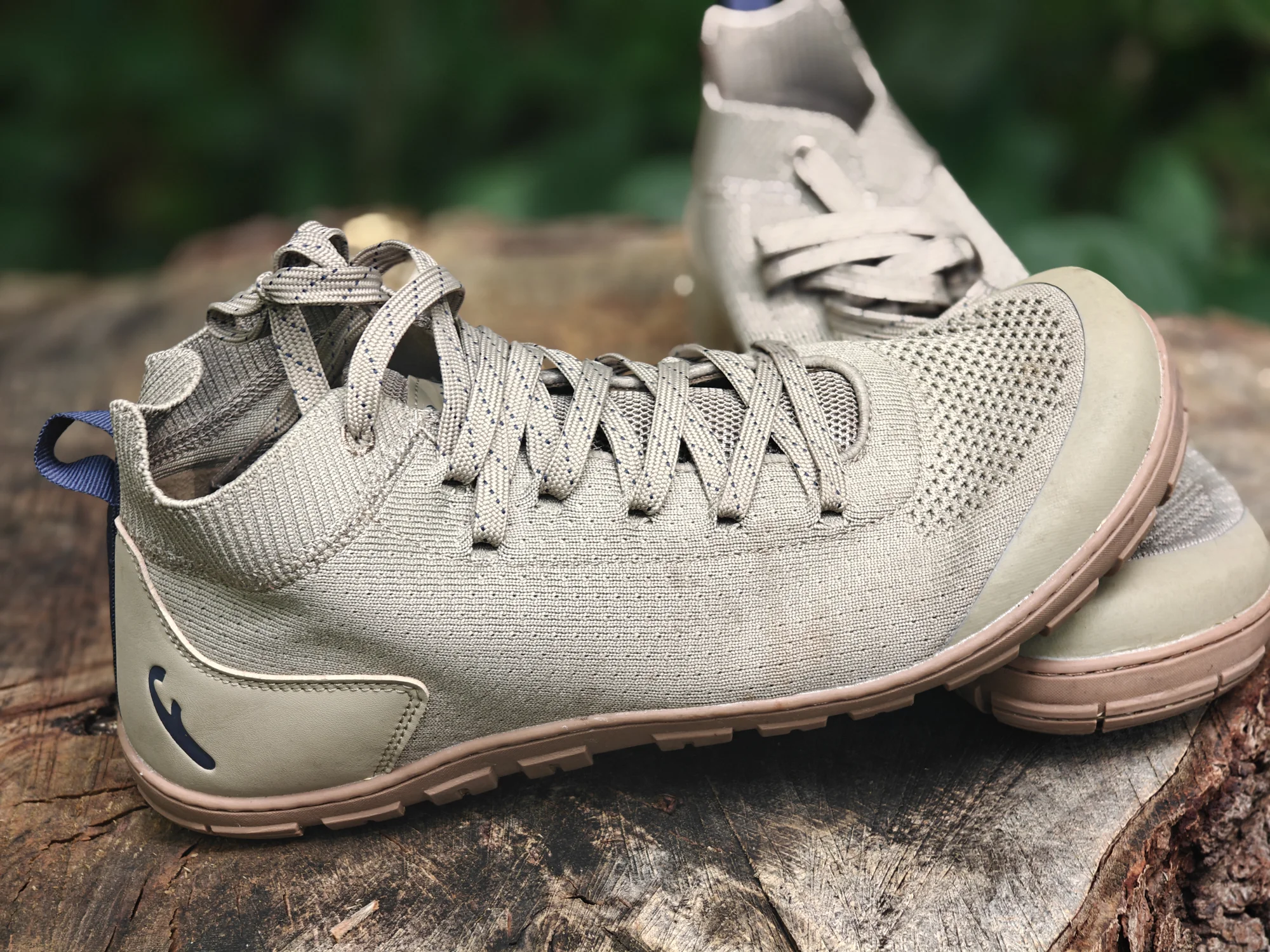
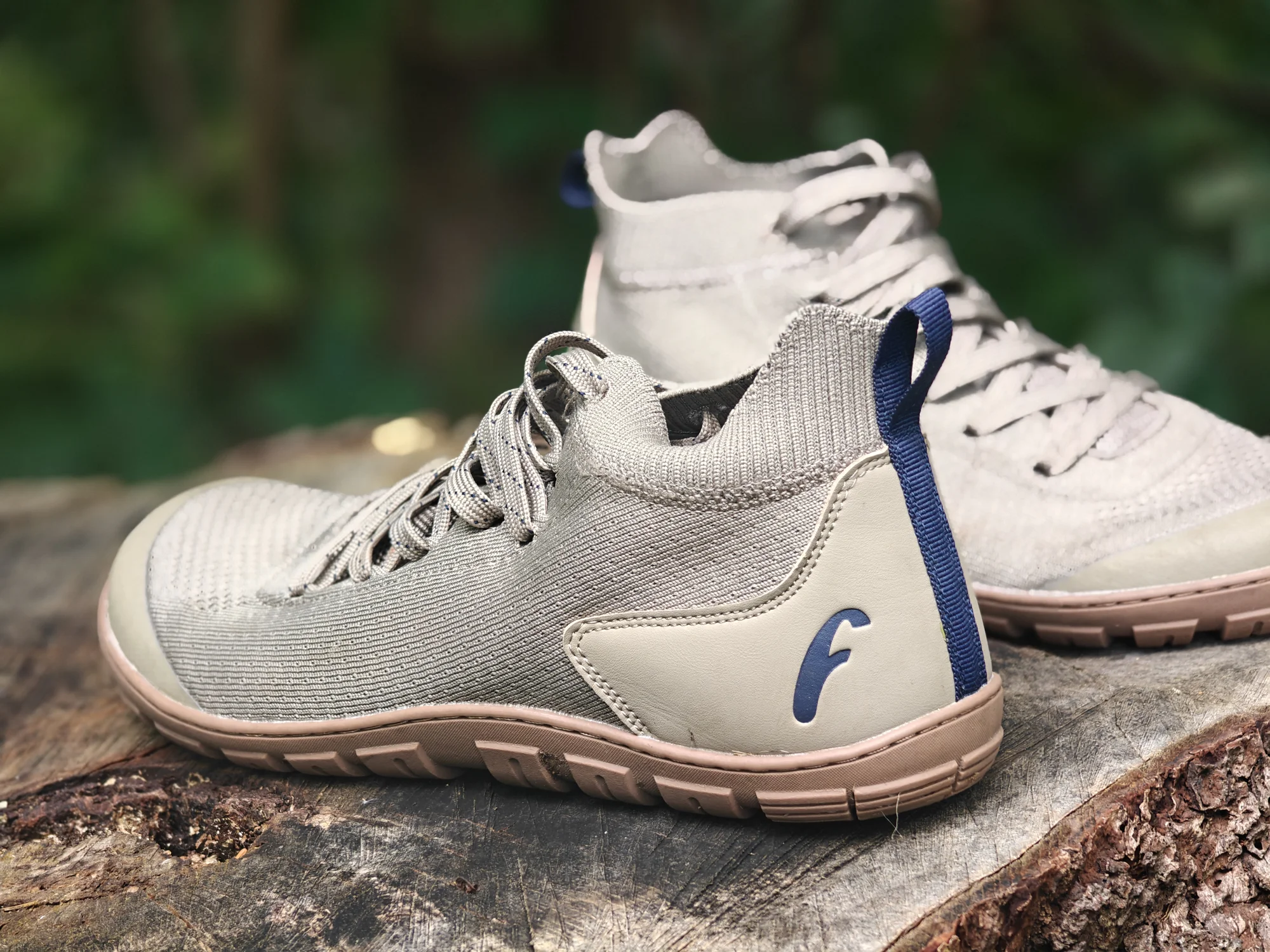
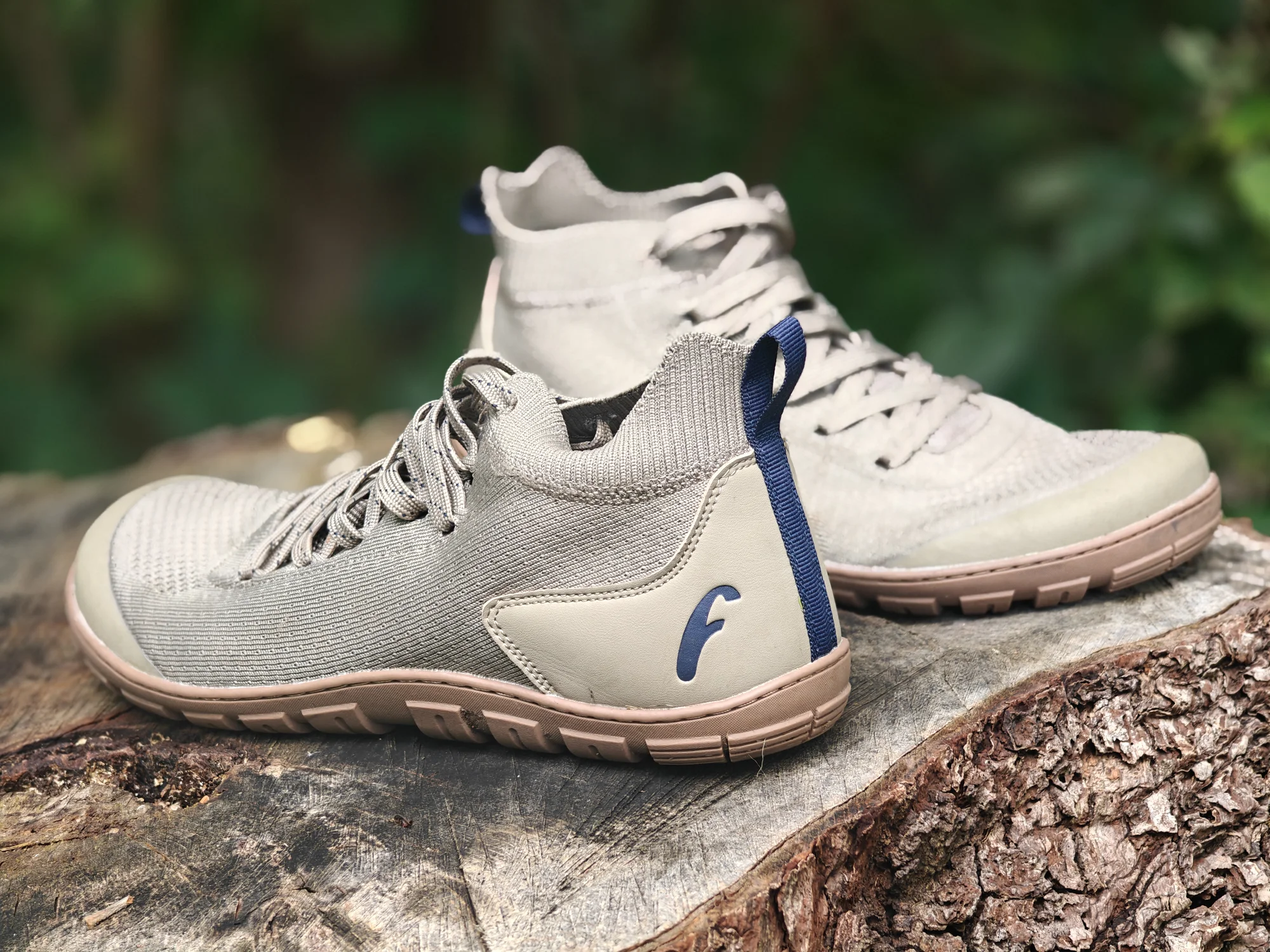
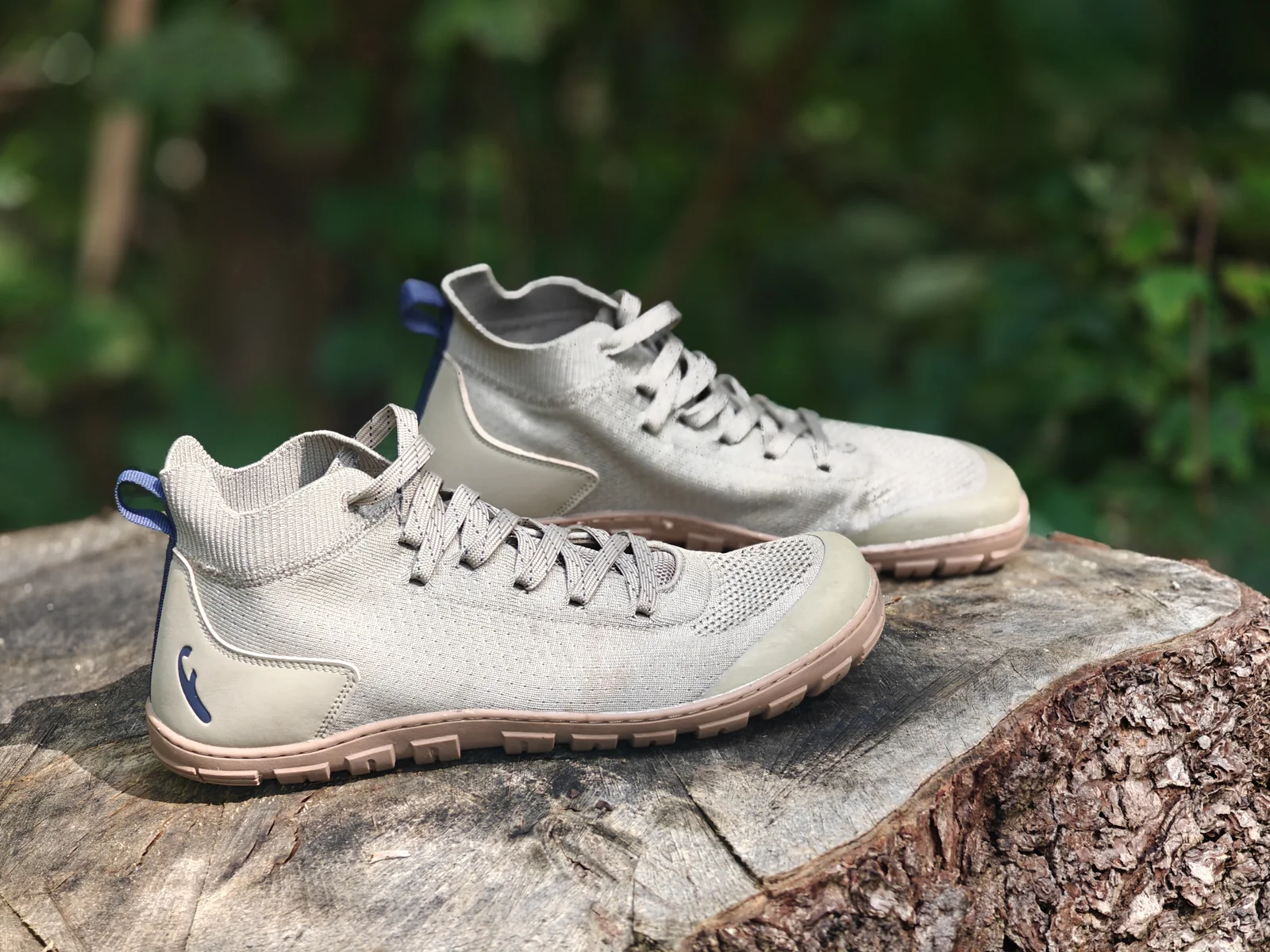
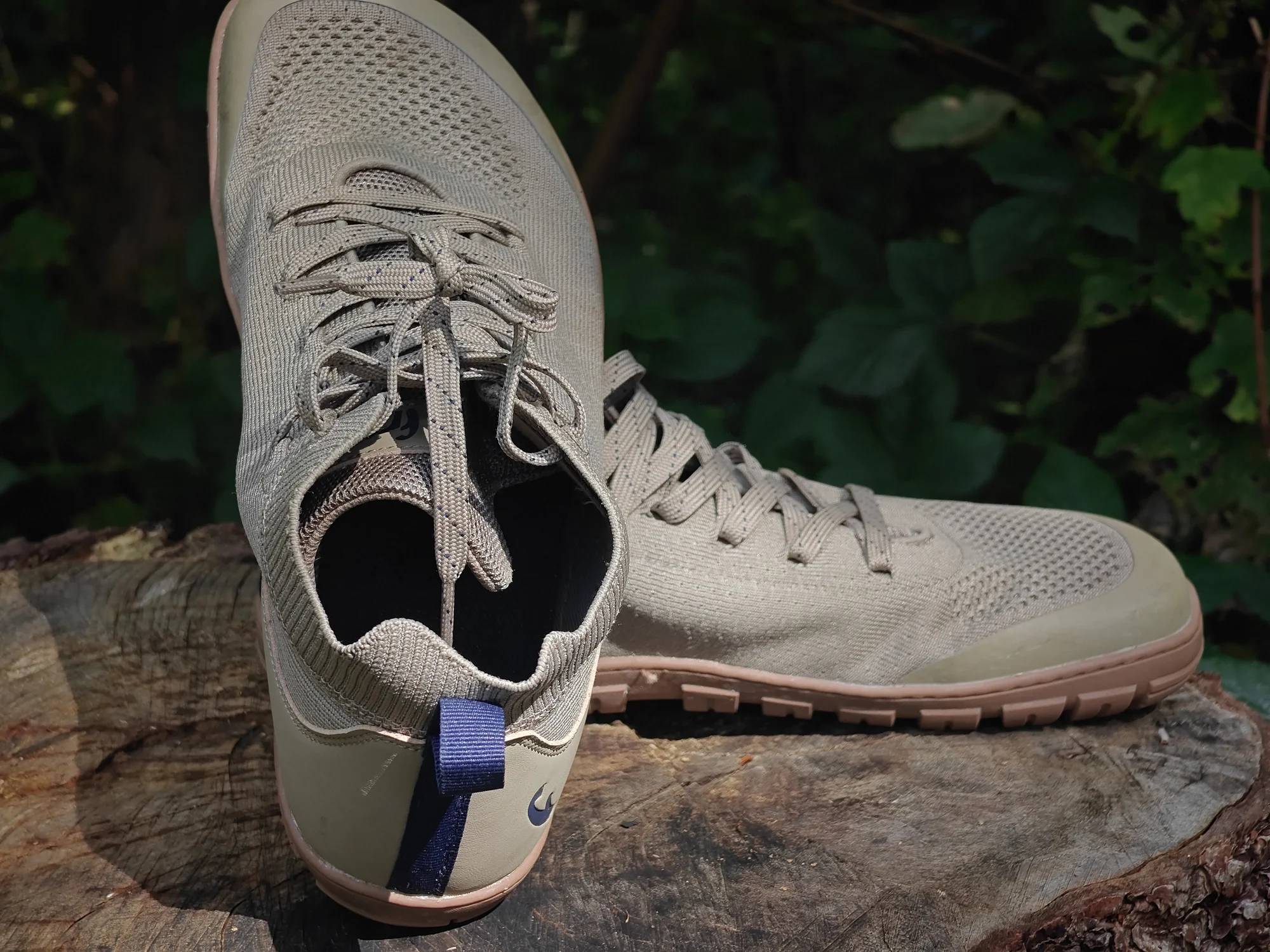
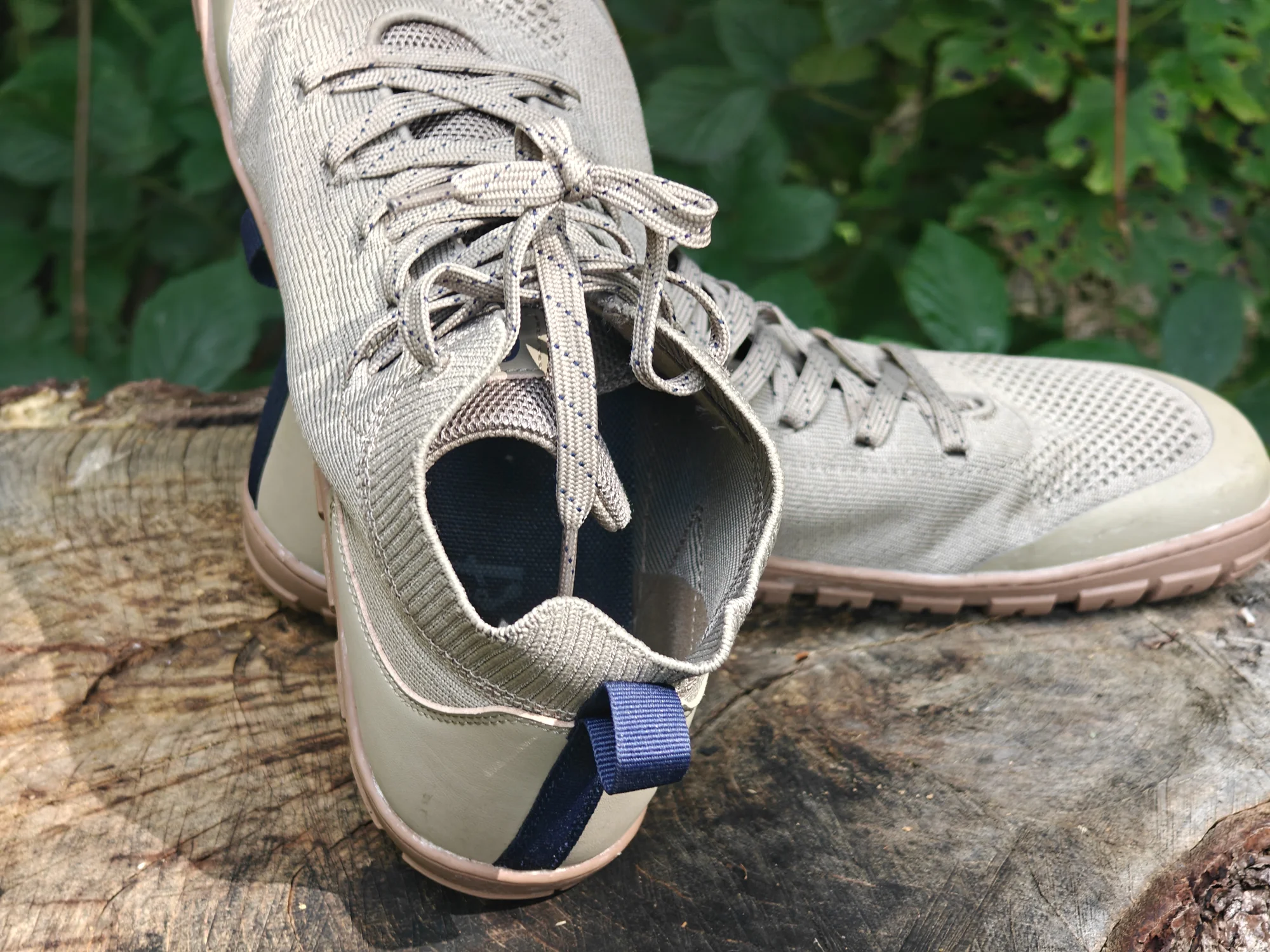
The Danum made a good first impression out of the box. The collar has the ribbed texture of a jumper, and the patterned laces work well with the knit and blue heel pull. I liked the attention to detail: the materials and colours felt carefully chosen, and the shape looked sleek without squeezing the front of my foot.
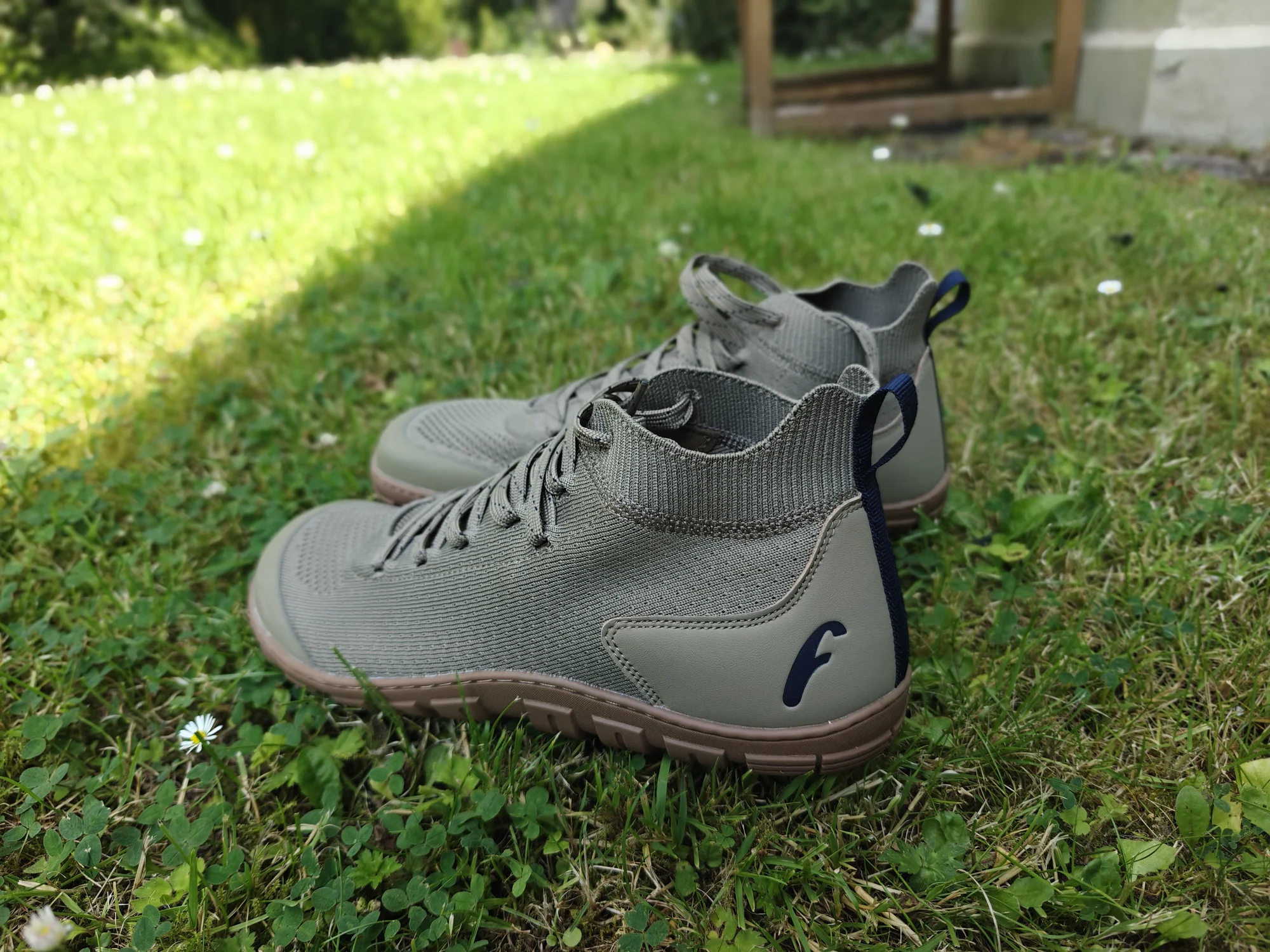
That translated well to wearing them out. I paired them with chinos, corduroy trousers, light summer trousers and jeans. People asked what the shoes were and which brand made them, which often led to a conversation about barefoot shoes. Their appearance, comfort and light weight are the main reasons I keep choosing them. They work easily with my normal casual clothes.
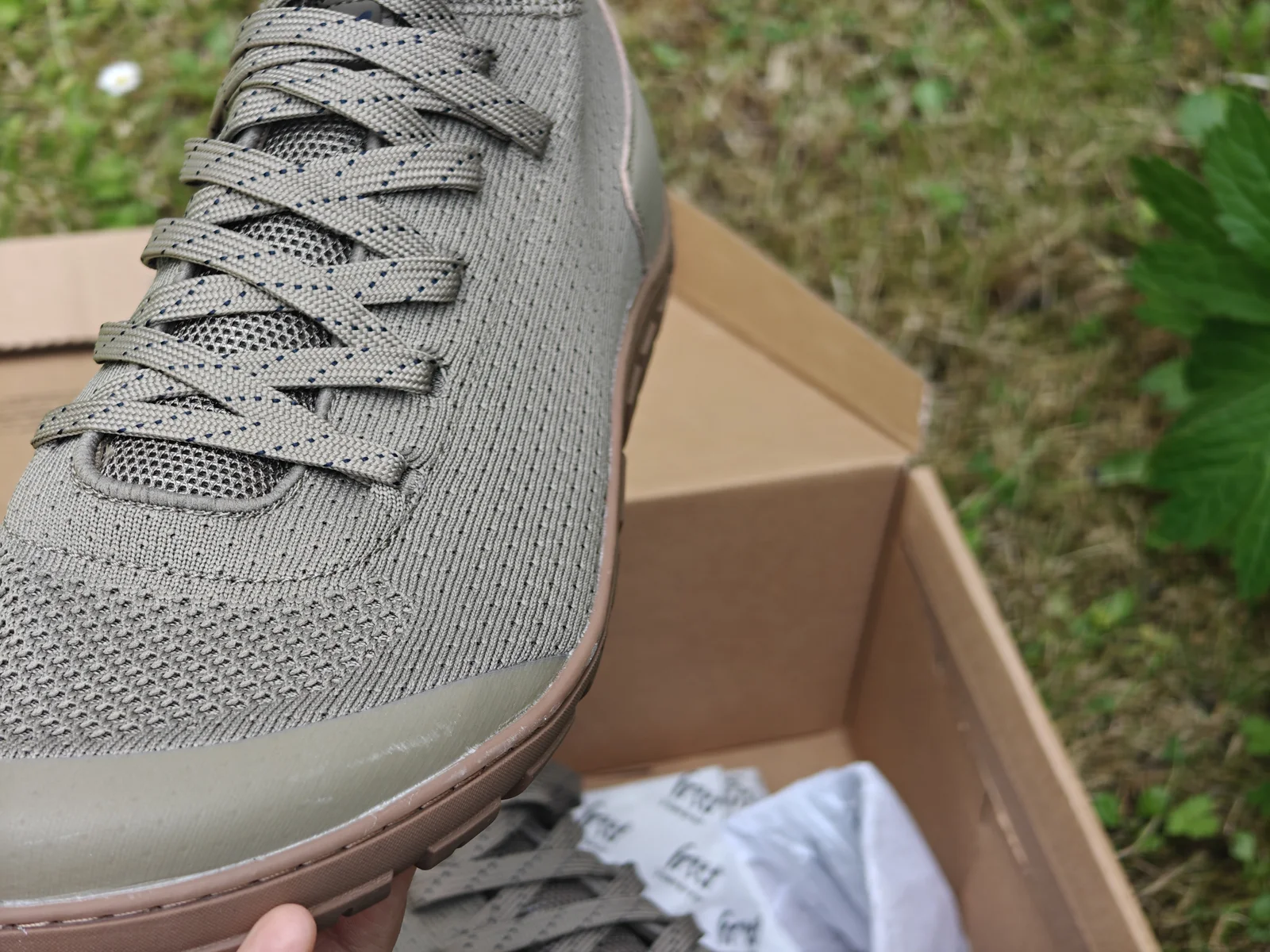
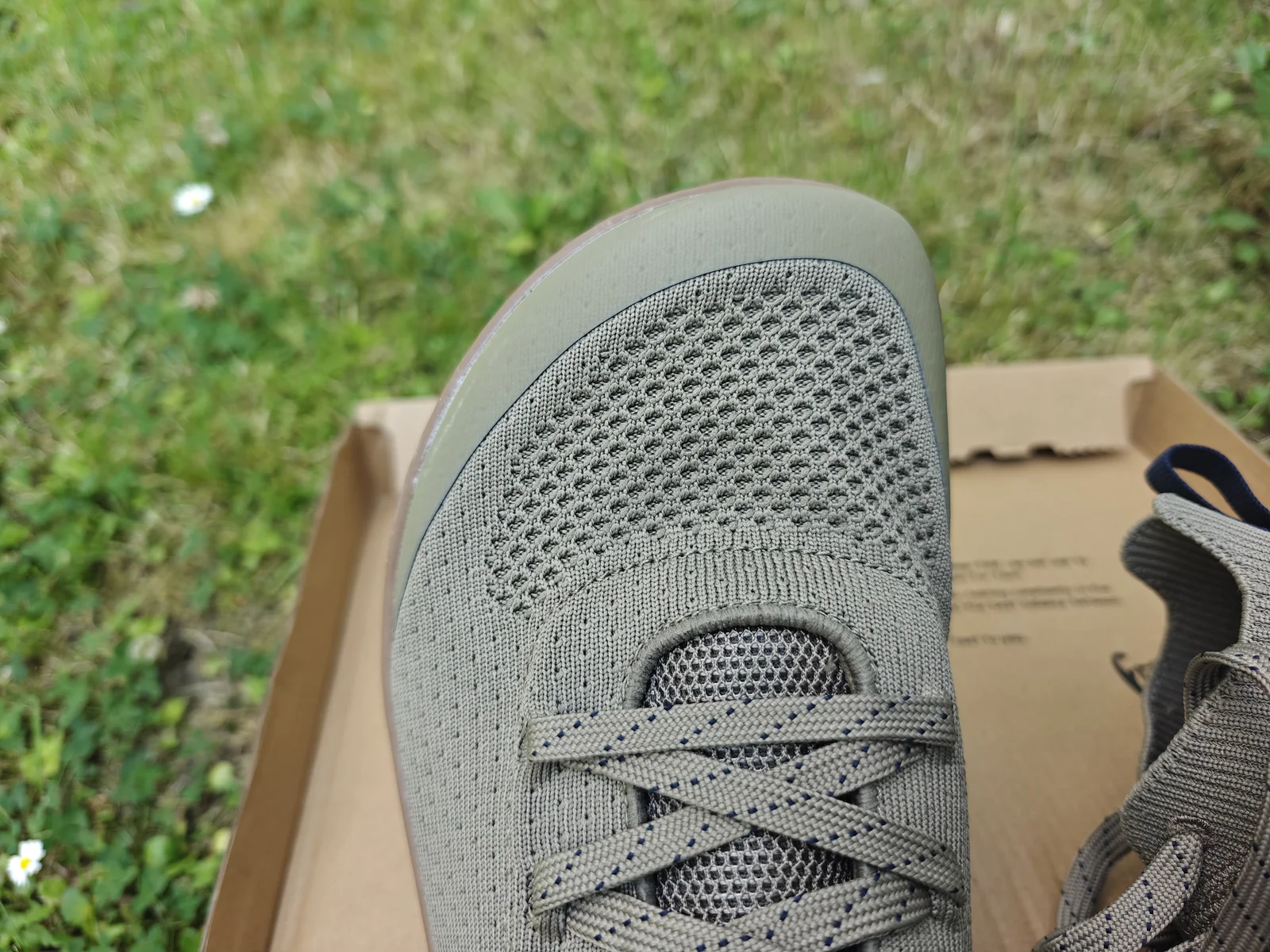
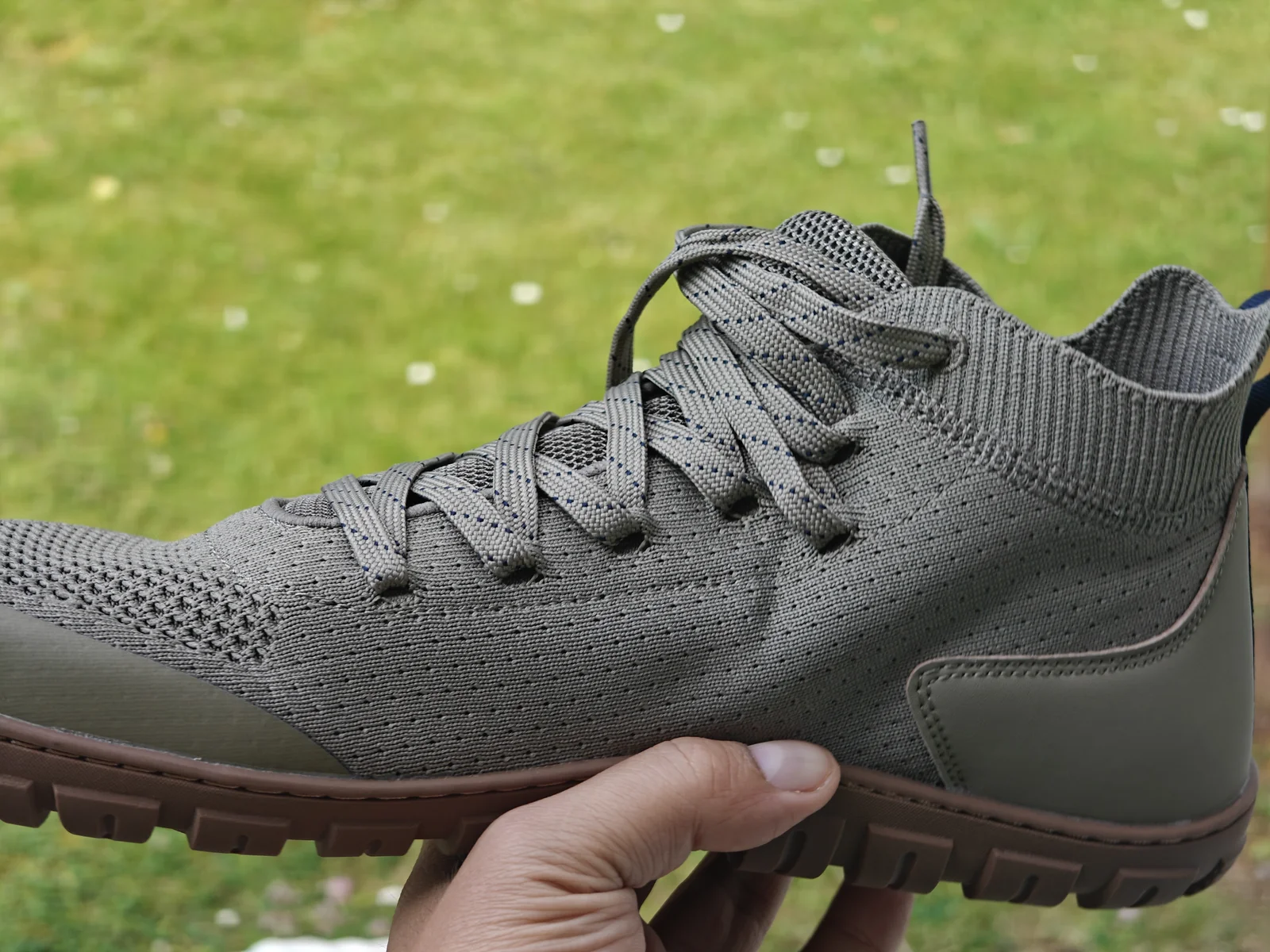
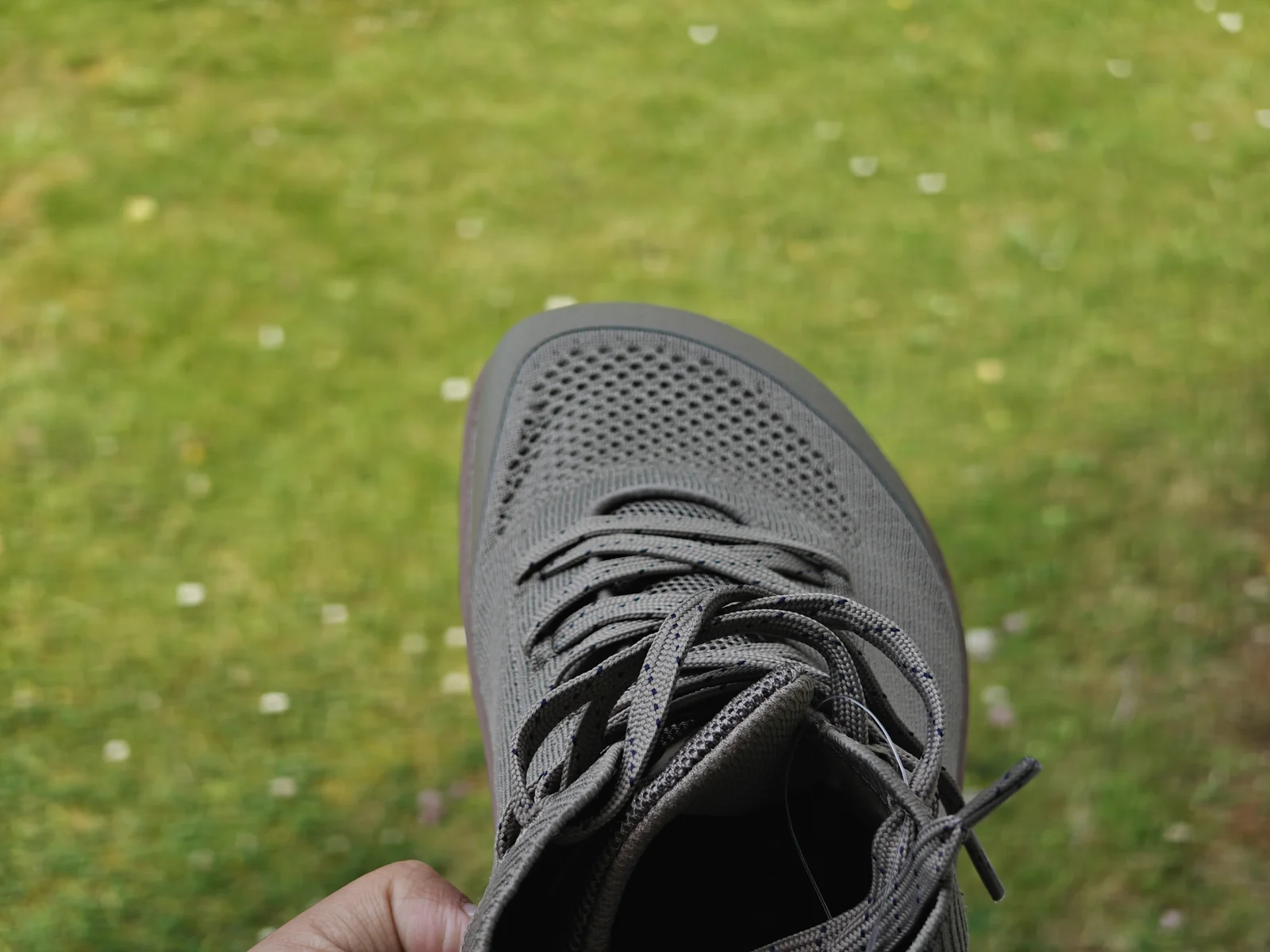
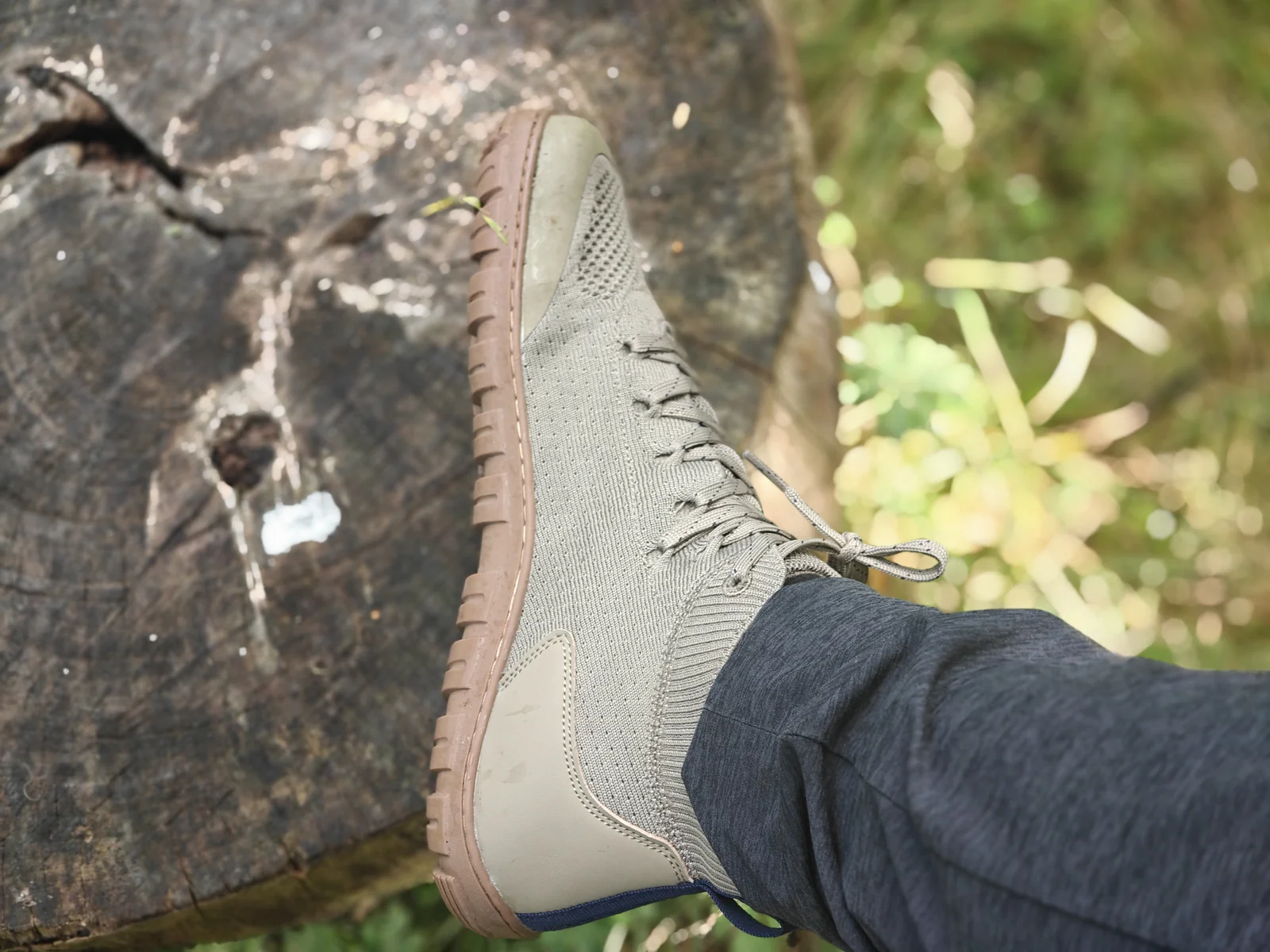
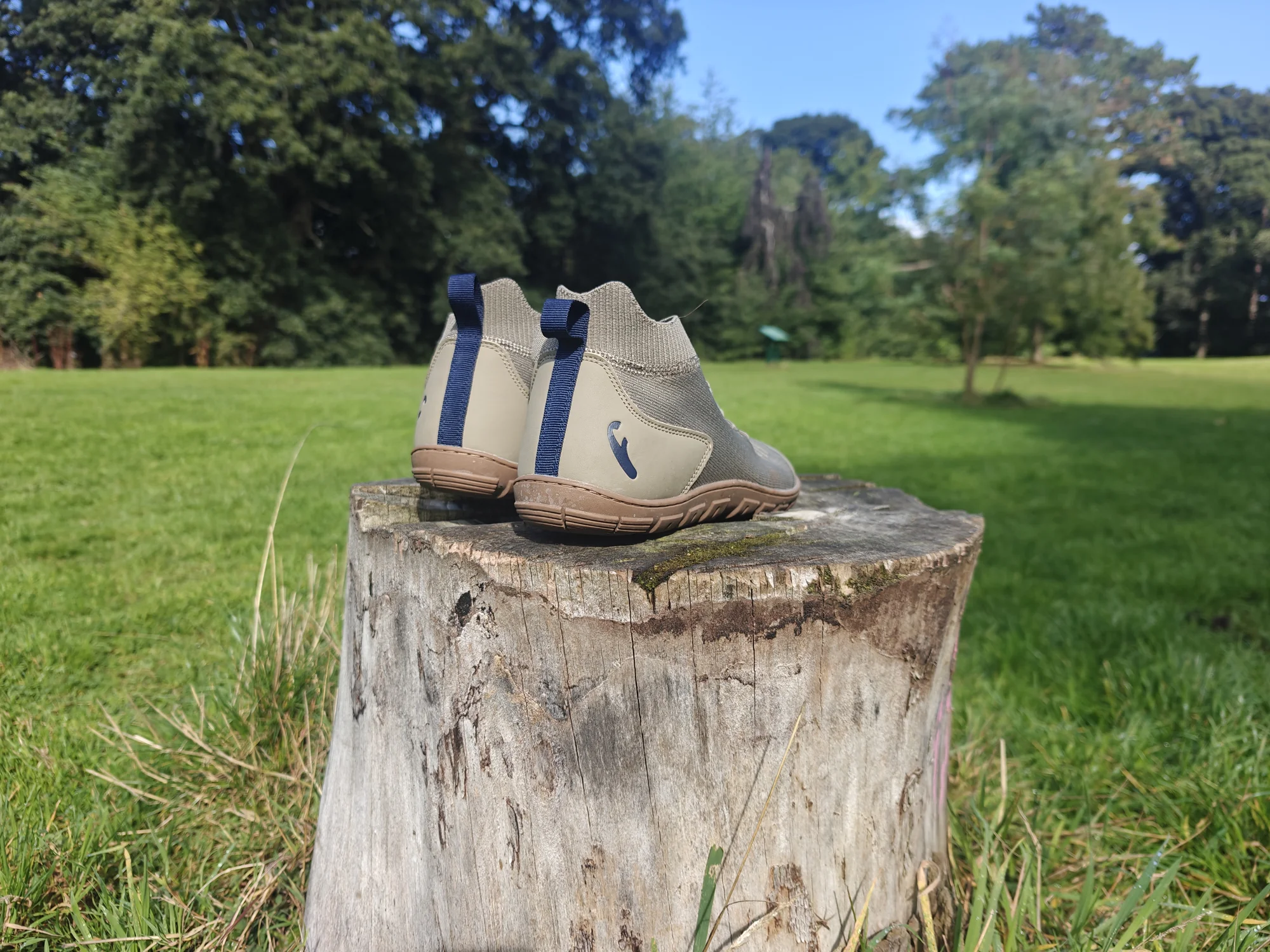
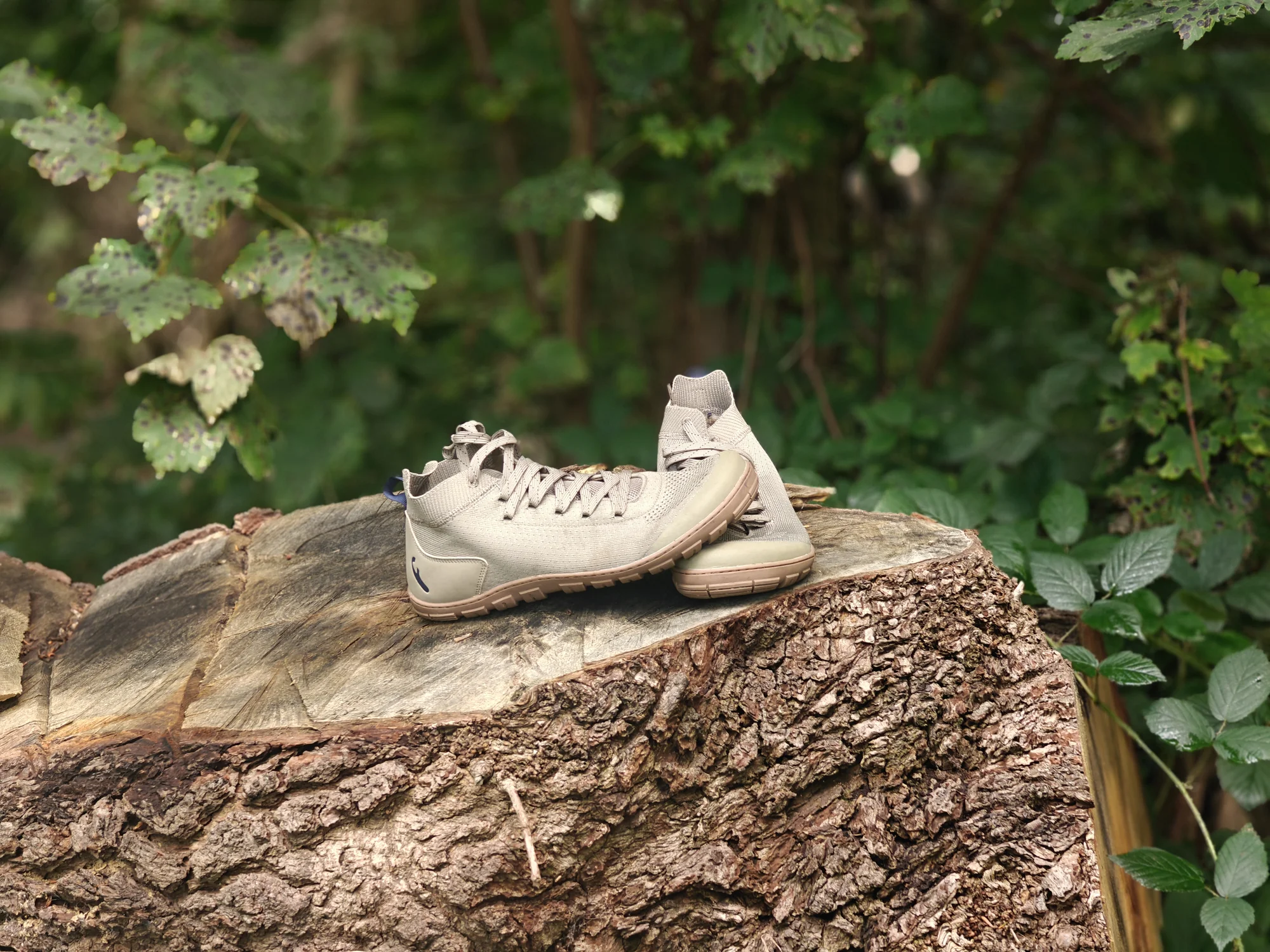
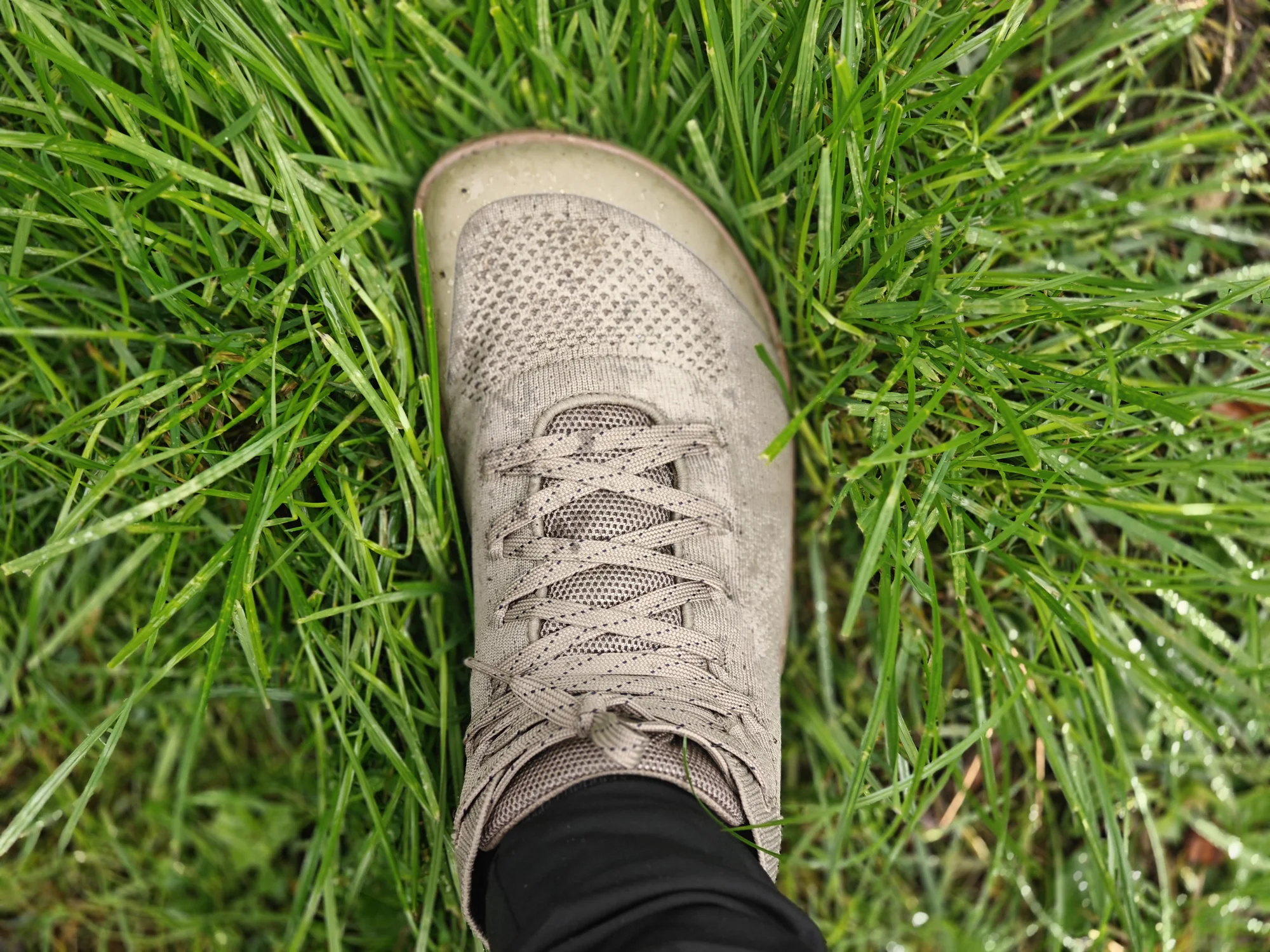
Freet calls the colour Olive, although it looks greyer in some of my daylight photographs. The mesh is more open over the forefoot and denser along the sides, with a rubber bumper around the toes. It has a more casual appearance than leather; if you want a Chelsea boot, my Freet Durham review is the more relevant comparison.
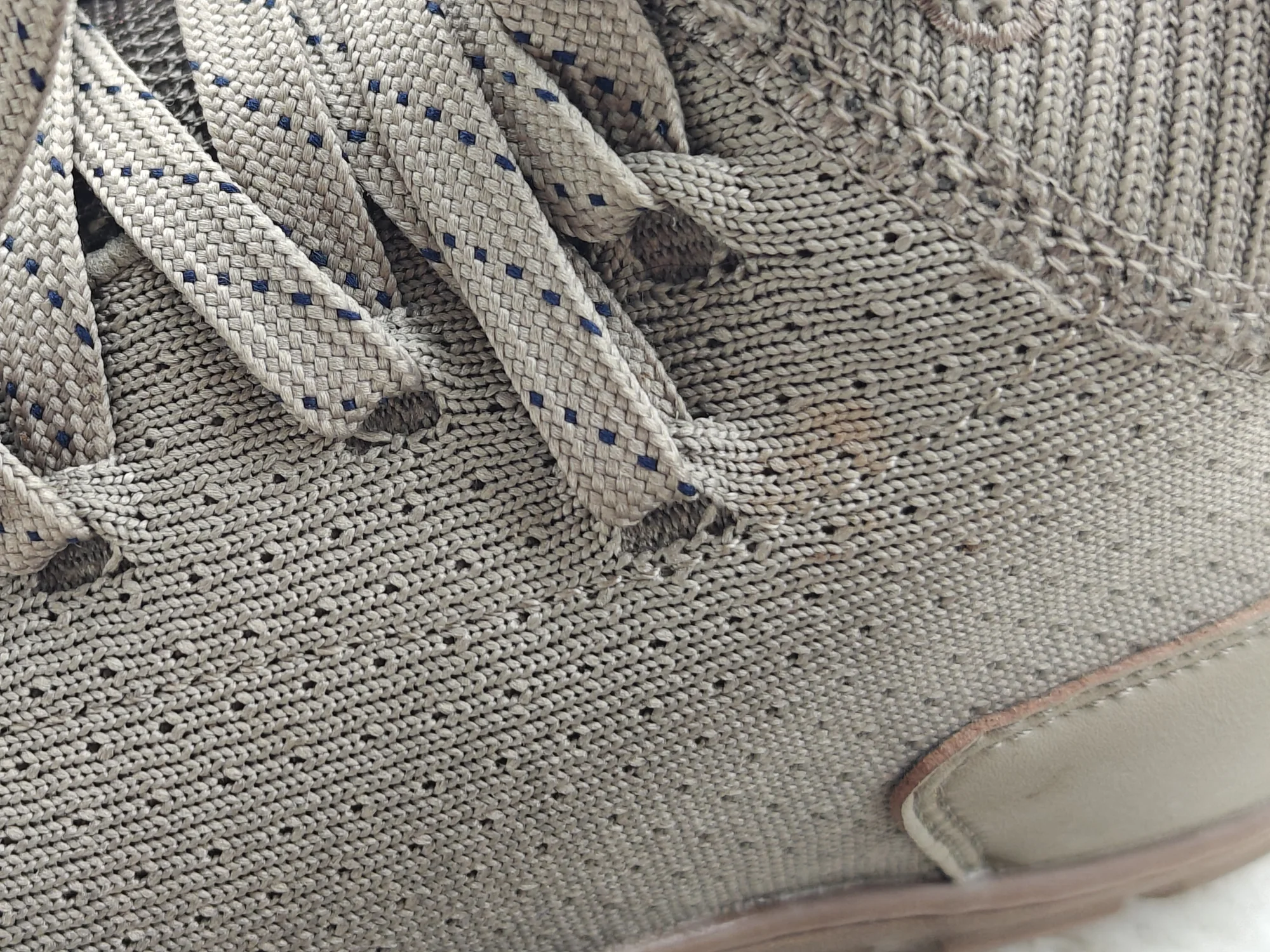
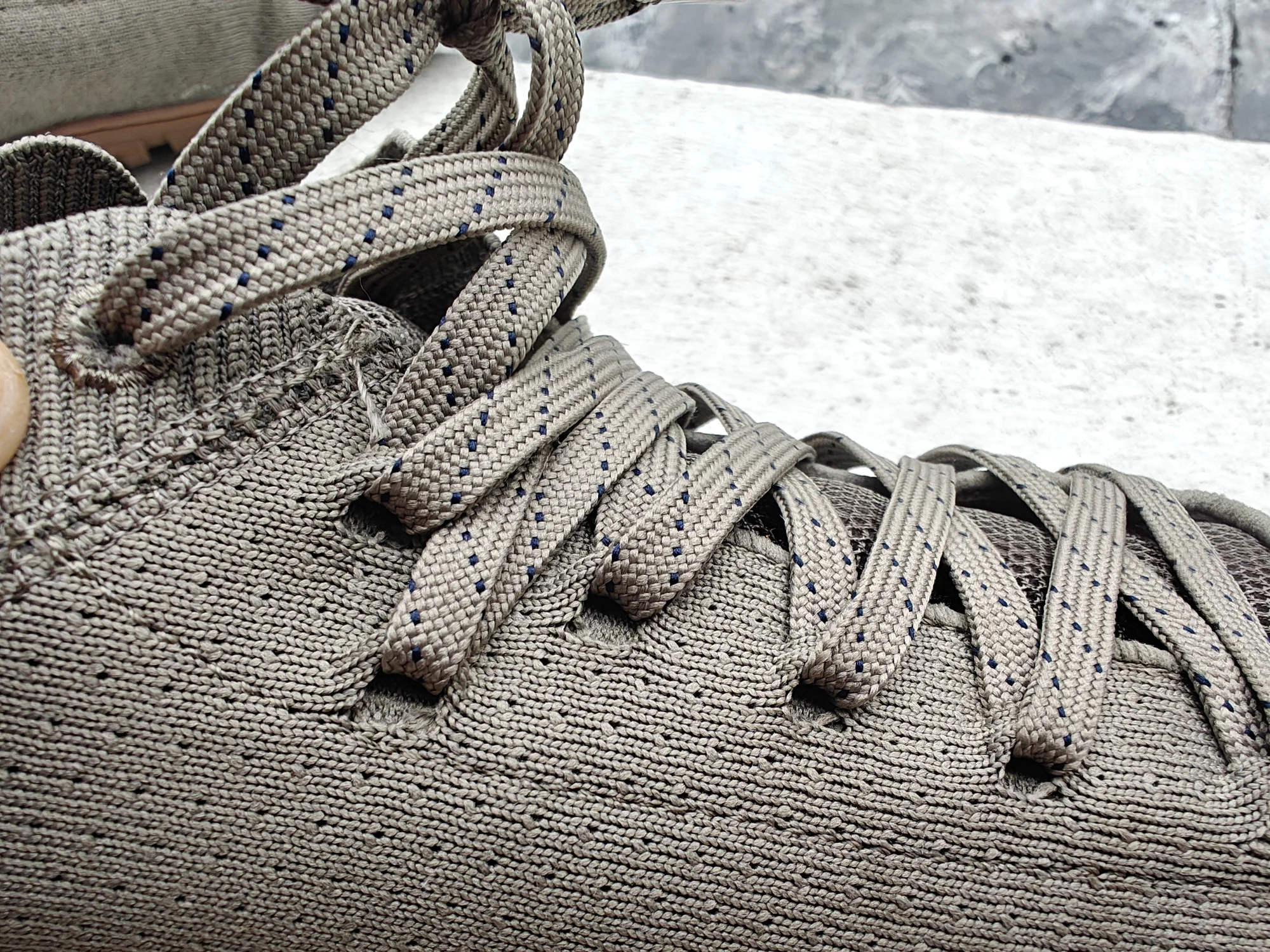
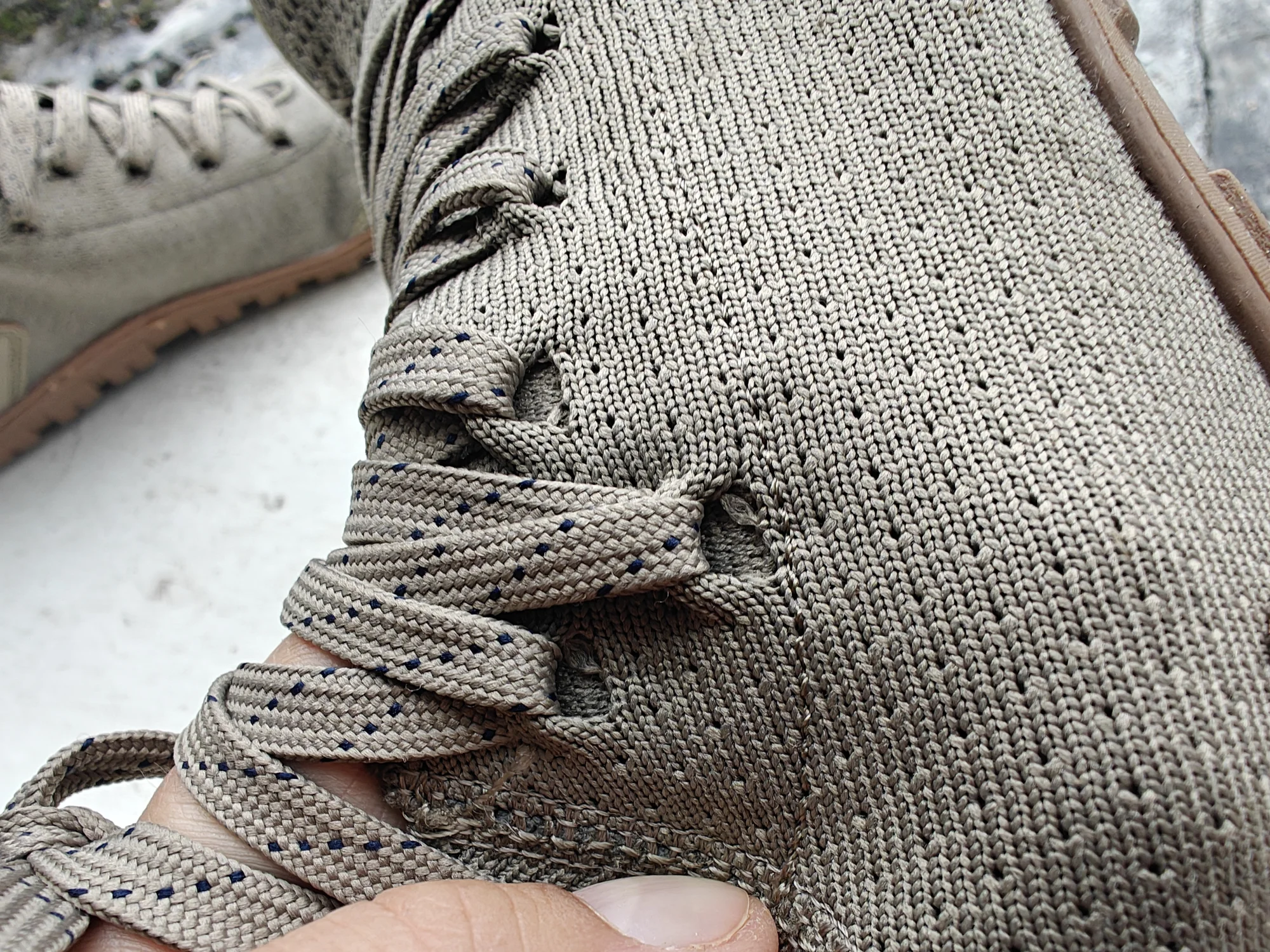
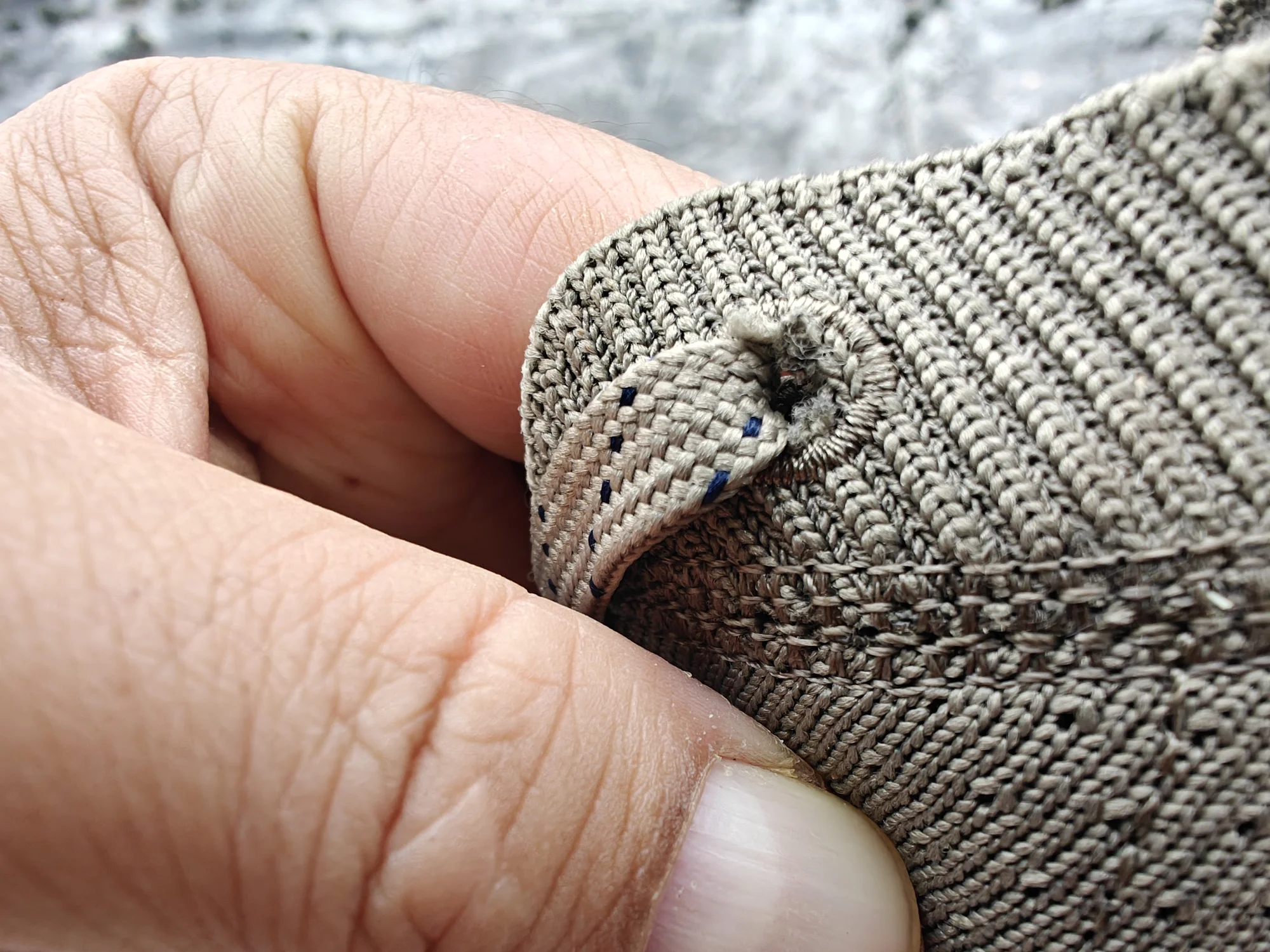
The lower laces pass through openings formed directly in the knit, while the top eyelet has a stitched surround; there is no metal hardware.
Fit, comfort and getting them on
My usual UK 9 fitted as expected. There was generous room around my toes, while my heel stayed in place without slipping. I wore them mostly with the supplied insoles, so that is the fit I spent most of the summer in. Freet’s sizing varies between models, so it is still worth measuring your foot in centimetres and checking their insole chart.
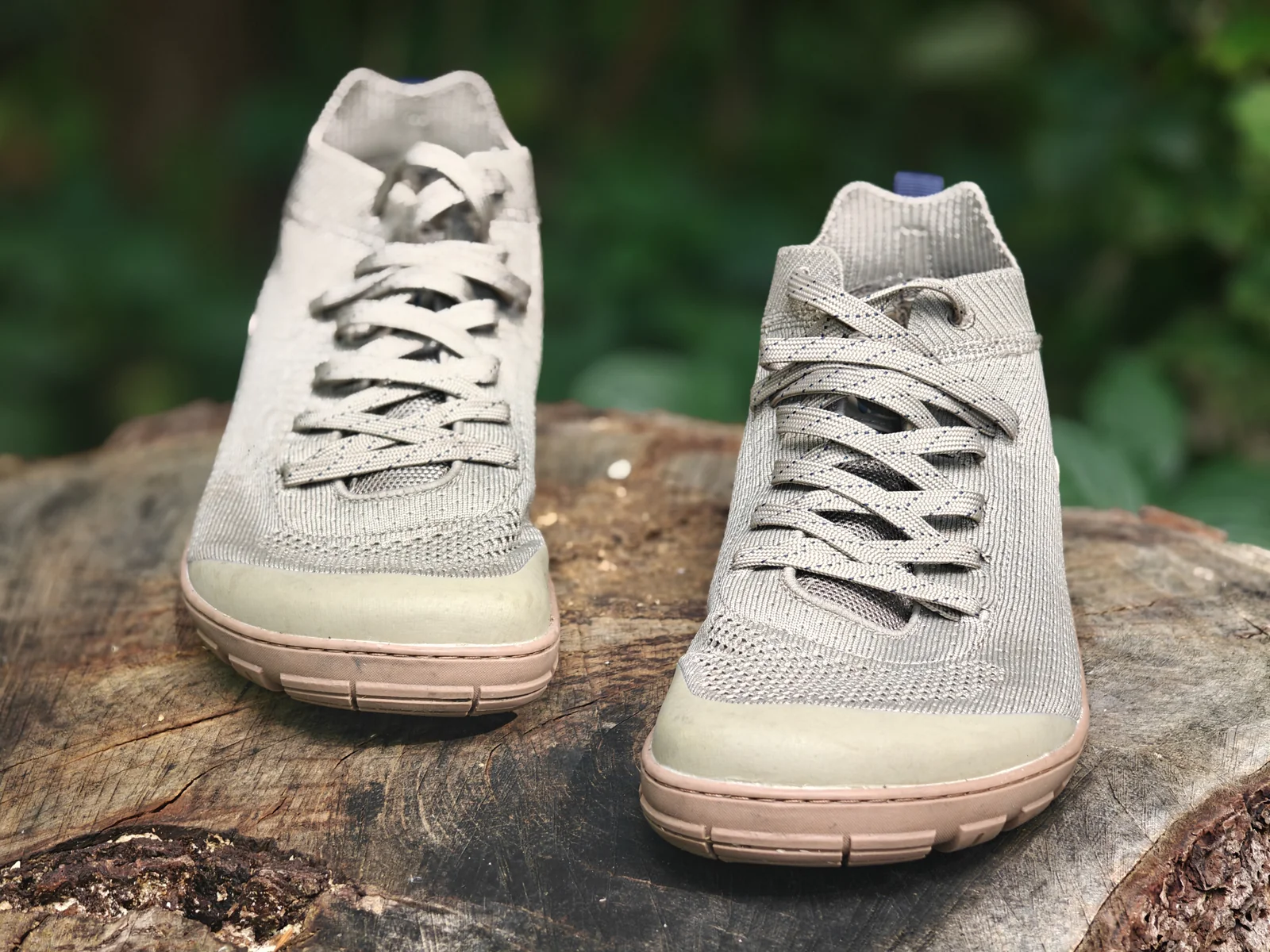
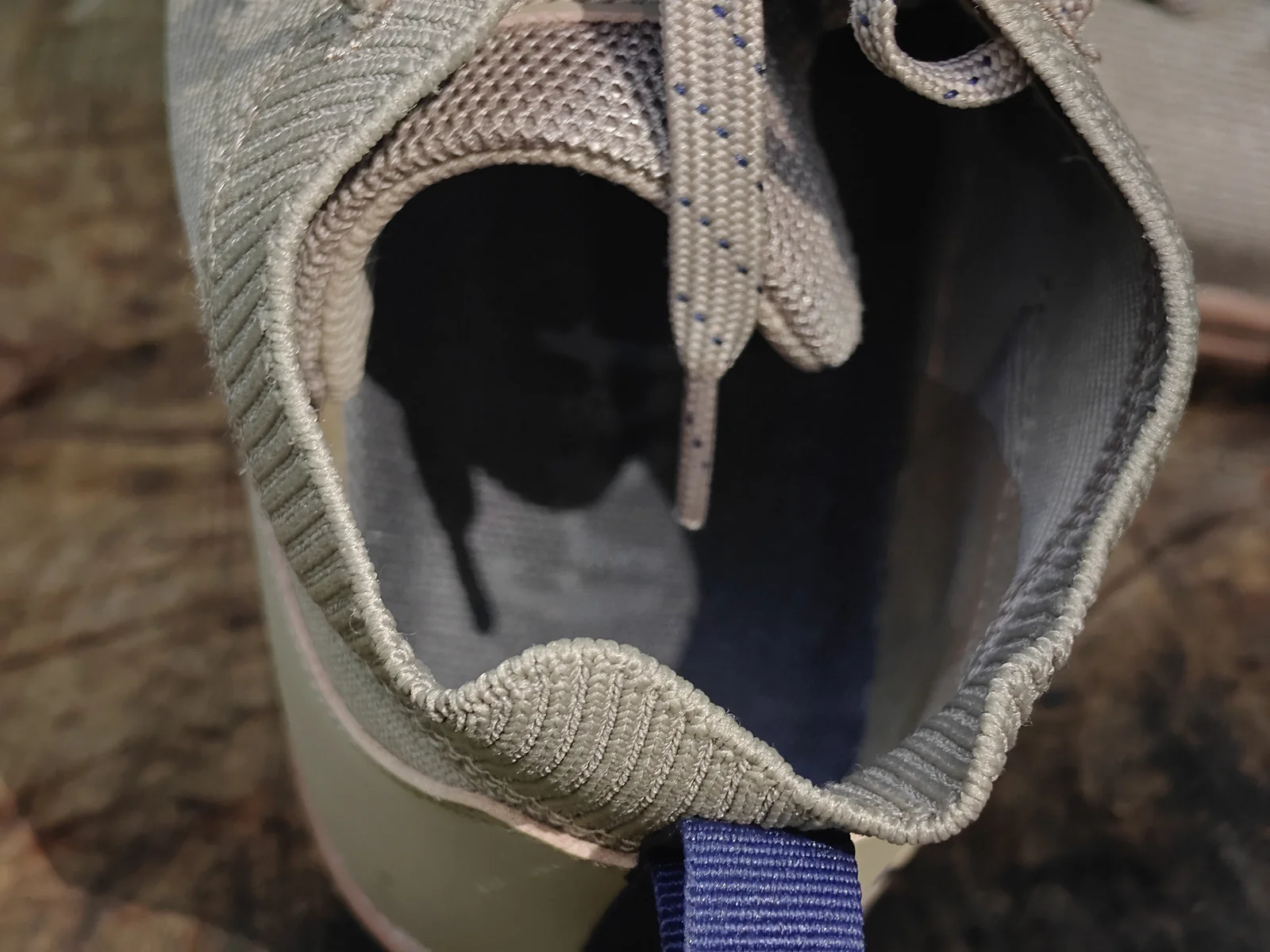
Getting them on takes more effort than putting on a low shoe. The knitted opening is flexible but fairly narrow, and the back tends to fold in as I push my foot through. I use an index finger to pull it back into place. That has become a familiar habit rather than something that disappeared with wear.
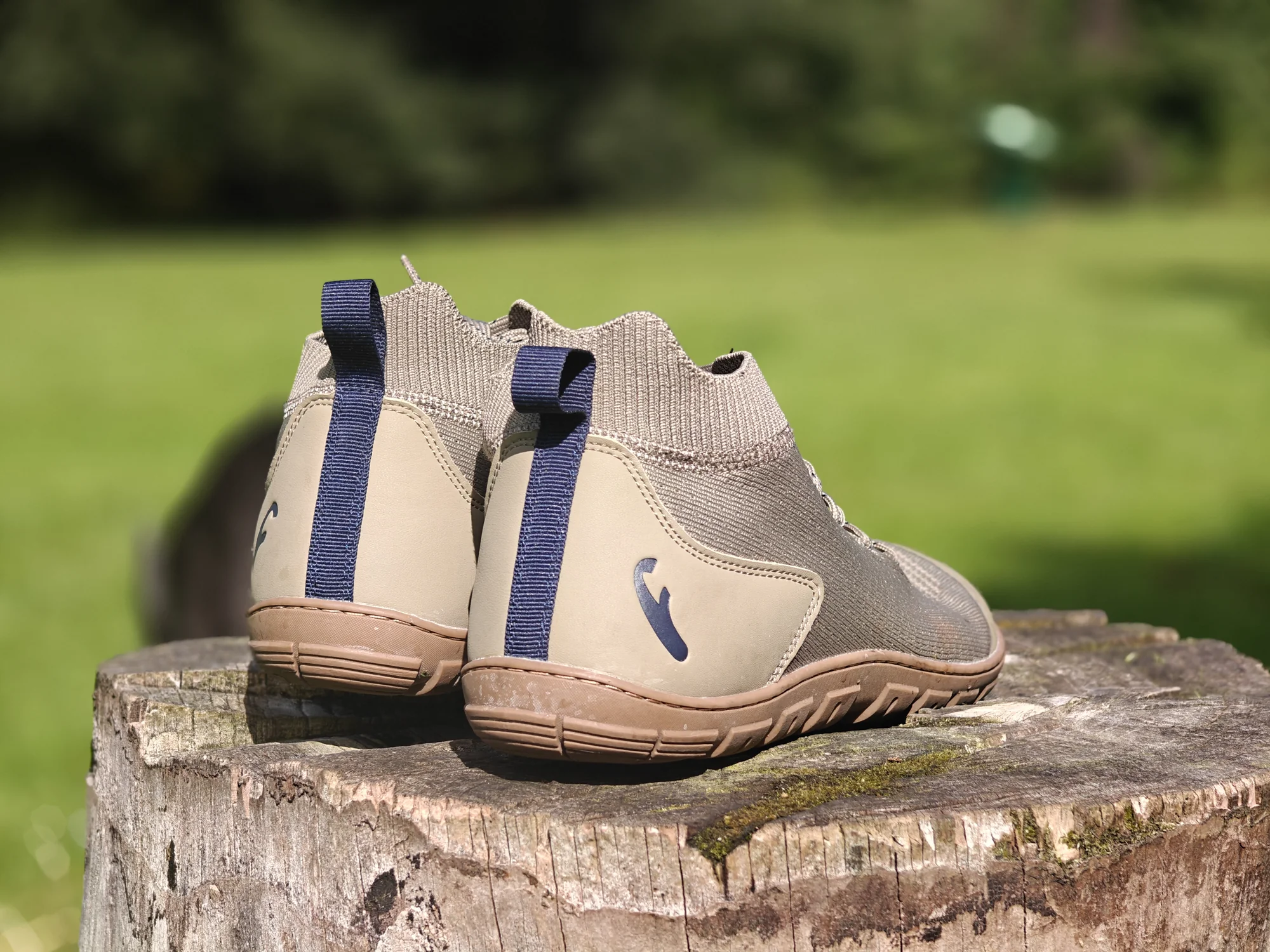
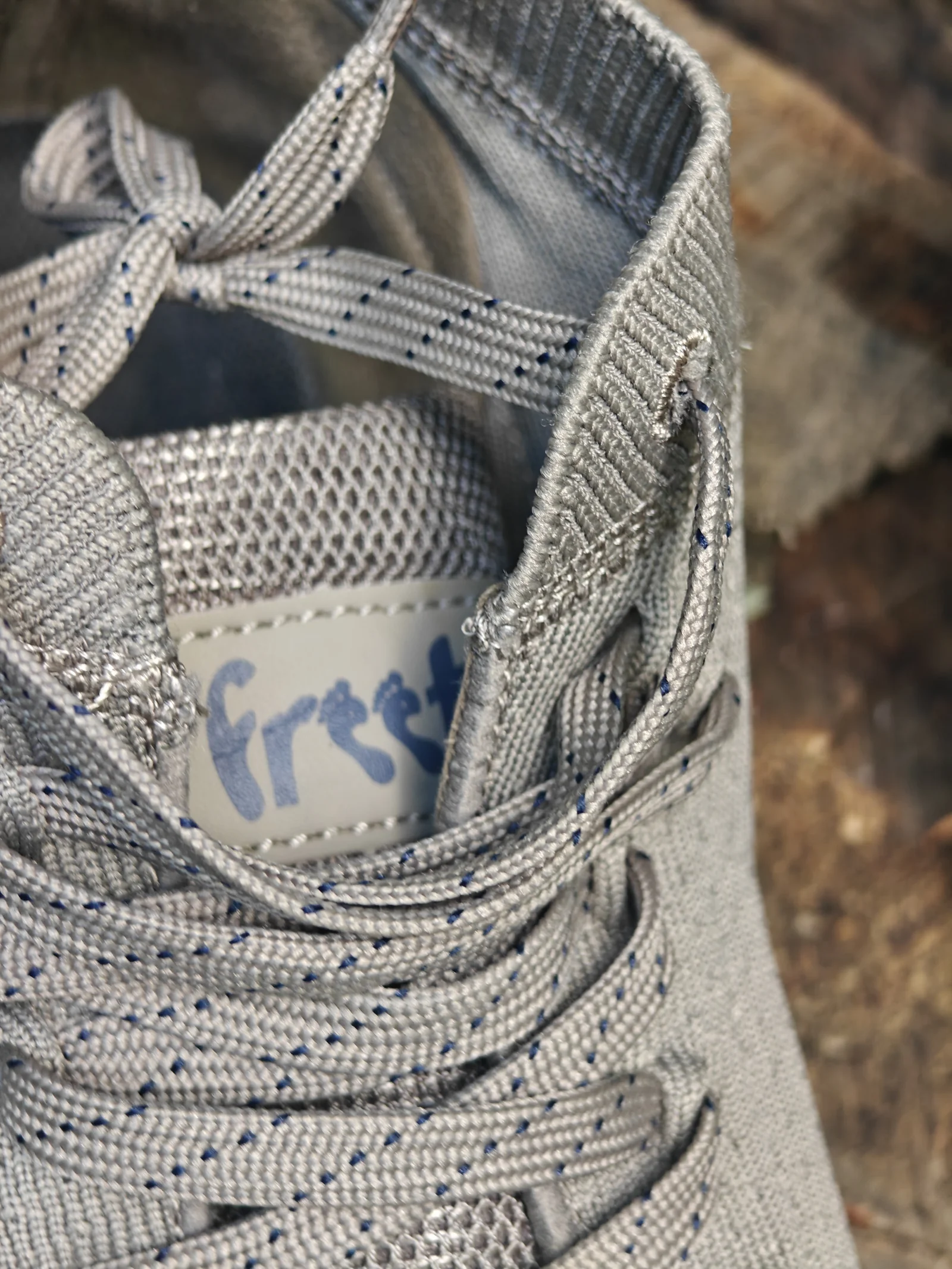
Once on, they are very comfortable for a boot. I cannot name another boot I find more comfortable. I have worn them through 8–10 hour restaurant shifts and they have felt consistent and dependable, with no particular problem when I take them off afterwards. After many hours I can be aware of the collar around my ankle, but it does not rub, hurt or create a pressure problem.
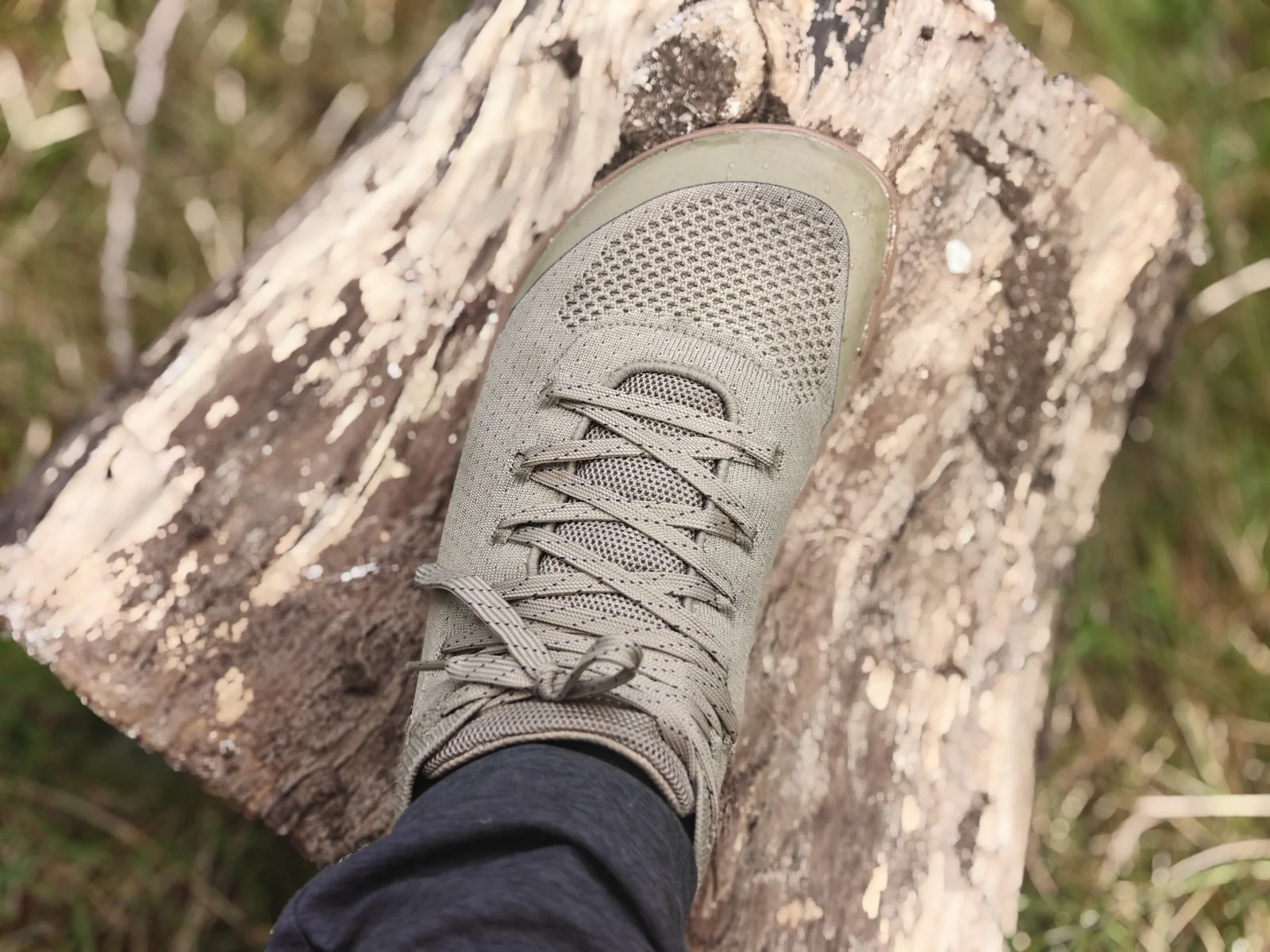
The tongue is joined to the upper along both sides rather than hanging loose. At the beach, I did not get sand inside them. The higher collar was useful there, even if it added a little fuss when getting dressed.
Ground feel and the removable insoles
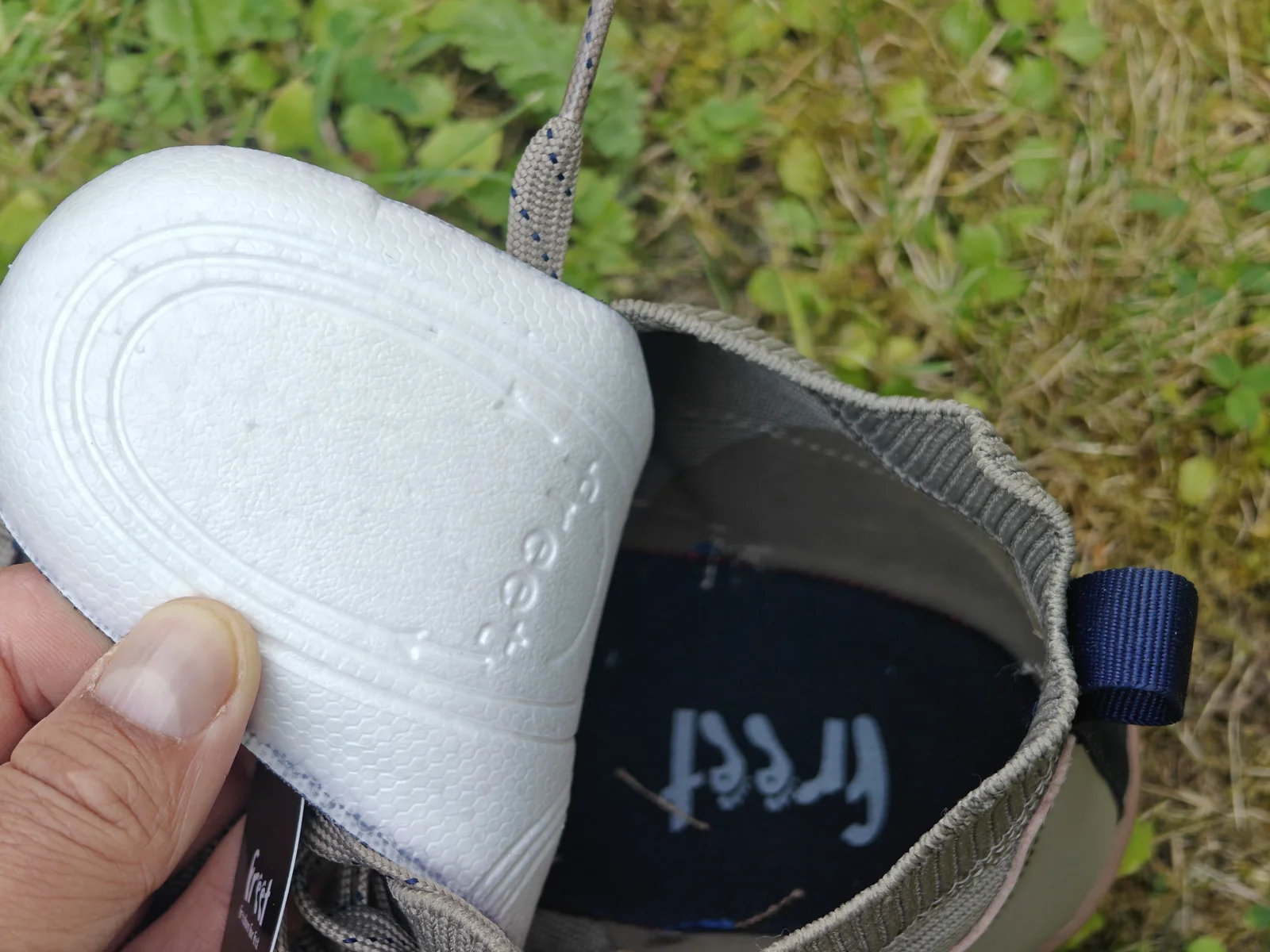
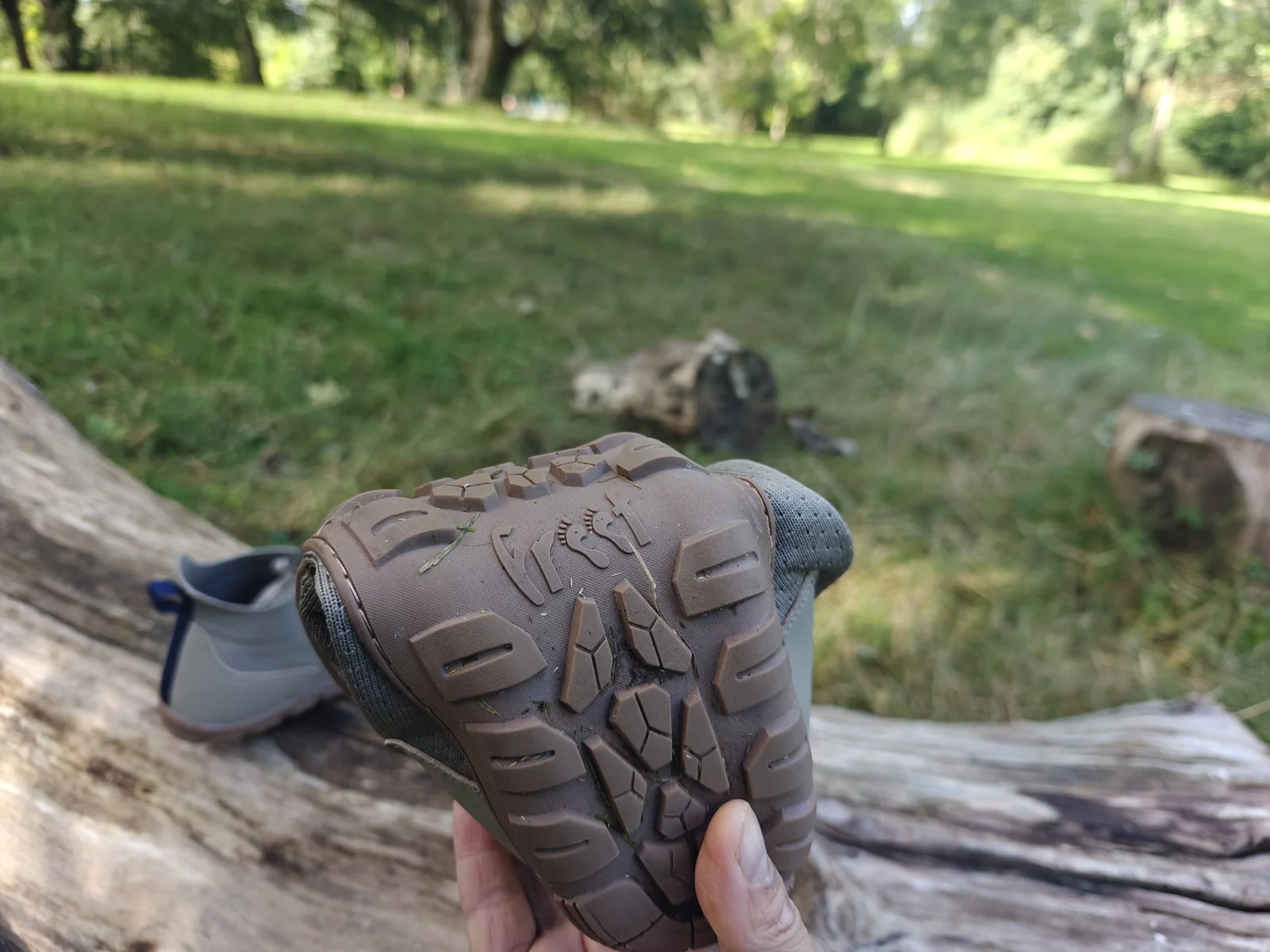
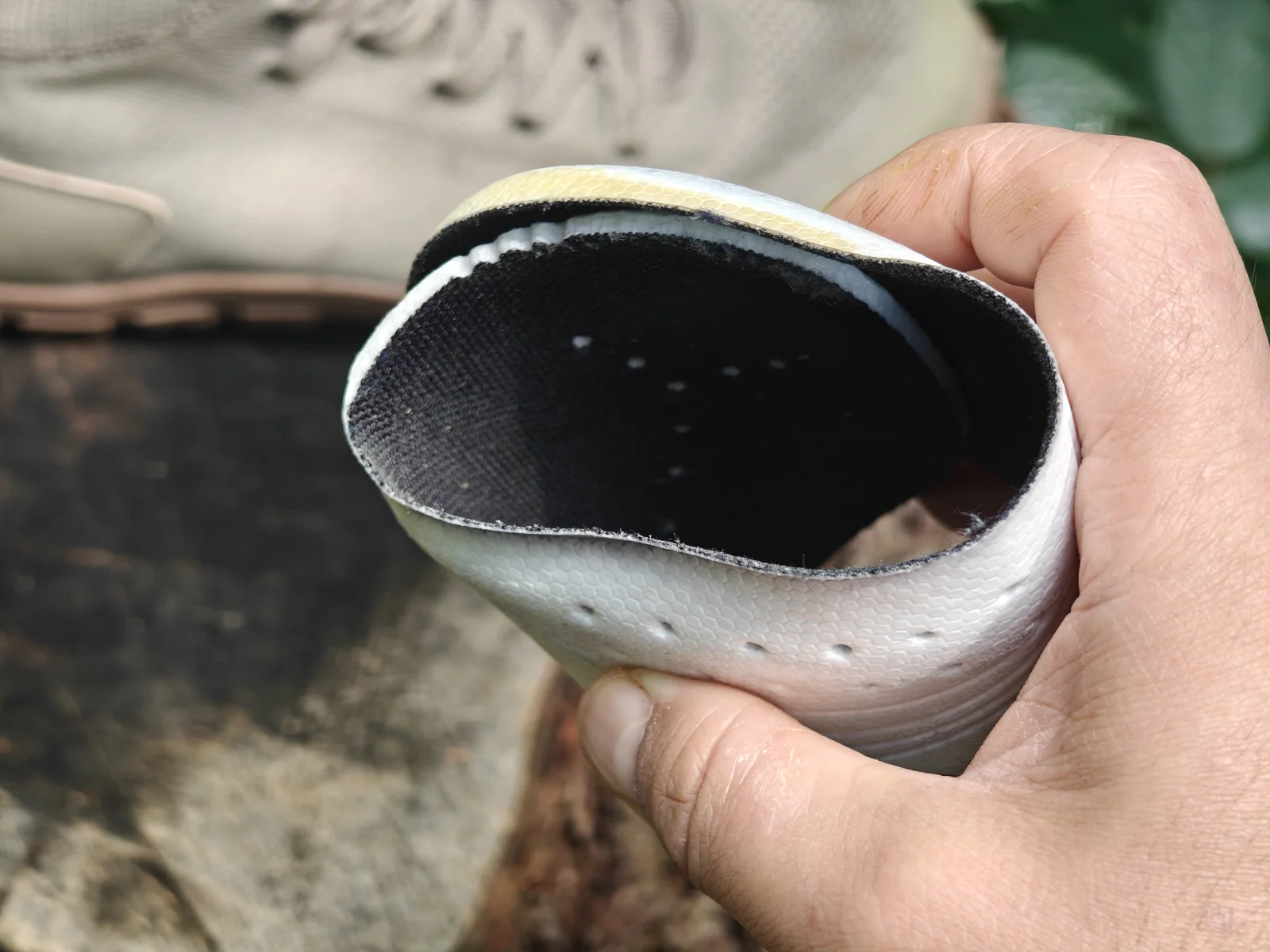
The sole was a pleasant surprise. Looking at the substantial tread, I expected less sensation underfoot. In use, I could feel surface detail across my whole foot, giving me one of the best ground-feel experiences I have had in a boot: a balance between feeling the ground and having some protection from it. The boot is flexible too: I can fold the sole heel to toe in one hand.
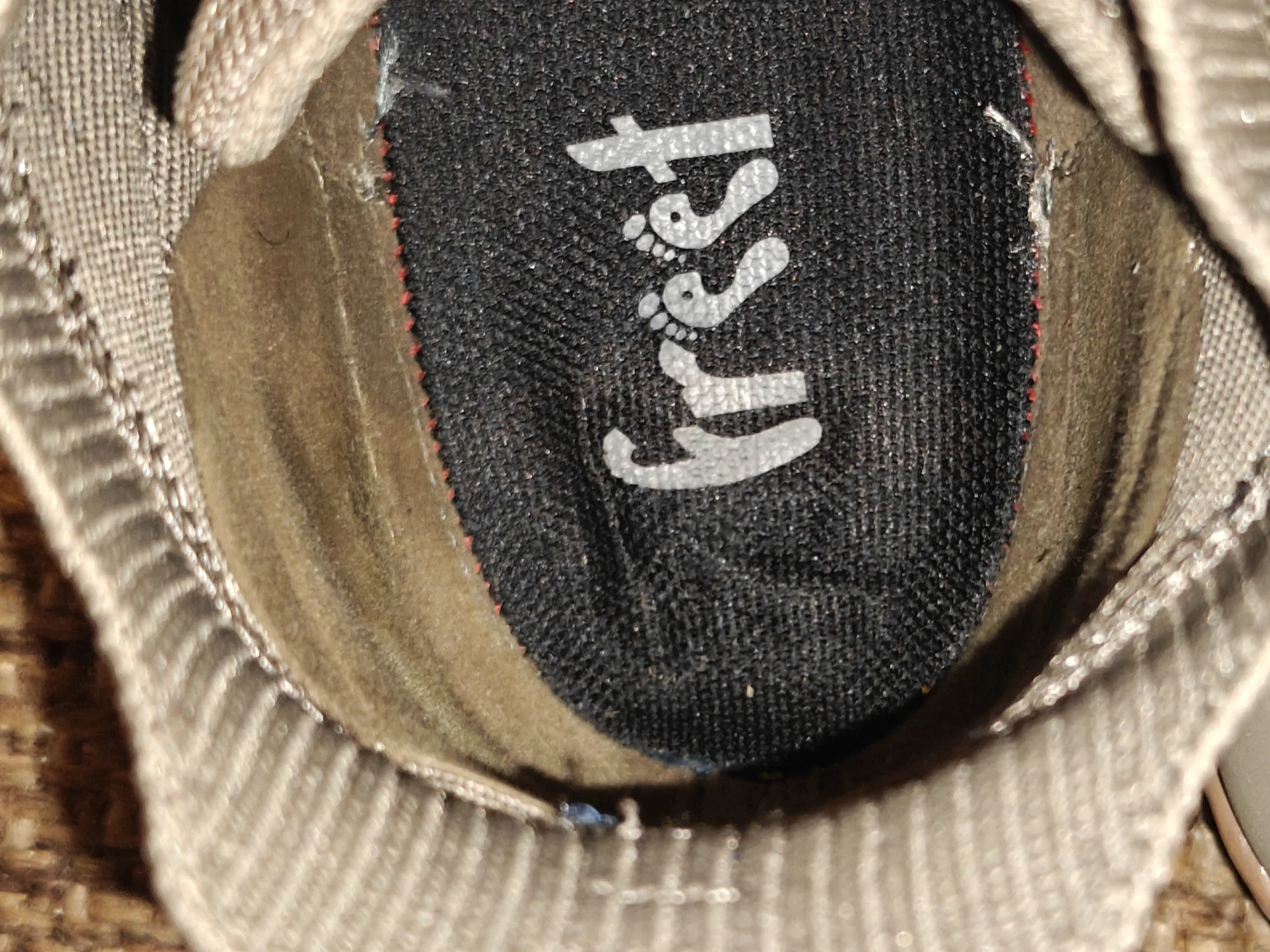
I left the supplied ReBound insoles in for most of my summer wear. More recently, I have spent almost 10 days wearing the Danum without them, including some walking without socks. With the insoles in, the sensation is gentler. Removing them made a noticeable difference: I could feel much more through the sole, and the extra space inside made the boots feel roomier. I enjoy them more that way, although this is the more recent part of my testing rather than how I covered most of the roughly 100 miles.
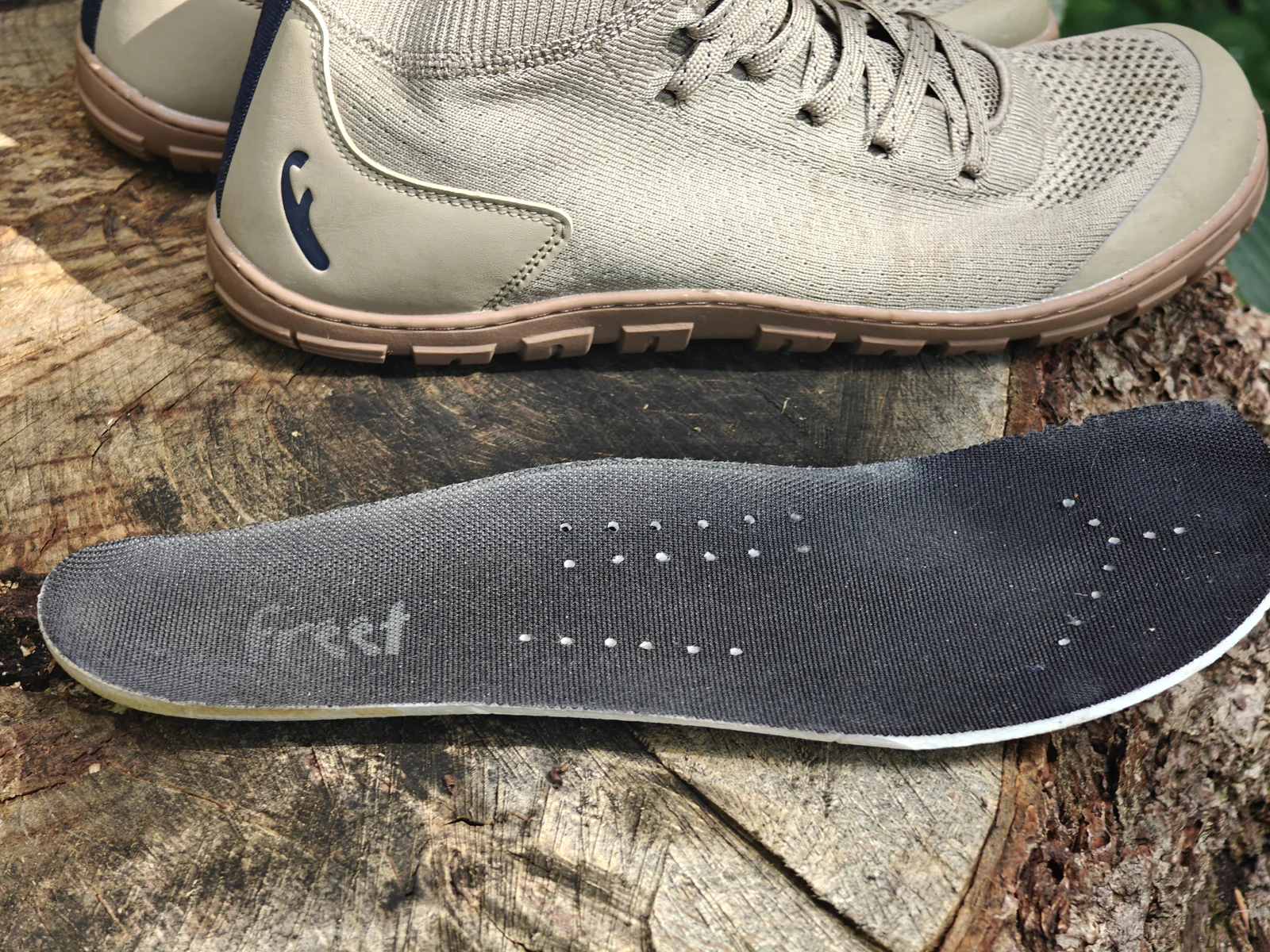
| Insoles in | Insoles out | |
|---|---|---|
| Underfoot | More cushioning | Noticeably stronger ground feel |
| Internal space | Generous toe room in my UK 9 | Noticeably roomier |
| Testing | Most summer wear | Almost ten days of more recent wear |
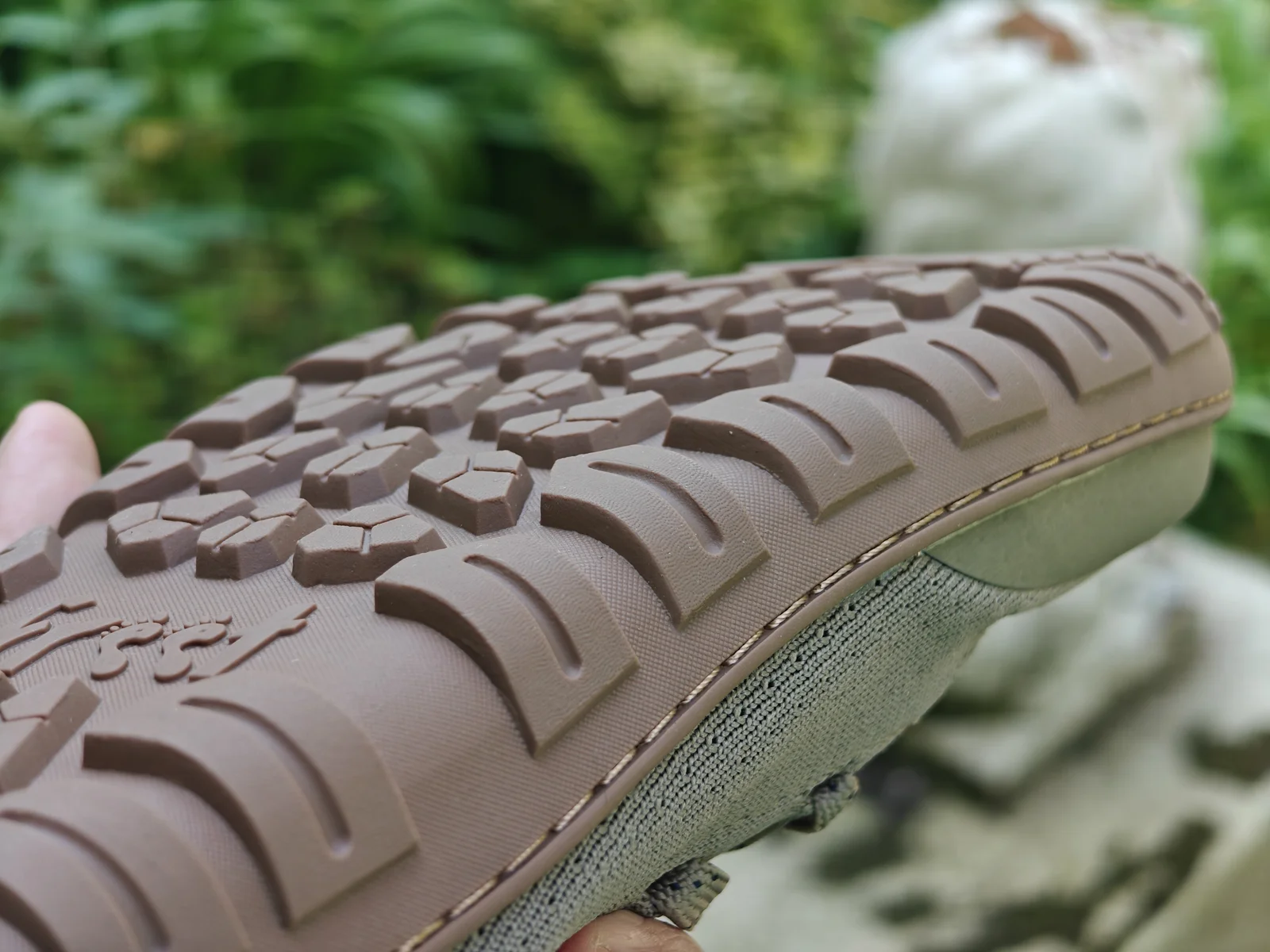
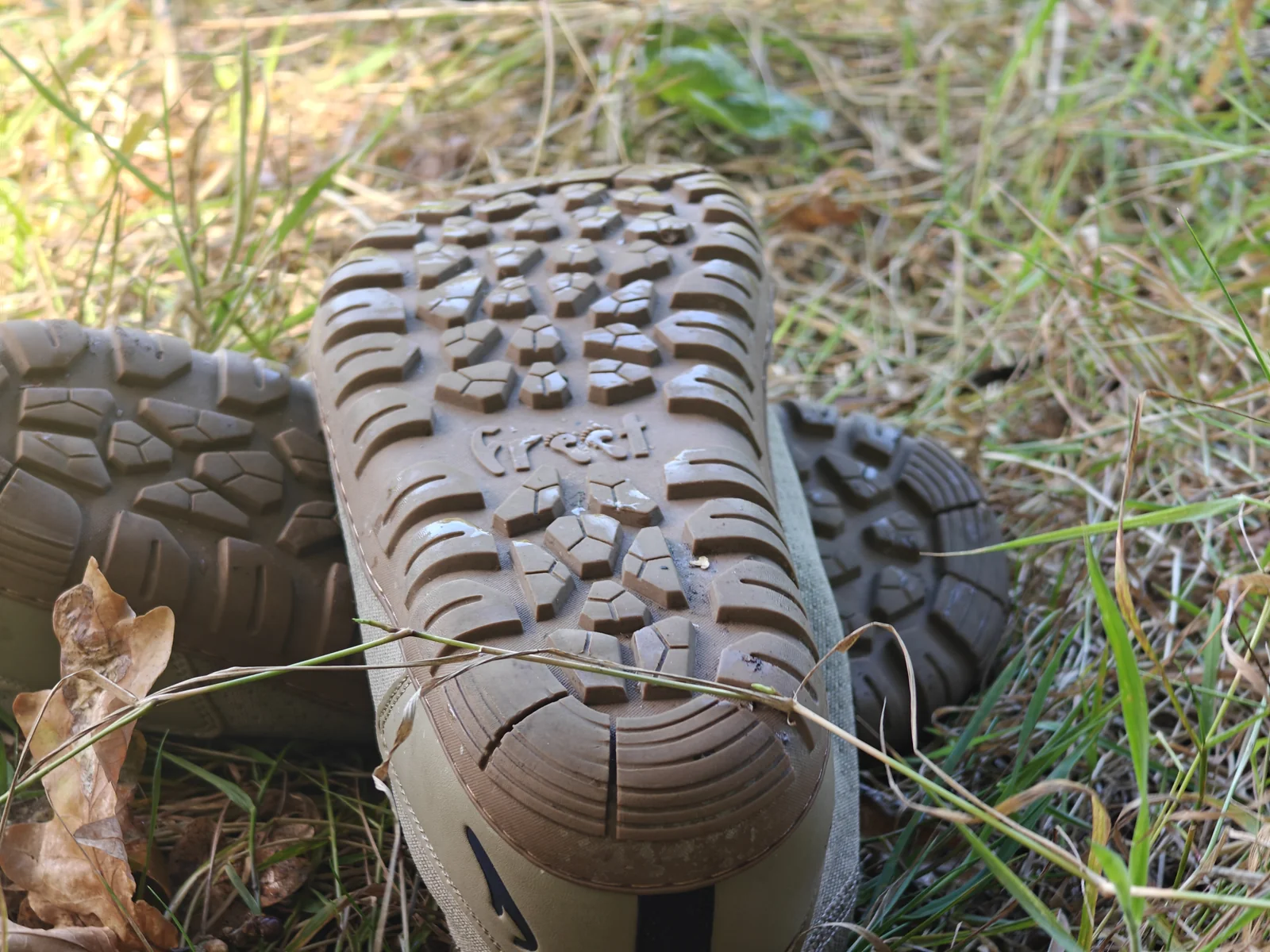
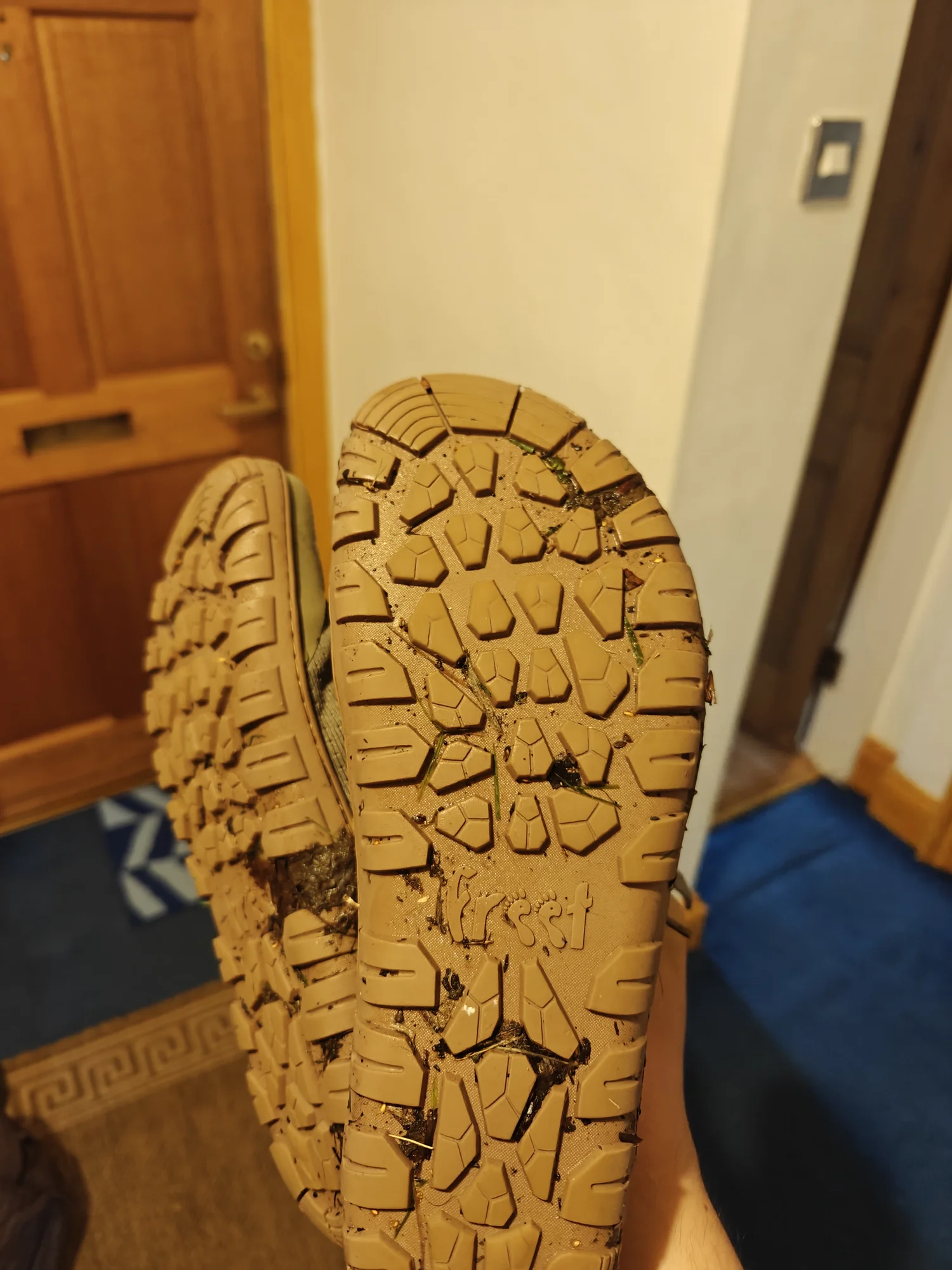
Freet uses its HillGrip outsole here, with 4 mm lugs and stitching around the sidewall. I have not noticed slipping at work, but that does not establish slip resistance. I have not tested them on technical trails or wet rock. My experience covers everyday surfaces, grass and the beach.
Breathability and wet weather
With thin bamboo socks, my feet did not get particularly sweaty on hotter days, despite the coverage around the ankle. I also had no noticeable odour problems over the summer.
From the field
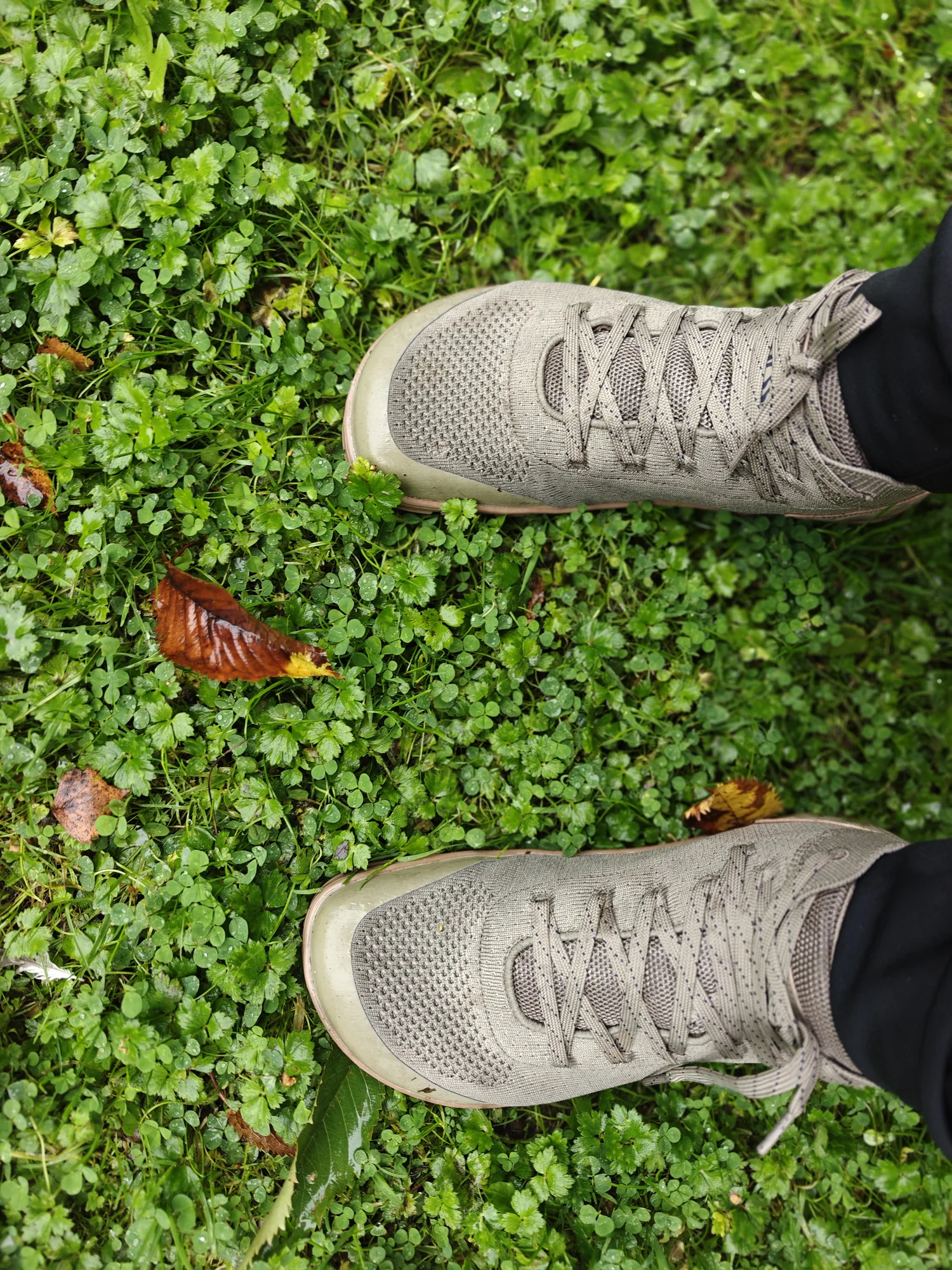
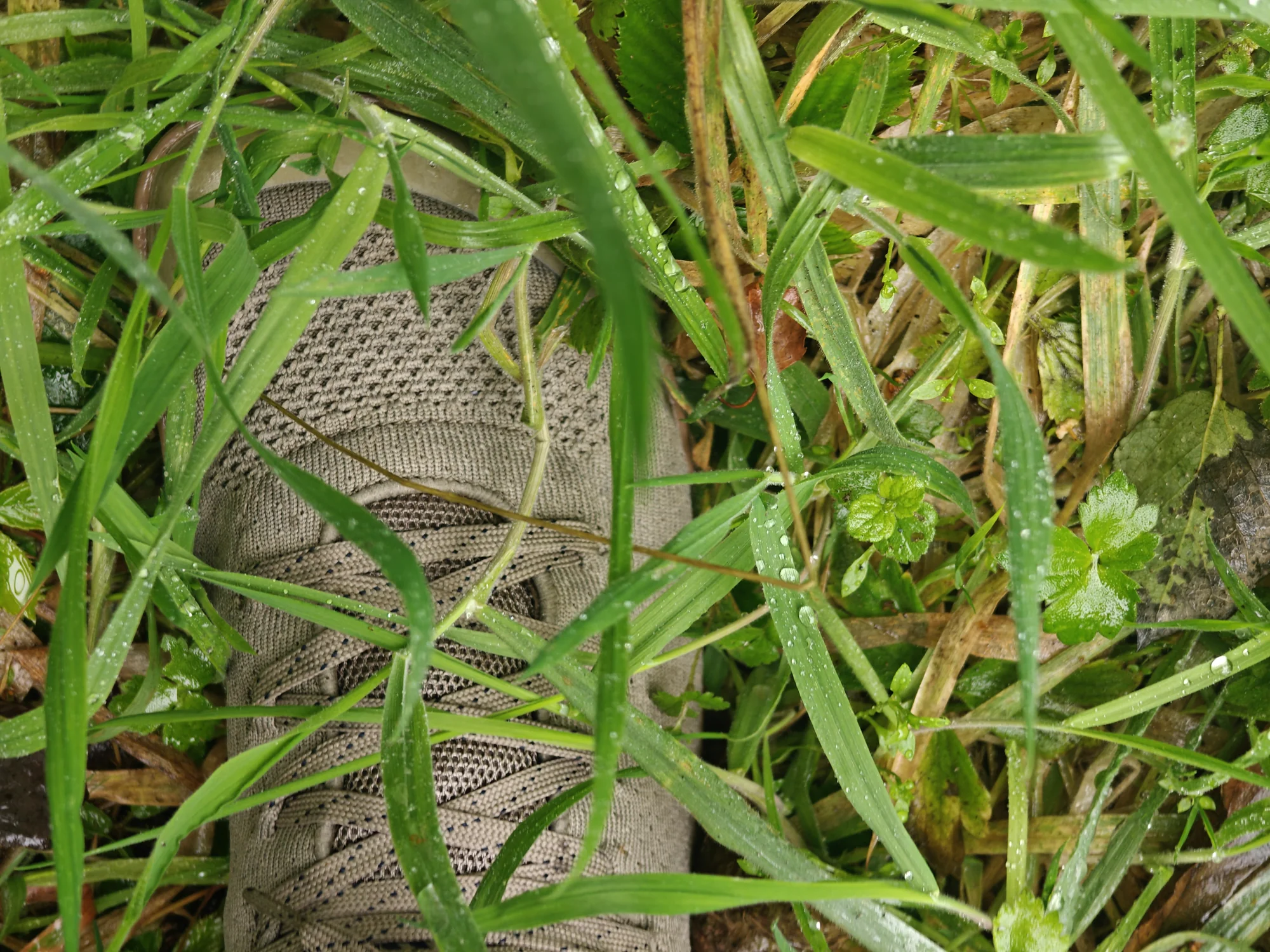
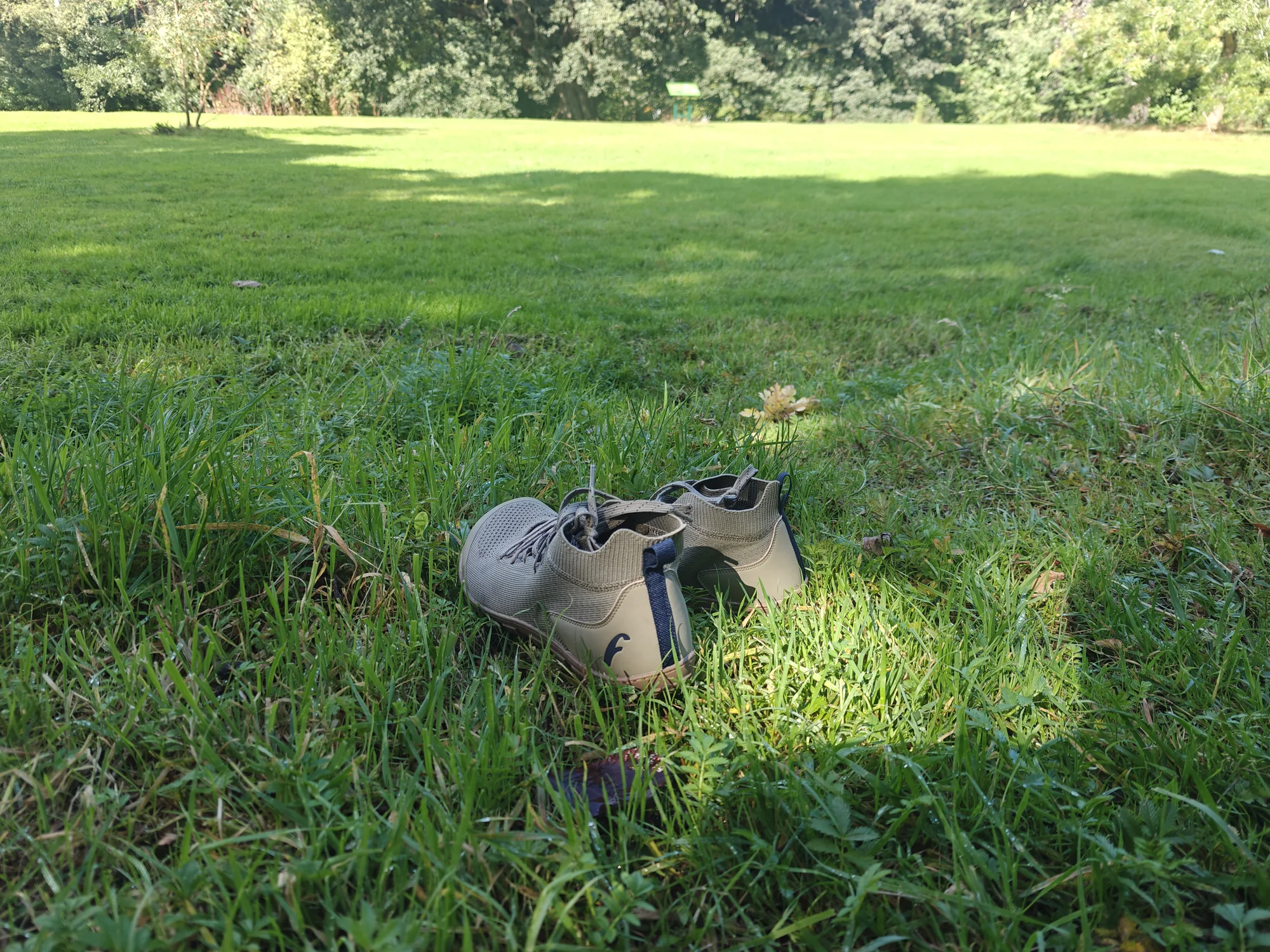
Breathable in warm weather, but wet grass gets through quickly.
I could feel air moving through the knit while walking. Wet grass let water through almost immediately, unlike ordinary drizzle on pavement.
03 / In practice
Drizzle was less of a problem.
My commute is short and I work indoors, so rain did not decide whether I wore them to work. I did not notice much wetness in ordinary drizzle; wet grass was a different experience.
I would wear something else for a long walk in properly wet weather. Freet does not describe the Danum as waterproof. For everyday summer use, I was glad of the airflow.
Wear and durability
The front of the Danum has held up better than I expected. The knit bends where my forefoot flexes, something I noticed early on, but it has not bothered me or developed into the ugly fixed crease I expected. Based on previous shoes with similar-looking material around the toes, I also expected plenty of nicks and scratches. Those have not appeared; the toe bumpers show only light surface marks.
They have proved easy to clean too: marks have come away with quick wipes, and I have not needed to give them a thorough wash.
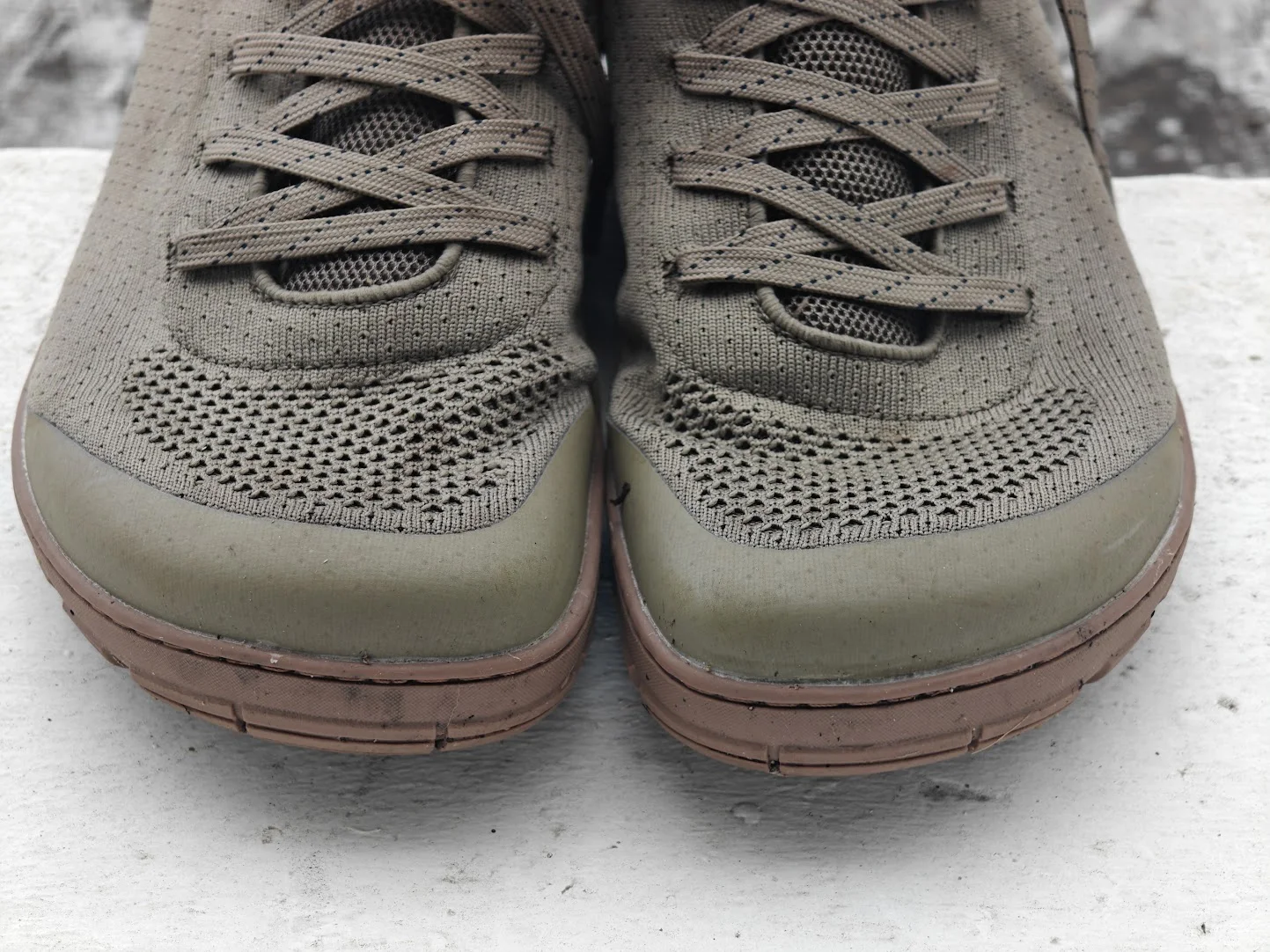
I tend to wear through shoes quickly, so I have been pleased with how the Danum is holding up after roughly 100 miles. I have had no durability failures so far. The lower lace openings described earlier elongate under tension but remain intact. The sidewall stitching is intact too, with no visible gap or peeling where the sole meets the upper. Underneath, the lugs remain well defined, the siping is intact and there is no obvious smooth patch, only light rounding at some edges.
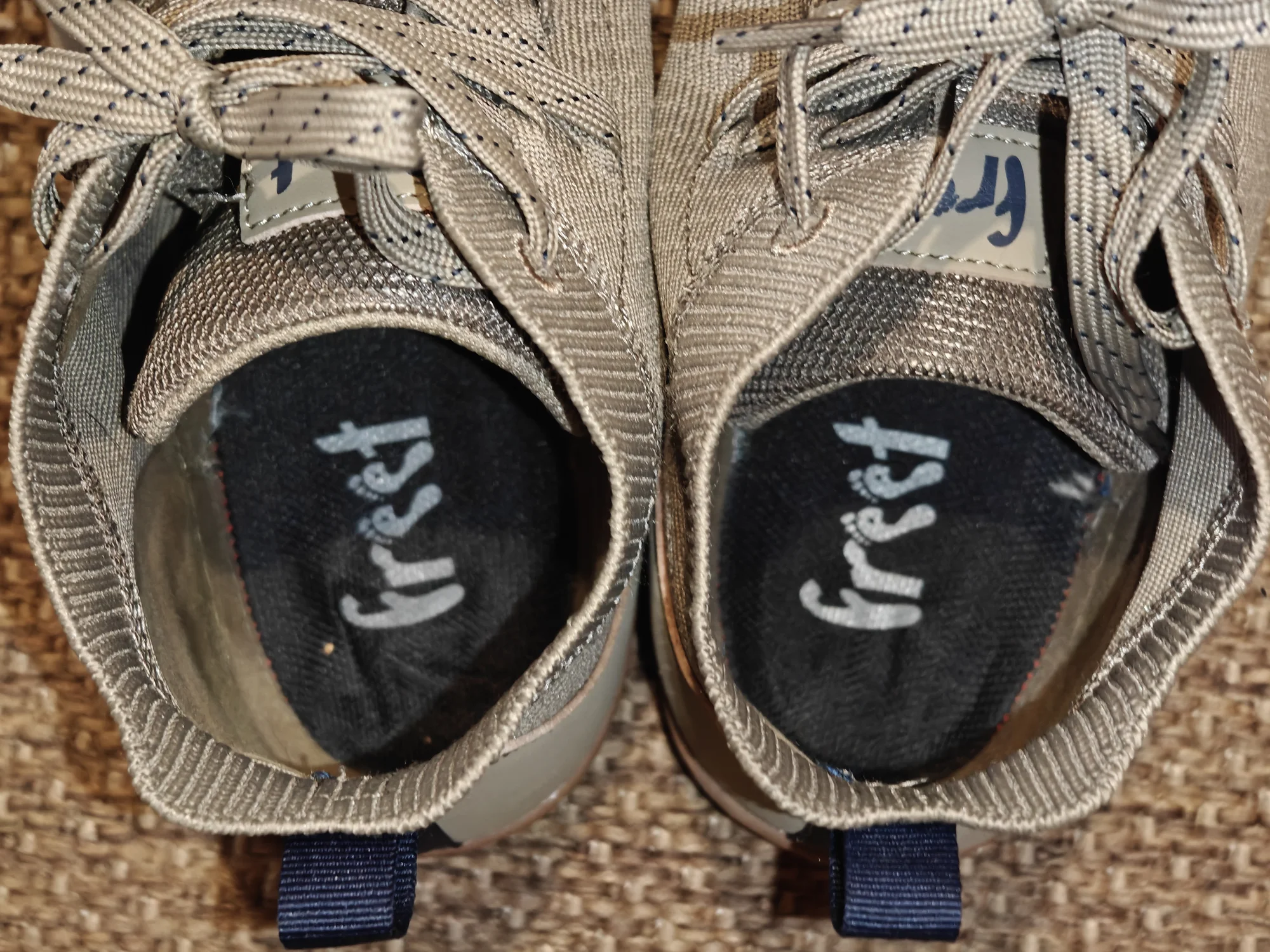
The heel lining also remains intact, with no visible hole or exposed foam. With the insoles out, I can feel an uneven heel bed and a small central depression when I press it with my fingers. I do not feel it while walking, even without socks or insoles, and I do not know whether it was there from new. It is something I will keep watching, not a failure I can establish.
The wear so far makes me think they could last well, but I cannot yet put a lifespan on them.
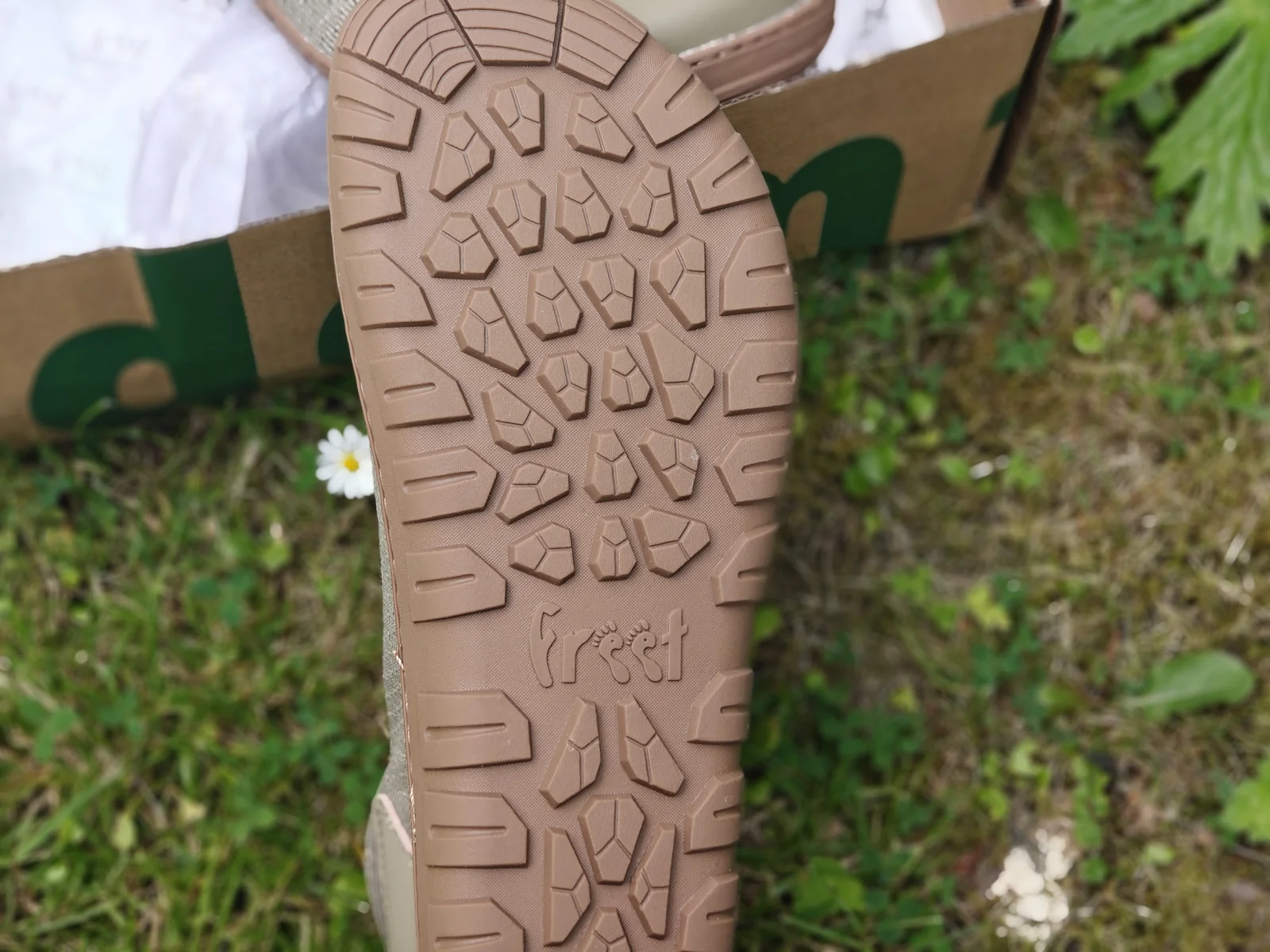
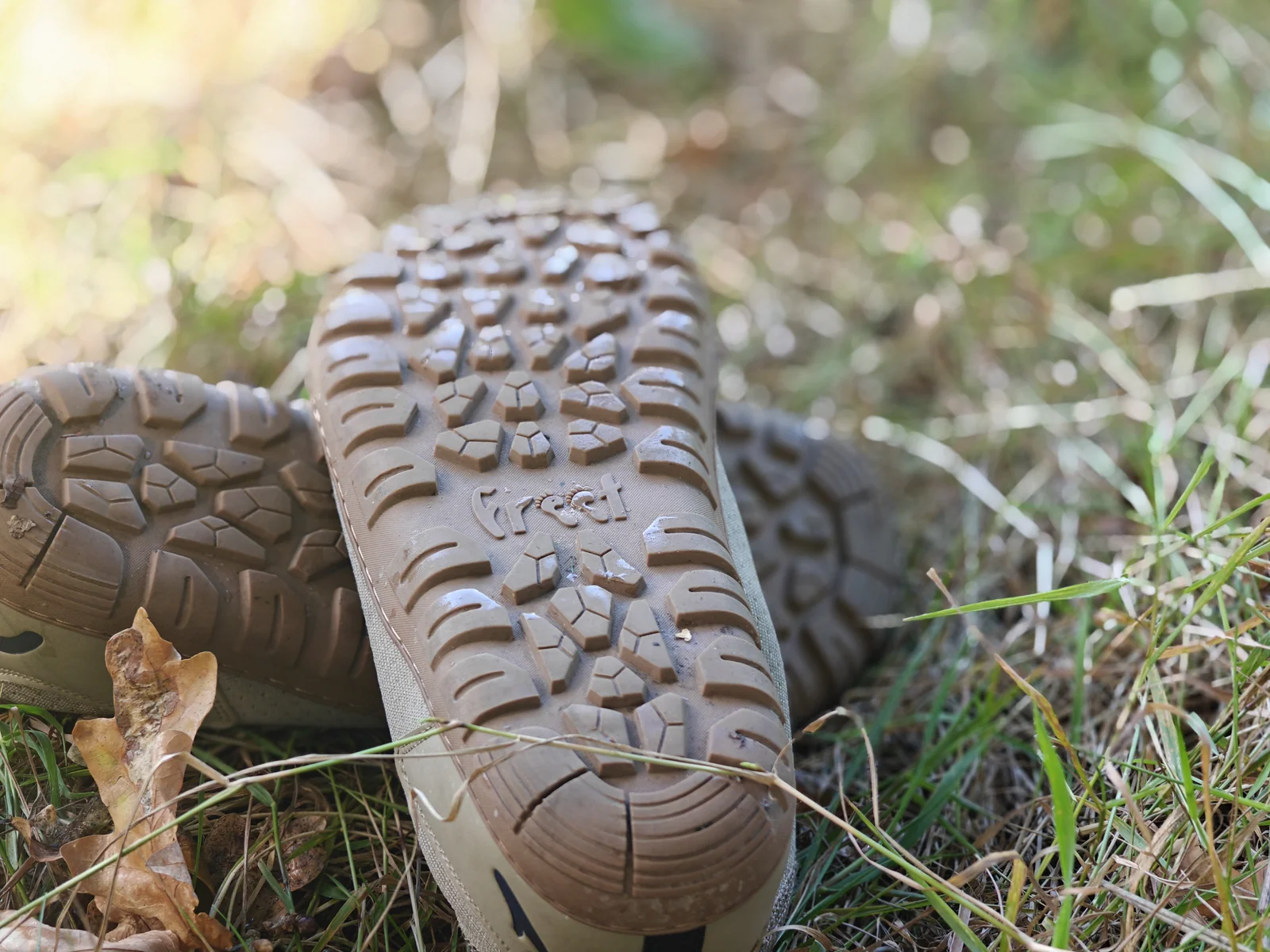
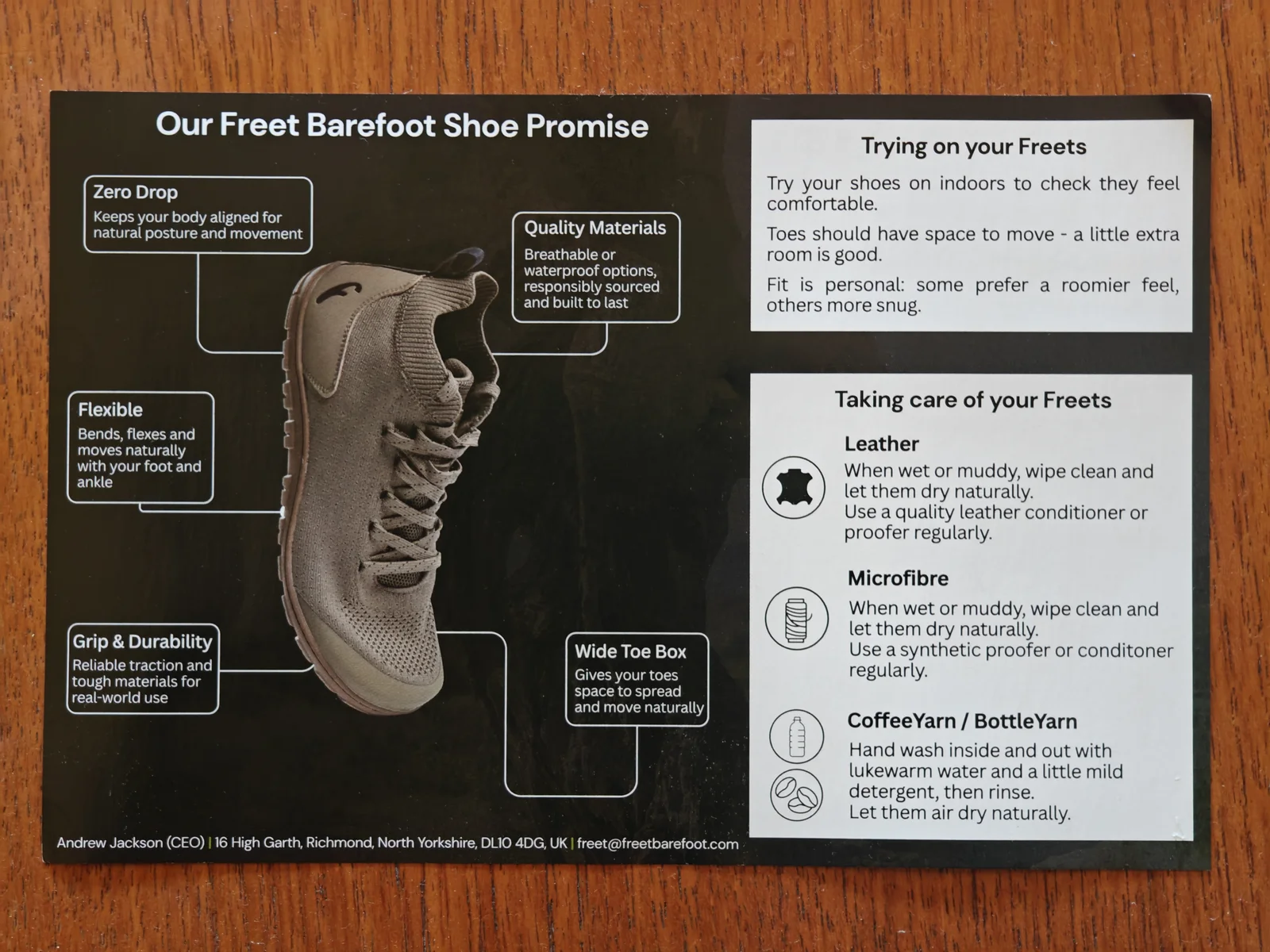
For cleaning beyond a wipe, Freet recommends hand washing in lukewarm water with mild detergent, then air drying. It advises against using a washing machine or tumble dryer.
Price and alternatives
At £85, the Danum is very good value for an ankle-height barefoot boot. Freet supplied my pair, but the comfort, build and amount of use I have had make that an easy judgement.
My Freet Mooch review is worth a look if you would rather have a lower, easier-to-put-on shoe. I find the Mooch highly comfortable, but it is a different sort of shoe from the more boot-like Danum. For regular wet grass or prolonged rainy walks, I would look for footwear designed to keep water out.
Specifications
Freet’s published figures and prices, recorded in this review on 10 September 2026. These are manufacturer figures, not measurements of my pair, except where noted.
| Specification | Freet Danum |
|---|---|
| Upper | Unlined BottleYarn mesh made with recycled PET; knitted collar |
| Colour | Olive |
| Outsole | HillGrip, 4 mm lugs; stitched around the sidewall |
| Insole | Removable ReBound, 4 mm |
| Drop | Zero |
| Stack with / without insole | 10.5 mm / 7 mm |
| Published weight | 520 g per pair, EU 42 |
| Measured weight | 290 g per shoe, without insole (my UK 9) |
| UK price | £85 |
| US price | US$115 |
Freet Danum
£85
Freet sent me this pair and has no editorial input. This review contains affiliate links; I earn a commission if you buy through them.
Photo gallery
The Danum, in photographs
More angles from my worn pair, plus photographs from when it was new.
View all 53 photographsShow fewer photographs50 more
After roughly 100 miles
New out of the box