Do Barefoot Shoes Change Your Feet?
Barefoot shoes will not make your feet grow. What they do is let your toes sit where they want to instead of being tapered inward, and they make the muscles that move your toes measurably stronger. What they do not do, on any evidence I can find, is make an adult foot wider. The change that is proven is strength, and it is smaller and slower than most marketing pages suggest.
Key takeaways
The short answer
- Your feet do not grow, and no study has shown an adult foot getting measurably wider. Your toes do get to sit where they want to.
- Toe pushing strength rose 57.4% on average after six months of daily minimal footwear in a 2021 University of Liverpool study.
- Six months looks like most of the gain. A separate group who had worn minimal shoes for an average of 2.5 years had similar strength to the six-month group.
- Minimalist shoes did not cut injury risk in a study of 1332 soldiers. Stronger feet is the claim that holds up, not fewer injuries.
Do barefoot shoes make your feet wider?
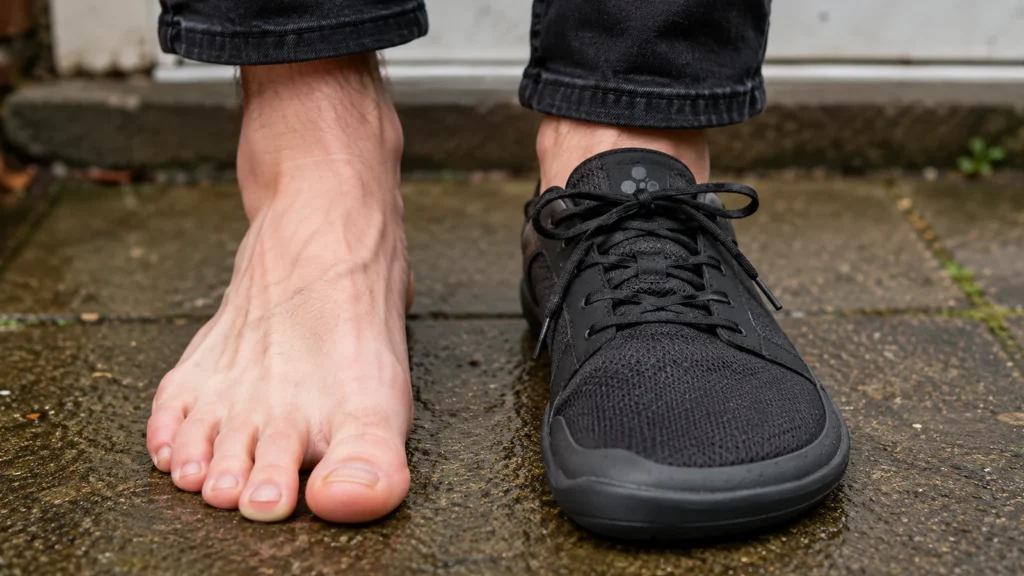
Sort of. A conventional shoe with a tapered toe box pushes the toes inward over years. A barefoot shoe with a wide toe box removes that pressure, so the toes sit further apart inside the shoe. That is a change in how your toes are arranged, not a change in the size of your foot. Put a pair of Xero Shoes Alstons next to a conventional dress shoe and you can see the difference in the toe box alone.
Populations that grow up barefoot or minimally shod do have measurably wider feet than populations that grow up in conventional shoes (Notre Dame Biomechanics lab review). But that is a comparison across a lifetime of footwear habits, not a prediction for an adult who switches at thirty. And when the Liverpool team below measured foot width across six months of daily minimal footwear, neither the group that switched nor the control group changed at the ball of the foot at all. So no study puts a percentage on how much an adult foot widens in barefoot shoes, and any page that gives you one is making it up. The 26 bones and 33 joints in the foot allow a surprising amount of passive spread once the box around them disappears, but the size of that spread varies from person to person and nobody has reliably measured it.

Do barefoot shoes make your feet stronger?
Yes, and this is the change with the best evidence behind it. A 2021 study from the University of Liverpool followed 22 adults who switched to minimal footwear for daily use, against a control group who stayed in conventional shoes. After six months, their foot strength, measured as how hard they could press down with their toes, increased by an average of 57.4% (Curtis et al., Scientific Reports). The researchers also tested 20 experienced minimal shoe wearers who had been at it for an average of 2.5 years. That group was no stronger than the six month group, which suggests most of the strength gain happens in the first six months. For more on what the research covers, see the science behind barefoot shoes.
But look at what the study did not find. It could not separate intrinsic foot muscles from extrinsic ones. It did not find significant changes in arch height in the six month group. The study found a large average increase, but the intervention group contained only 22 people, so 57.4% is a study result, not a personal prediction.
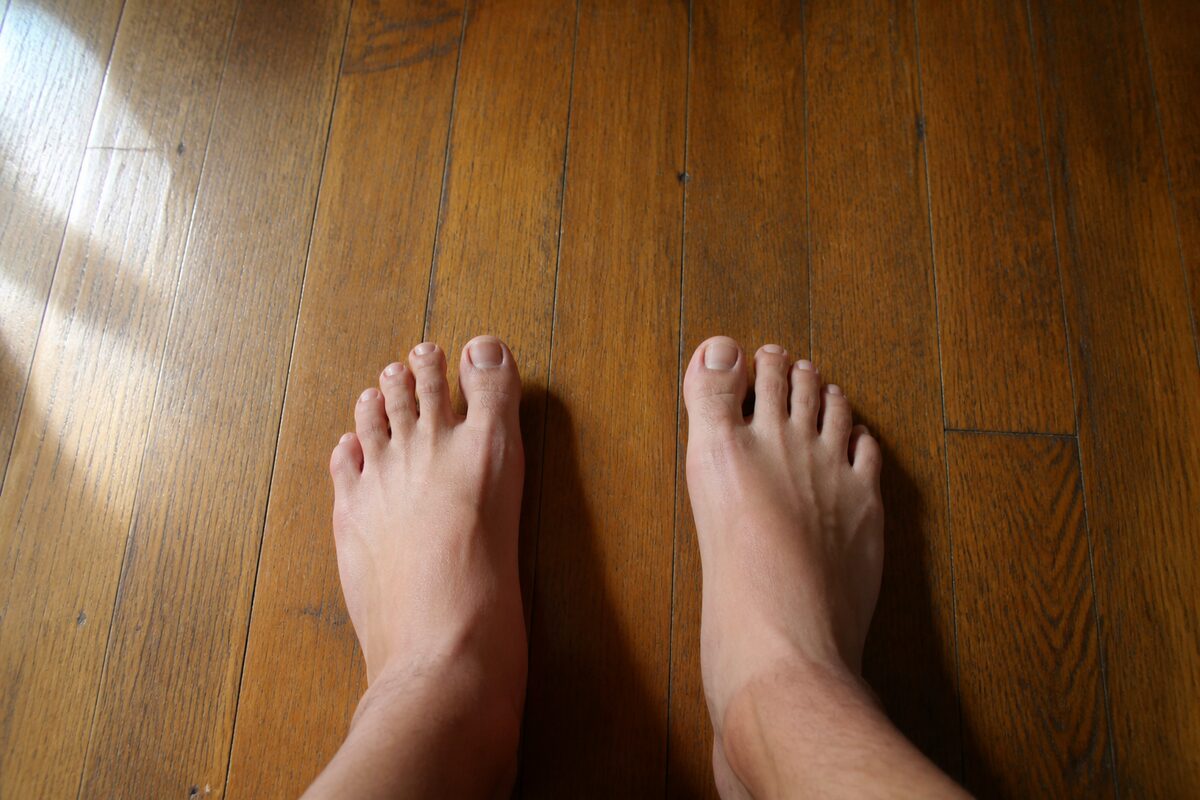
Stronger feet also tend to mean better balance. Whether that adds up to feet that are broadly good for you depends on your starting point and what you do in them.
How long do your feet take to change in barefoot shoes?
The Liverpool study measured at six months and found the strength gains were already there. The experienced group, averaging 2.5 years in minimal shoes, was no stronger still. Six months of consistent daily wear is the timeframe with the best evidence behind it, though the Liverpool paper also points at earlier work that measured changes at eight weeks. What there is no evidence for is the tidy named adaptation phases you see on brand blogs, where each block of weeks gets its own promised milestone. Nobody has measured those. They are marketing copy, not data.
What is fair to say: the first few weeks often feel odd, because muscles that have been braced by a shoe sole for decades are suddenly doing more work. Some soreness is normal. Sharp or lasting pain is not. Go slowly, and if you want a structured approach, the transition guide lays one out. There is also a separate page on how to walk in barefoot shoes if you want to start with the basics before running in them.
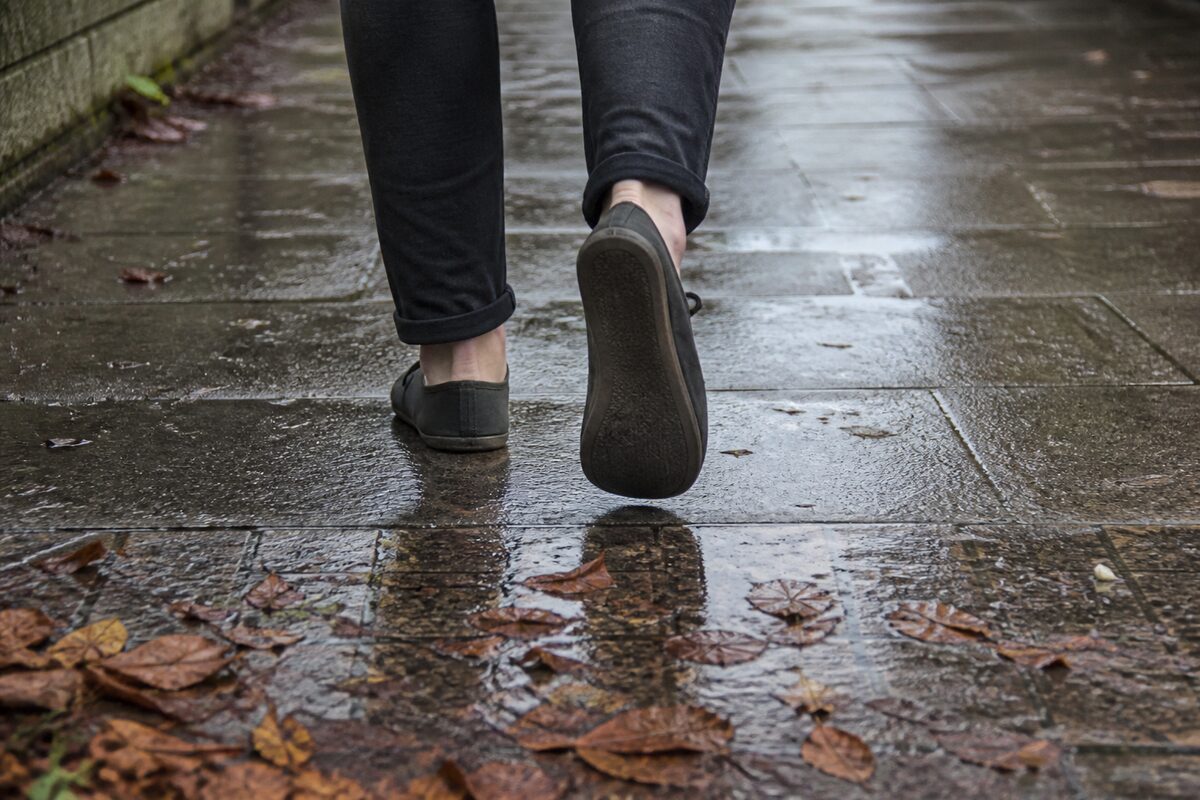
Separately, a study of Tarahumara runners found that those who ran in minimal sandals landed on the midfoot or forefoot far more often than conventionally shod runners, and the shod runners had less stiff arches (Lieberman et al., Journal of Sport and Health Science). That is evidence of a biomechanical difference, not proof that your gait will change on a specific timeline. If gait differences interest you, the barefoot vs. traditional running shoes comparison goes deeper.
Do barefoot shoes help with flat feet?
Maybe, but the evidence is weaker than most barefoot shoe brands would have you believe. The Liverpool study found that the experienced group, with years in minimal shoes, did have slightly higher arches than the intervention group, but the six month group did not show a significant arch change. So if barefoot shoes do lift the arch, it likely takes longer than the strength gains, and we do not have a controlled study that proves it happens at all. Anyone who tells you that barefoot shoes fix flat feet is overstating what the research says.
Do stronger feet mean fewer injuries?
On injury risk: a study of 1,332 US Army soldiers found no difference in injury rates between those running in minimalist shoes and those in traditional ones, once other risk factors were controlled (American Journal of Sports Medicine, 2016). That is soldiers running, not everyone walking, so do not stretch it further than it goes. But minimalist shoes did not cause more injuries there, and they did not prevent them either. If you have flat feet and want to try minimal footwear, a podiatrist is a better starting point than a blog post.
Who should not switch?
People recovering from foot surgery, people with chronic foot pain that has not been diagnosed, and people with severe overpronation that is currently managed by orthotics should not switch without talking to whoever prescribed the support. In all three cases, removing structure without medical advice risks making things worse rather than better. Read more in when not to wear barefoot shoes.
Affiliate links on this page pay me a commission if you buy.
Vivobarefoot’s own blog on the benefits of barefoot shoes makes a stronger case for the switch than this page does. They are selling shoes, so read it with that in mind, but it is a decent overview of the brand’s argument.
If you are still deciding, start with the beginner’s guide, check Xero Shoes sizing if that is the brand you are looking at, or read whether barefoot shoes are good for running.



It’s truly a nice and useful piece of information. I’m glad that you shared this useful information with us. Please keep us up to date like this. Thank you for sharing.
Whats up are using WordPress for your site platform? I’m new to the blog world but I’m trying to get started and set up my own. Do you need any coding knowledge to make your own blog? Any help would be really appreciated!
Merely wanna remark on few general things, The website style and design is perfect, the subject matter is very good. “Good judgment comes from experience, and experience comes from bad judgment.” by Barry LePatner.
great issues altogether, you just gained a logo new reader. What could you suggest in regards to your put up that you made a few days ago? Any positive?