Are Barefoot Shoes Good for Your Feet?
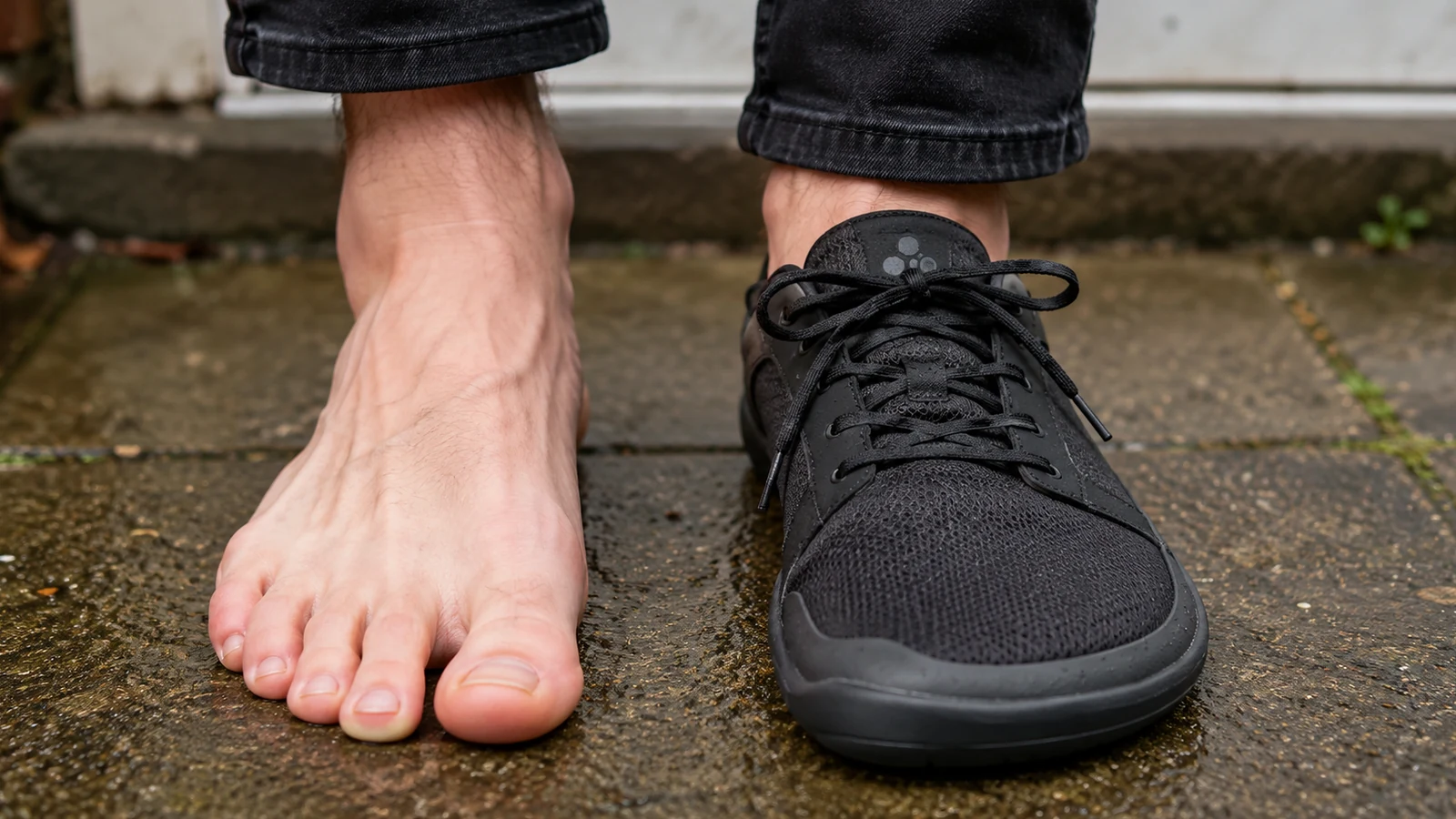
Barefoot shoes are good for most healthy feet, and the people they hurt are almost always the people who rushed. The design does three things: it lets your toes spread, it keeps your heel level with your forefoot, and it puts a sole thin enough under you that you can feel what you are standing on. Feet that have spent thirty years inside a stiff, cushioned, heel-raised shoe usually get stronger when you take all that away.
The catch is the timeline. Muscles that have not worked properly in decades need weeks to catch up, and a foot that already hurts needs a professional opinion before it needs a new pair of shoes.
Key takeaways
The 30 second version
- Healthy feet get stronger in minimalist shoes. The figure most often quoted is a 60 percent gain in foot strength over six months.
- Almost every bad outcome is a transition problem, not a shoe problem. Budget 8 to 12 weeks.
- Existing foot pain, flat feet or high arches mean you talk to a podiatrist before you buy.
- A thin sole gives you ground feel and no protection. Match the shoe to the terrain.
- They cost less than premium cushioned trainers, roughly $30 to $150 against $200 and up.
What makes a shoe barefoot
Barefoot shoes, also called minimalist or zero drop shoes, are built to let your foot move the way it would with nothing on it while still keeping glass and gravel out. Four design choices do the work.
- A thin, flexible sole you can feel the ground through
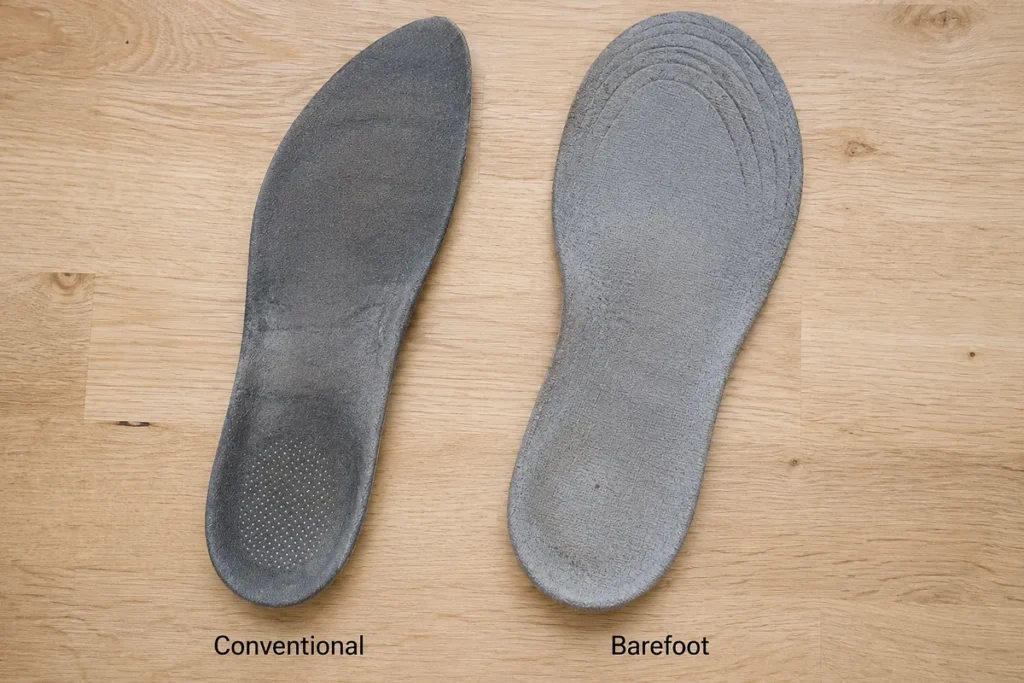
- A wide toe box so your toes spread instead of being squeezed into a point
- Zero heel-to-toe drop, meaning your heel sits at the same height as your forefoot
- No built-in arch support, so your own arch does the job
The zero drop part is the one people underestimate. A 12mm raised heel tips your whole body forward slightly, and everything above the ankle compensates. Flatten it and the compensation has to unwind, which is why calves complain in week two.

The wide toe box is the part most people feel first. Put your foot next to the shape of a conventional trainer and the mismatch is obvious.

If you want the full definition with the edge cases, we have a longer guide to minimalist shoes.
Where the design came from
None of this is new. The history of barefoot footwear runs back through centuries of sandals and moccasins that protected the sole and left everything else alone. The modern version arrived in the early 2000s, when Vibram FiveFingers put toe pockets on the market around 2005 and Vivobarefoot followed with minimalist shoes you could wear to an office without being stared at.
How they differ from a normal shoe
Side by side
Four design choices, two opposite answers
| Feature | Conventional trainer | Barefoot shoe |
|---|---|---|
| Toe box | Tapered, toes held together | Wide, toes splay under load |
| Heel-to-toe drop | Commonly 12mm or more | Zero, heel level with forefoot |
| Sole | Thick cushioning, little ground feel | Thin and flexible, high ground feel |
| Arch | Built-in support does the work | No support, your arch does the work |
Neither column is automatically right. The second one asks more of your feet, which is the point and also the risk.
What they actually do for your feet
Your feet get stronger
A conventional shoe works a bit like a cast. Support the arch, cushion the impact and hold the toes still, and the muscles that would have done that work stop doing it. Take the cast off and they start again. This is the clearest of the benefits of barefoot shoes, and the number people quote is a 60 percent gain in foot strength over six months of regular wear.

Stronger feet mean a more stable ankle and less strain on the plantar fascia, because the arch is being held up by muscle rather than by foam.

Balance improves because you can feel the ground
Thick foam does not only absorb impact, it absorbs information. A thin sole sends far more of what is under you back up to your brain, which is what proprioception means in practice, your sense of where your body is in space. Compared with traditional running shoes the difference shows up fastest on uneven ground: cobbles, tree roots, a wet slope. You correct sooner because you know sooner.
Less pounding through the knee, if your gait changes
The claim you see everywhere is that minimalist shoes cut knee pain. The mechanism is real enough: without a cushioned heel to land on, most people shorten their stride and move towards a midfoot strike, which sends less shock up the leg. But it only works if the gait actually changes. Heel striking hard in a thin shoe is worse than heel striking in a cushioned one.

Your posture stops leaning forward
Standing on a raised heel all day tilts the pelvis forward and asks the lower back to hold you up. Drop the heel and that tilt unwinds. Legs, hips and spine settle into a more neutral stack, and the core has to do a little more of the work it was meant to do.

They cost less than premium trainers
Most barefoot shoes land between $30 and $150, against $200 and up for a flagship cushioned running shoe. There is less in them to fail, too: no gel pods, no air units, no stacked midsole to compress. If price is your constraint, we keep a list of the best affordable barefoot shoes in the UK.
Who should wait, or not switch at all
Feet that already hurt
If you have severe plantar fasciitis, very flat feet, very high arches or any diagnosed structural problem, get a professional opinion before you buy. Removing support from a foot that is already failing to cope is how people end up worse off, and it is the main reason some clinicians push back. It is worth reading the professional objections to barefoot shoes before you decide, rather than after.
The adjustment period is not optional
Sore feet, tight calves and aching arches in the first few weeks are normal. They are dormant muscles waking up. What is not normal is sharp pain, bruising under the ball of the foot, or anything that gets worse day on day. That is a stress response, and the answer is fewer hours in the shoes, not more grit. Novice runners who jump straight from cushioned trainers to minimalist ones are the group that gets hurt most often.
A thin sole does not stop glass
Ground feel and protection are the same dial turned in opposite directions. Broken glass and nails on city pavements, rocks and thorns on a trail, and anything with a safety footwear requirement at work are all reasons to keep a conventional shoe in the rotation. This is a trade-off, not a flaw, and pretending otherwise helps nobody.
A 12-week transition that works
The plan below is deliberately slow. If a stage hurts beyond ordinary muscle soreness, stay on it another week instead of moving up.
Transition plan
Twelve weeks from first wear to full time
Weeks 1 and 2, indoors only
15 to 30 minutes a day on flat floors. Tired feet at the end of it are expected. Add basic foot strengthening work on the days you are not wearing them.
Weeks 3 and 4, short walks outside
Build to 1 or 2 hours a day and take them onto smooth pavement. Balance usually starts to feel different around here.
Weeks 5 to 8, most of the day
Wear them for ordinary daily activity and varied ground. Runners can add short, easy jogs, keeping the stride short and the landing quiet.
Weeks 9 to 12, full time
Everything the terrain allows, running included. By the end of this stage the shoes should feel unremarkable, which is the goal.
Should you switch
Quick decision helper
Find your situation
Buying the first pair
Size roughly as you would a cross-training shoe, then check the brand chart anyway, because sizing varies more between barefoot brands than it does in the mainstream. You want room for your toes to spread with the foot loaded, and a midfoot and heel snug enough that your foot is not sliding forward, which is what causes blisters. Buy for the thing you will actually do in them. A shoe built for trails and one built for a desk job are different shoes, and one pair rarely covers both.
Common questions
What exactly are barefoot shoes?
Shoes designed to protect the sole of your foot and interfere with everything else as little as possible. Thin flexible sole, wide toe box, no heel lift, no arch support.
Do they really make feet healthier?
For most healthy feet, yes. They strengthen the muscles of the foot and ankle, improve balance and remove the forward tilt a raised heel creates. The gains depend on a gradual switch, because you are loading tissue that has not been loaded properly in years.
Can anyone wear them?
No. Most healthy adults can with a slow transition, but pre-existing conditions such as severe flat feet or plantar fasciitis need a clinician’s opinion first. Some people also work in places where minimalist footwear is not allowed.
How do I pick a pair?
Flexible sole, real toe room, snug midfoot, and features that match what you will do in them. Try them on if you can, and treat comfort as the deciding factor. A shoe that looks right and pinches is a shoe you will stop wearing after a fortnight.
If you are ready to start, our barefoot shoe reviews and buying guides are organised by what you need them for, and our page on the myths around barefoot shoes covers the claims that do not hold up.


